
Educational Tourism in Belarus
Educational tourism is becoming an increasingly popular segment of the travel industry in Belarus. It offers an opportunity to learn more about the country’s history, culture, nature, and science, to study and practice languages and allows people to immerse themselves in professional fields of knowledge.
Modern Belarus is a country with a high level of educational, scientific, and technological development, known for its strong brands and world-class achievements and rich historical heritage. It can capture the interest not only of schoolchildren, university students but also adult travelers.
Educational tourism is closely linked to other types of tourism that are rich in information and opportunities for gaining new knowledge - historical-cultural, religious, business, industrial, ecological, ethnographic, active tourism, and others.
Nevertheless, travel where learning, professional development, and self-improvement are the main goals is a special niche. In Belarus, this tourism is gaining momentum in response to the demand from people of different generations for quality education, skills enhancement, study of best practices, acquisition of practical skills, and so on.
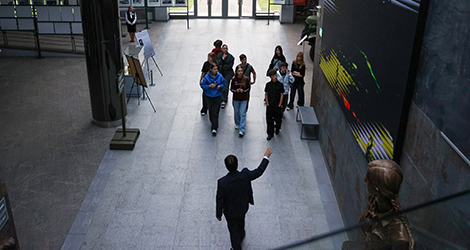 In essence, educational tourism transforms passive learning into an active journey of discovery, making Belarus not just a destination for foreign travelers but a classroom without walls.
Long-term educational programs, conferences and seminars, off-site internships and courses, thematic festivals and congresses, school and student excursions - educational tourism encompasses a multitude of interesting formats. Travel transforms into an engaging learning process through direct interaction with objects and events, through communication with the best, rare, and even unique specialists.
Popular types of educational tourism in Belarus are:
-
Language learning: trips aimed at mastering a language (Russian and Belarusian for foreigners), immersing oneself in the language environment, and engaging in informal communication with native speakers.
-
Professional development: participation in scientific and academic internships, conferences, seminars, and familiarization visits to institutions, organizations, and enterprises.
-
Academic education: studying at universities offers many opportunities, including rich educational tourism programs.
-
Cultural-educational tours: visiting cities, landmarks, museums, natural areas, and participating in thematic excursions to deepen knowledge in a specific field (history, art, science, ecology, etc.).
-
Sports training: training camps with additional thematic travel programs, visits to sports facilities, and workshops with renowned athletes and coaches.
What to Study and Learn in Belarus
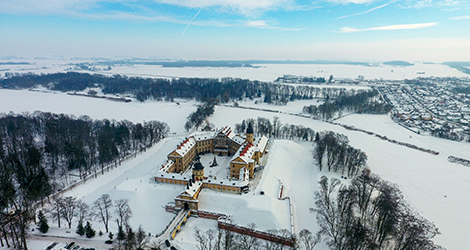 Here are just a few examples of how traveling across Belarus can broaden your perspectives and provide new knowledge.
Due to its geographical location in the center of Europe, Belarusian land has, since ancient times, been at the crossroads of major routes and has repeatedly become the arena of the largest conflicts in continental and world history. Today Belarus is an interesting destination for a deeper, more substantive study of past events.
The First and Second World Wars, especially the period of the bloody Great Patriotic War, Napoleon's Russian Campaign and the Patriotic War of 1812, the Great Northern War, medieval conflicts... Throughout Belarus, there are places that preserve the memory of significant events and famous personalities. Nowadays, surviving architectural monuments, signs and memorials, and museum exhibitions, which often feature the most representative thematic collections and absolutely unique artifacts, tell their stories.
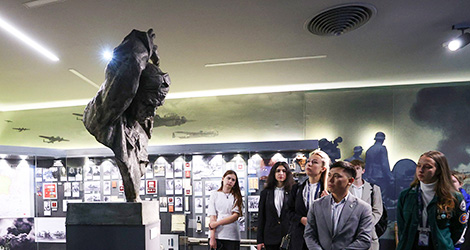
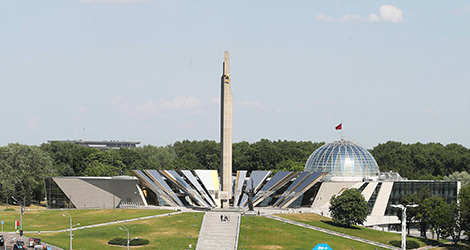 For example, it is in Minsk that is home to the world's first museum dedicated to the Great Patriotic War and the Second World War as a whole. Its collection was founded as early as 1942, when no one could have imagined how long the war would last. Future exhibits were sent directly from the front lines to an ad-hoc republican commission for the collection of documents and materials of the Patriotic War. The official opening of the museum took place on 22 October 1944, in one of the surviving buildings in the then-ruined Minsk – the House of Trade Unions on Svobody Square. … Nowadays, the Belarusian State Museum of the History of the Great Patriotic War is housed in a complex specially built for it on Pobeditelei Avenue, surrounded by Victory Park. And it is one of the most visited museums in the country.
The legendary Brest Hero Fortress, the Buinichi Field near Mogilev, Khatyn as a testament and symbol of the tragedy of many other villages burned to the ground together with their inhabitants, as well as the genocide of the Belarusian people, Trostenets, which became the third-largest Nazi death camp in the world in terms of the number of victims... Even many decades after the Great Patriotic War, Belarus remains an “encyclopedia” of this terrible period of the 20th century.
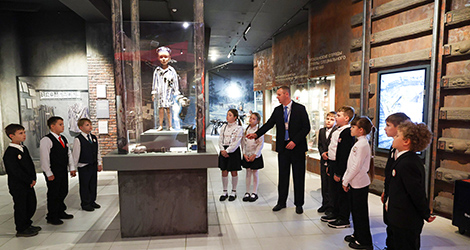 However, other periods of history are also interesting. The formation of the first states on the territory of modern Belarus, the eras of the Grand Duchy of Litva (Lithuania) and the Polish–Lithuanian Commonwealth, the period as part of the Russian Empire, the creation and development of the Byelorussian SSR as part of the Soviet Union, and the establishment and strengthening of the sovereign Republic of Belarus – by traveling through the country, one can truly broaden their knowledge of events that are significant in the context of world history.
Did you know that...
On 13-15 March 1898, Minsk hosted the First Congress of the Russian Social Democratic Labor Party (RSDLP), the political organization that paved the way for the Russian communist movement. That gathering set off a chain of events that would reshape world history. The subject remains highly compelling, even though Soviet historians traditionally traced the party’s history from its Second Congress (Brussels and London), where the Social Democrats split into Bolsheviks and Mensheviks. The House-Museum of the First Congress of the RSDLP opened in Minsk on 14 March 1923. In the 1950s, it was moved closer to the Svisloch River and woven into the architectural fabric of the capital’s main avenue.
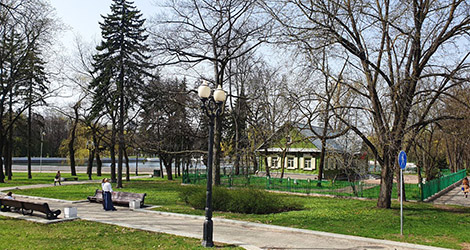 One of the most prominent forms of educational tourism in Belarus is the study of the lives and legacies of extraordinary figures who once lived on this land, whether they were native Belarusians or came from other countries. These include artists, composers, writers, scientists, politicians, and public figures. Well known names among them are Marc Chagall, Chaïm Soutine, Adam Mickiewicz, Alexander Suvorov, and Pavel Sukhoi.
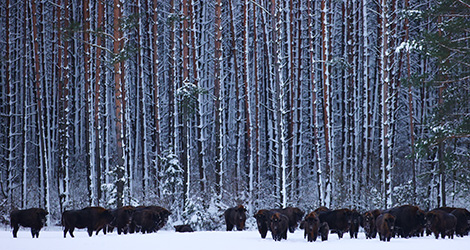
Another remarkable and diverse area of educational tourism is natural history and ecology. Belarus is famous for its natural riches, including protected areas of European and global significance. Places like the Belovezhskaya Pushcha National Park, Pripyatsky National Park, Narochansky National Park, and Braslav Lakes National Park, along with the Berezinsky Biosphere Reserve, Yelnya Nature Reserve, Naliboksky Nature Reserve, and Sporovsky Nature Reserve offer visitors an opportunity to explore biological diversity, ecosystems, and the principles of nature conservation. Such tours include excursions led by professional ecologists, open air lectures, and field practice.
 Tourists in Belarus can also explore the Polesie State Radioecological Reserve, a territory unlike any other on Earth. It was established after the explosion at the Chernobyl Nuclear Power Plant, one of the greatest man made catastrophes in human history. A large area at the epicenter of the fallout became the most heavily contaminated with radionuclides, both in terms of composition and quantity. Today, this reserve sees virtually no human interference, allowing its natural biodiversity to thrive. Any economic activity is strictly limited to scientific research and restoration projects. What is more, the reserve is the largest scientific and practical site in the world where specialists study radiation's impact on ecosystems, conducting research that has no equal anywhere. During a full day excursion into the Belarusian exclusion zone, visitors receive a radiation dose roughly equivalent to an hour of flight time on an airplane.
 Science and technology are also part of Belarus’ educational tourism offering. Students and professionals can benefit from excursions and hands on sessions at the country’s leading universities and research centers, including Belarusian State University, Belarusian National Technical University, and the Belarusian State University of Informatics and Radioelectronics, to name just a few. These institutions host master classes and lectures that showcase advances in physics, chemistry, IT, engineering, and other scientific fields. Some programs go even further, offering visits to industrial enterprises, research institutes, and cutting edge technology parks.
Most of Belarus’ existing universities were founded either before the October Revolution or during the period of the BSSR. Yet even earlier, in the Grand Duchy of Lithuania and the Polish-Lithuanian Commonwealth, many educational institutions in Belarusian towns followed the principles of academic training, particularly the Jesuit collegiums, and some of these eventually developed into major educational centers.
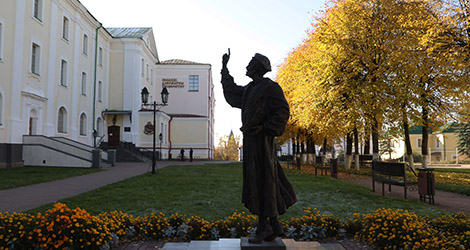 The first higher education institution on the territory of modern Belarus is widely considered to be Polotsk Jesuit Academy, which grew out of a collegium. Its successor today is Polotsk State University, where the restored historic buildings still serve as university premises. In one of them, visitors can find a popular exhibition called “Reconstruction of Gabriel Gruber’s Project “The Mechanical Head””.
It’s interesting!
The original “Mechanical Head” was the invention of Professor Gabriel Gruber of Polotsk Collegium and later Polotsk Jesuit Academy. He was a mathematician, engineer, architect, physician, theologian, painter, musician, and linguist fluent in seven languages. His project, created at the end of the 18th century, took the form of an old man’s head with long gray hair. The invention could move its eyes and answer visitors’ questions. People traveled from Moscow, Saint Petersburg, Warsaw, and Berlin to see it. Today, visitors to Polotsk and the university have the opportunity to see a revived version. The new “Mechanical Head” appears in the guise of the ancient Greek philosopher Socrates and speaks five languages.
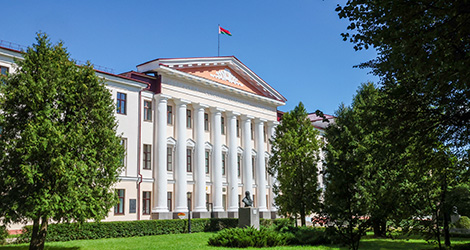 The country’s oldest higher education institution, Belarusian State Agricultural Academy, is located in Gorki. Founded in 1836 and officially opened in 1840, Gory-Gorki Agricultural School became the first agricultural educational institution in Europe. It quickly evolved into a leading educational and scientific center of its time, where many things were done “for the first time.” Today, the academy remains the largest multidisciplinary higher education institution for the agro-industrial sector in both the CIS and Europe.
The main academic buildings were constructed in the first half of the 19th century based on designs by the Italian architect Angelo Campioni. He also created the urban plan for the town of Gorki itself, ensuring that the Classical ensemble would harmoniously blend with the surrounding development. The landmarks of the university include a large specialized museum dedicated to the institution’s history and the origins of agricultural education in Europe, as well as a magnificent botanical garden that stands as a historical and cultural treasure within the academy complex.
Belarus is also home to other universities that resemble museums and are rightfully included in lists of local attractions, thanks in no small part to their architecture. Notably, within educational tourism, the art of design and construction, spanning both past and present, remains a popular area of interest.
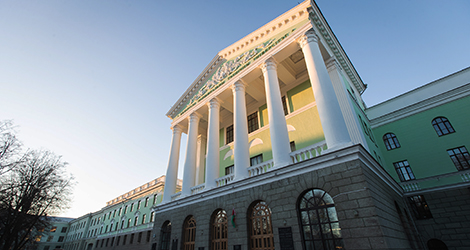
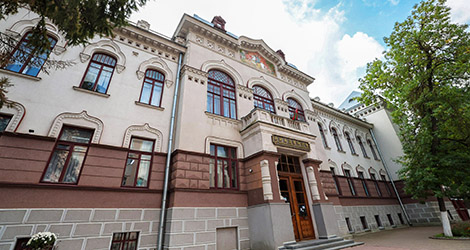 Some of these fine buildings were constructed specifically for educational institutions, while others are even older structures that have been repurposed. For example, the campus of the Belarusian National Technical University is an ornament on Minsk’s Nezavisimosti Avenue, which is renowned for its neoclassical ensemble (Stalinist Empire style). The main building of the Vitebsk State Academy of Veterinary Medicine is located in a former Peasants’ Bank building from the early 20thcentury, designed in the Neo-Russian style that blends elements of Art Nouveau and eclecticism. The ivy-clad main building of Yanka Kupala State University of Grodno, built in 1893, originally housed the Mariinsky Girls’ Gymnasium and is a monument of the Brick style in architecture from the second half of the 19thto early 20thcenturies.
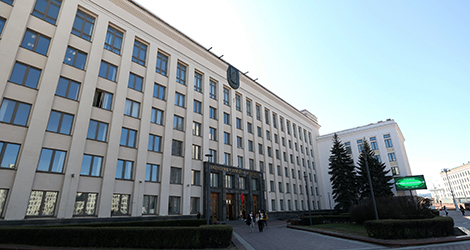 The campus of Belarusian State University, the country’s most renowned university and largest classical university, occupies the block between Nezavisimosti Square and Railway Station Square, making it a landmark attraction in the center of Minsk. In addition, the alma mater has several other buildings throughout the city. The university’s museums, namely the Museum of BSU History, the Zoological Museum, the Museum of Earth Sciences, and the Museum of the Faculty of Law, have also become popular destinations for educational tourism.
Did you know?
The BSU Zoological Museum is not only the only natural history museum of its kind in Belarus but is also unique in many ways. Its collection is the largest in the country, comprising over 102,000 zoological specimens (taxidermy mounts, bird egg clutches, preserved specimens, osteological material, and other items from both vertebrate and invertebrate animals). The museum preserves pre-revolutionary zoological specimens and contains rare and unique exhibits collected by faculty members and graduates of the Faculty of Biology during expeditions or travels. Among the zoological collections are 260 species listed in the Red Data Books of CIS countries and the world.
The BSU Museum of Earth Sciences is the only university natural science museum of a geological profile in Belarus. It functions as an educational, research, methodological, and consultative center. Its collection includes over 20,000 minerals, rocks, and paleontological specimens. The exhibition halls display 7,000 exhibits.
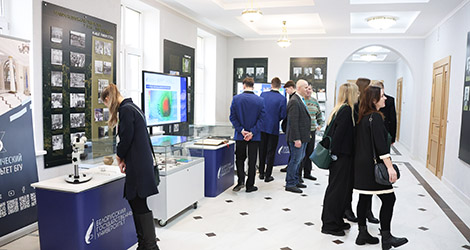 After the building was modernized, the BSU Faculty of History became the first museum-faculty in Belarus. This building holds a special place for the university. Construction dates back to the second half of the 19thcentury, and the building was transferred to BSU during the university’s very first year of existence. It was here, in 1921, that the first lecture in the university’s history was delivered to students. In this same building, the first rector of BSU, Vladimir Picheta, worked and even lived for some time.
Today, all Belarusian universities - educational and research centers with rich traditions, a high level of training, and representation in prestigious global rankings - are certainly involved in the field of educational tourism, both domestic and international. Special programs are available for international students to get acquainted with Belarus.
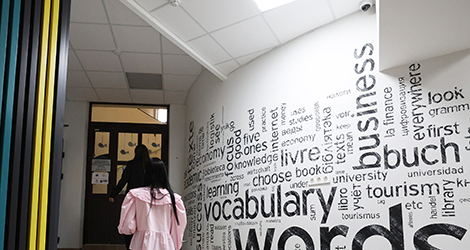 Educational tourism is actively developing in the area of language and cultural exchange. In Belarus, where both Russian and Belarusian are official languages, there are ample opportunities for foreigners to study them. Russian is popular as a language of international communication, essential for studying at universities and living comfortably in the country, while Belarusian is relevant for those interested in Slavic studies and Belarusian studies. Intensive language courses with cultural program elements are in high demand among international tourists. Participants in such tours not only study the language but also visit theaters, concerts, and festivals, ensuring deep immersion into the cultural environment.
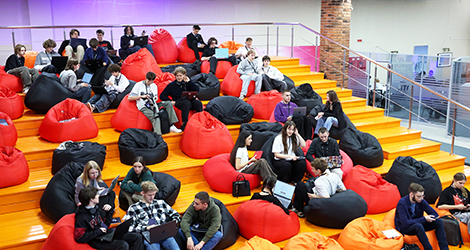 The level of technological development in modern Belarus can be assessed not only through educational tourism but also through business and industrial tourism. One of the most iconic locations is the High Technology Park (HTP), an IT cluster that combines elements of a technopark, an innovation hub, and a digital transformation center. It brings together hundreds of resident companies working in various fields - from fintech and mobile development to artificial intelligence and machine learning. A tour of the HTP provides insight into the scale of digital transformation in the country, allows visitors to assess the innovative potential of Belarusian developers, and helps identify growth points for personal improvement and business development.
Belarus discovery programs for international students
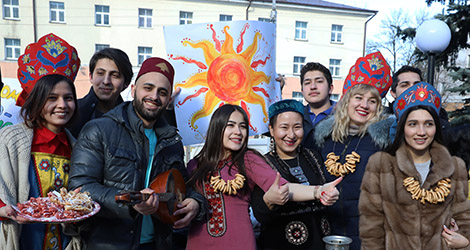 Various programs exist for international students in Belarus to help them get familiar with the country. These include summer schools, excursion tours, cultural events, and academic exchanges organized by universities, embassies, and public organizations.
The Center for International Relations operates within the Education Ministry of Belarus. Among its priority areas are the development of international cooperation in education and the promotion of educational tourism. The center organizes excursion and educational programs for students, faculty, and foreign nationals, aimed at familiarizing them with the historical and cultural heritage and traditions of the Belarusian people.
Together with educational institutions, the center annually organizes international mobility programs for students, which have become an important part of training modern specialists. Through these programs, students take part in industrial tours, exhibitions, international conferences, seminars, and discussions related to their future professional activities. They study best practices and get familiar with the history, culture, and traditions of Belarus and neighboring countries. This helps improve the quality of specialist training and promotes the national education system abroad.
 print version
 make home page
 add to bookmarks