Event Tourism in Belarus
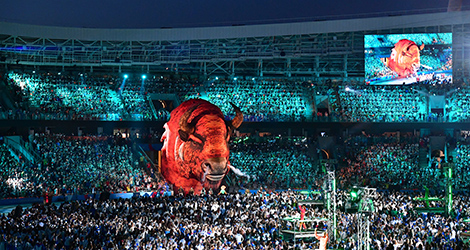
Traveling to Belarus is not only an opportunity to discover the rich historical and cultural heritage of this country in the center of Europe, to visit unique natural areas, or to relax at a resort in a temperate continental climate. People also come to Belarus for the experience of its vibrant events.
Music, sport, and authentic modern holiday culture are actively shaping tourism trends in Belarus.
Numerous events are held in the country annually, attracting thousands of participants and guests. Festivals, concerts, City Days and regional signature holidays, historical reenactments, large-scale sports tournaments and matches, thematic exhibitions… Every visitor to Belarus can choose an event that becomes the main purpose of the trip or an addition to the main travel itinerary. Belarus also frequently hosts mega-events: sports championships and games, prestigious concerts, and large-scale festivals.
Event tourism, aimed at both a national audience and guests from different countries, is becoming increasingly popular in Belarus. This is facilitated by:
• a convenient geographical location and transport accessibility;
• visa waivers for citizens of dozens of countries;
• a large number of events in the capital city and regions;
• high standards of security for events;
• developed tourism infrastructure.
What events to attend in Belarus
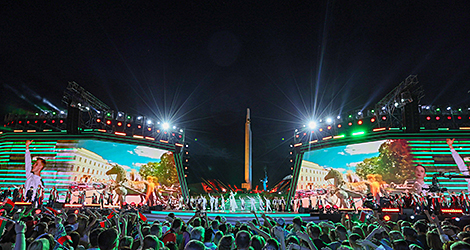
Belarus' events calendar is filled with activities of various themes and formats. Tourists are particularly interested in major music festivals, colorful holidays, unique traditions not found anywhere else in the world, concerts by popular artists, and large-scale sports tournaments that attract fans from different countries.
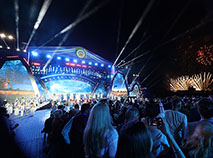
A unique cultural brand and mega-event, known far beyond Belarus, is the International Arts Festival Slavianski Bazaar in Vitebsk. Every year for a week in July, it transforms the "northern capital" into a city that practically never sleeps. The program includes dozens of events: concerts at the famous Summer Amphitheater, in auditoriums and in the open air, popular international contests for young and junior singers, theaterical performances, a humor cup, thematic festivals within the main festival, the Gorod Masterov (City of Masters) arts and crafts fair, exhibitions, vernissages, and master classes, rendezvous and meet-and-greets with celebrities…
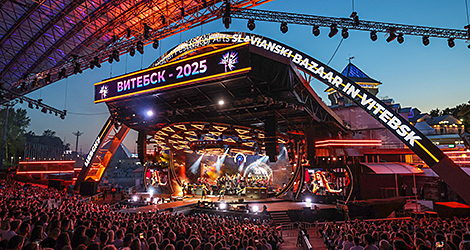
Over the decades, the Slavianski Bazaar in Vitebsk, founded in 1992, has become one of the largest festivals in Europe and, without exaggeration, a world-class show. In 2000, it set a record by gathering representatives of absolutely all Slavic peoples on its stage. Annually, the forum attracts thousands of participants and guests from dozens of countries. It is likely that in terms of the number of represented art forms and genres, Slavianski Bazaar in Vitebsk is unmatched in the world.
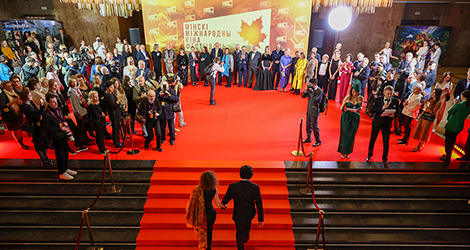
The largest event of the Belarusian cultural autumn is the Minsk International Film Festival Listapad which brings the magic of cinema not only to the capital city but also to the country's regions. For over a week, audiences can watch films from all over the world: new art-house releases, films that have gained recognition at prestigious international festivals, global box-office hits, retrospective screenings of Belarusian classics, animation, and children's, youth, and family films, among others. Naturally, the most intriguing and star-studded evenings are traditionally the festival's opening and closing ceremonies.
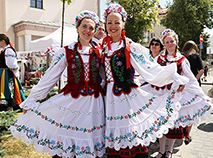
Foreign visitors may find events dedicated to Belarusian national holidays (both state and folk holidays) particularly interesting. Belarus celebrates Victory Day (9 May) and Independence Day (3 July) on a grand scale: these occasions feature major concerts, military parades or processions, public festivities, open-air exhibitions, and more.
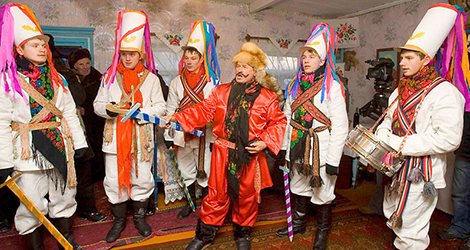
In winter, lively New Year's celebrations and cozy Christmas festivities with markets, concerts, and street performances are popular. Various regions of Belarus host authentic Kalyady (Christmas) rites, such as the Kalyady Tsars in Semezhevo, which has been included in the UNESCO Intangible Cultural Heritage list.
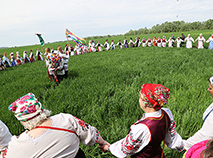
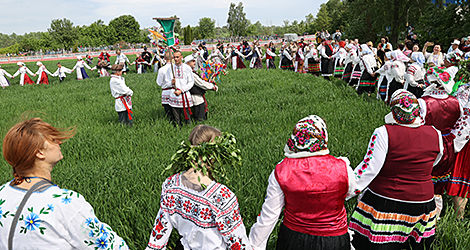
As spring approaches, Belarus joyfully celebrates Maslenitsa and holds the Calling of Spring festival. Major Christian celebrations (Easter, Trinity) in spring and summer intertwine with folk traditions, and during this time, one can also witness interesting authentic rites, including the Jurauski Karahod (St. George's Round Dance) from the UNESCO Intangible Cultural Heritage list.
Summer in Belarus is the time for open-air festivals: music, food, ethno-cultural, historical, large-scale sports, motorcycle festivals, and more.
Today, virtually every region of the country has its own signature festival celebrating local cultural traditions, local products, the past and famous landmarks. Popular ones include:
-
Cherry Festival in Glubokoye;
-
Motalskiya Prysmaki (Motol Delicacies) in the agro-town of Motol, Ivanovo District;
-
Ivie Tomato in Ivie;
-
Batskava Bulka (Father's Loaf) in Svisloch;
-
Annensky Kirmash (St. Anne's Fair) in Zelva;
-
Autsyuki Folk Humor Festival in Kalinkovichi District, Gomel Oblast, and others.
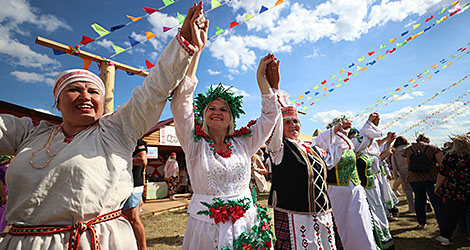
The largest festivals focusing on the rich culture of Belarusians, as well as good neighborly relations and friendship with other peoples have grown into an international format. They are well-known far beyond the country's borders and unite thousands of guests:
National Kupala Night Festival Alexandria Gathers Friends (agro-town of Alexandria, Shklov District);
Call of Polesie International Festival of Ethnocultural Traditions (Pripyatsky National Park, Petrikov District);
Festival of National Cultures (Grodno, held every two years).
Did you know...
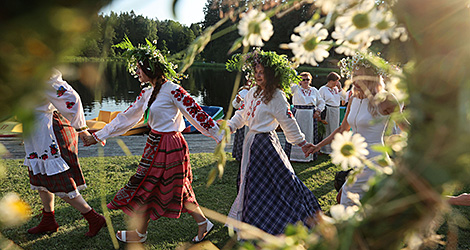
The most beautiful and mystical folk holiday in the Belarusian summer calendar is Kupala Night. Its ancient traditions remain vibrant and are widely celebrated across the country today, in cities and villages on the banks of rivers and lakes, at ethnographic complexes and museums, and in national parks.
Loud, large-scale open-air music festivals are very popular in Belarus and attract fans from across the country and abroad. They feature famous headliners and trending artists on the line-up, live music until dawn, powerful sound and light systems, fireworks, entertainment, and bustling campsites. All these events meet world-class standards. And most often, they are held in locations that can amplify the experience even further.
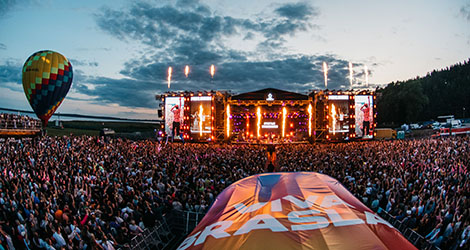
Largest open-air music festivals in Belarus:
-
Viva Braslav on the central beach in the resort town of Braslav (Braslav Lakes National Park, Vitebsk Oblast);
-
Solntsestoyanie (Solstice) rock festival (Pruzhany, Brest Oblast);
-
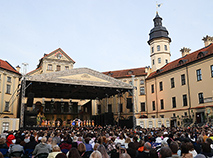
Wostrau Nesvizh Fest in the park near the famous residence, a UNESCO World Heritage Site site (Nesvizh, Minsk Region);
-
LIDBEER music and food festival near the medieval castle (Lida, Grodno Oblast).
In Minsk, the main venue for the musical summer is Dinamo Stadium in the very heart of the capital. It hosts major events like the belbet fest and the city music festival FESTIWOW. Another popular Minsk open-air event is Stereo Weekend, which takes place in the city's picturesque locations like the Botanical Garden and the historic Loshitsa Park.
Throughout all seasons, Belarus' famous landmarks - castles, palaces, and estates, memorial complexes and museums - attract visitors not only with their rich history, architectural, and museum heritage but also with major events of various formats. These include both their own projects and vibrant collaborations with other creative groups.
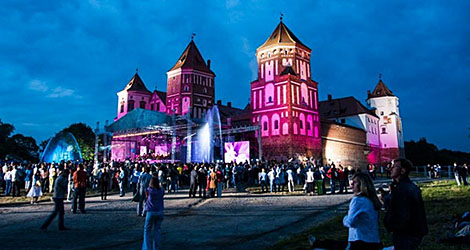
For example, some of the most active hubs of event tourism are Mir Castle and Nesvizh Palace and Park Complex, UNESCO World Heritage sites.
Mir Castle, frequently ranked among Europe’s most beautiful castles, serves as a venue for:
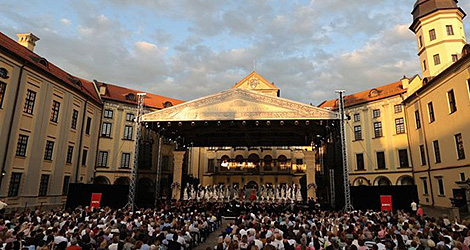
• “Musical Theater in Mir Castle”, which is the grand finale of the Belarusian State Musical Theater’s season.
• High-society balls for both adults and children.
• Concert seasons of the Belarusian State Philharmonic.
The National Historical and Cultural Museum-Reserve Nesvizh, home to a stunning palace and park complex, has established a roster of signature events, including:
• “Bolshoi Theater Evenings in the Radziwill Castle”, which is the culmination of the Belarusian Bolshoi Theater’s season.
• “Jazz in City N” summer festival
• “The Muses of Nesvizh” arts festival
• “Flowers of Nesvizh Grand Fair at the Palace”
• Seasonal balls
• Touring concerts and thematic events aligned with holidays and vacation periods.
Golshany Castle serves as an evocative venue for popular cultural projects, including the “Golshany Castle” festival of medieval culture, “Museum Night at Golshany Castle Walls,” and the “Evenings at Sophia of Golshany” summer series.
The historic grounds of Krevo Castle provide the scene for several key events: the “Krevo on the Tablets of Time” historical reenactment festival, “Krevo Ceramics” and “Museum Night.”
The Michal Oginski Museum Estate offers a roster of notable events, such as the “Return of the ‘Northern Athens’” heritage celebration, the “Dahlias for Michal’s Birthday” flower festival, and balls for adults and children.
Meanwhile, Ilya Repin Zdravnevo Museum Estate is known for regularly organizing engaging, thematic holidays for its visitors. In 2025, it debuted a new project, the nighttime open-air Kupala Fest, which promises to become a major new highlight of the Belarusian summer.
The Augustow Canal is a celebrated landmark of Belarus, renowned for its historical, engineering, and hydro-technical significance, as well as its recreational appeal. It draws visitors throughout the year by hosting major events, including the “Augustow Canal Invites Friends” regional arts and crafts celebration, the “Augustow Canal in the Culture of Three Nations” creativity festival, the Festival of the Sea, the “Augustow Fresh” event, and the Susedzi marathon.
Belarus, a country with deep religious traditions and a multitude of churches from various faiths, welcomes thousands of believers during its major feast days. Beyond traditional church services, these occasions are also marked by rare, unusual, and unique events.
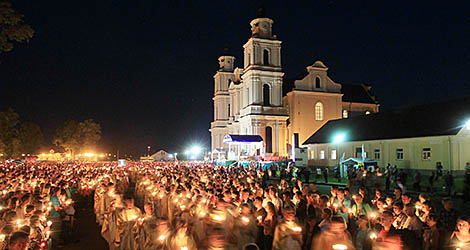
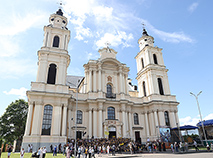
A prime example is the beautiful spiritual holiday Budslau Fest, held each July near the ancient Catholic church in Budslau, located in Minsk Oblast. This celebration is inscribed on UNESCO’s Representative List of the Intangible Cultural Heritage of Humanity.
In the ancient town of Polotsk, where the heavenly patroness and protector of the Belarusian land, St. Euphrosyne, founded an Orthodox convent 900 years ago, annual celebrations in her honor beautifully blend time-honored traditions with new events.
At the Zhirovichi Monastery, the main religious services and holiday celebrations are complemented by the annual veneration of an ancient miracle-working icon and a unique, engaging “Monastery Run.”
Did you know that…
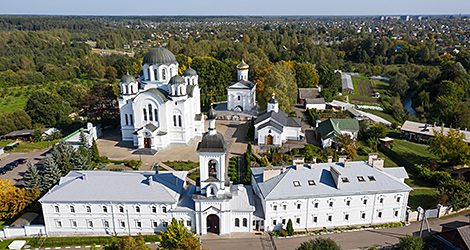
Belarus has established key spiritual centers for its main religious confessions. For the Orthodox, these are the Holy Dormition Stavropegic Monastery in Zhirovichi and the St. Euphrosyne Convent in Polotsk. For Catholics, this is the church in Budslau, which is the National Sanctuary of the Budslau Icon of the Mother of God, an icon crowned by papal authority. The ancient Ivie Mosque serves as the center for Islam, while such a site for Jews is the synagogue in Bobruisk, which features a Jewish courtyard with a Wailing Wall.
Even during a short vacation, visitors to Belarus can craft a rich itinerary that includes several of these destinations and events. Major cultural projects are held in Minsk, regional centers, and other cities. Many have long histories and traditions, and are well-known both domestically and abroad, serving as true calling cards for the country.
Brest: Belaya Vezha (White Tower) international theater festival, January Music Nights international festival of classical music, large-scale events at the Brest Hero-Fortress on Victory Day (9 May), and on the day of the start of the Great Patriotic War (National Remembrance Day of the Victims of the Great Patriotic War and the Genocide of the Belarusian People – 22 June), Brest Motor Music Weekend…
Vitebsk: Beyond the renowned Slavianski Bazaar festival, Vitebsk also hosts the Sollertinsky International Music Festival and the International Festival of Modern Choreography (IFMC).
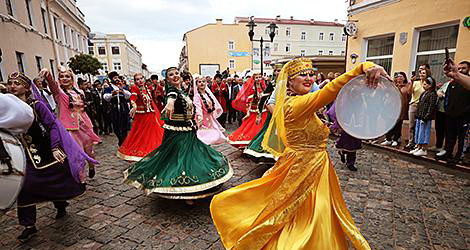
Grodno: Festival of National Cultures, the Kolozhsky Blagovest International Festival of Orthodox Chants, “Lyalki nad Nyomanam” (Puppets over the Neman River) international festival of puppet art.
Gomel: Slavic Theatrical Meetings International Festival, Sozhski Karagod International Dance Festival.
Mogilev: International Youth Theater Forum M.@rt.contact, Golden Hit International Song Contest, Animaevka International Animated Film Festival.
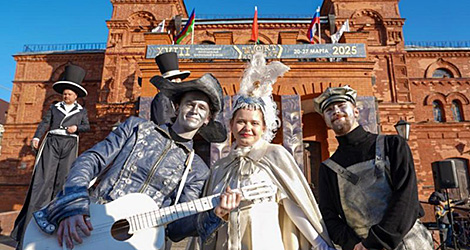
Molodechno: Mala93chna National Festival of Belarusian Song and Poetry.
Polotsk: Bells of Sofia International Festival of Organ Music, International Festival of Ancient and Modern Chamber Music…
• For festivals celebrating Belarusian folk, street, or haute cuisine, visit the GASTRONOMIC TOURISM section.
• For holidays and festivals that showcase cultural heritage of the Belarusian people, explore the ETHNOGRAPHIC TOURISM section.
• For events dedicated to the natural wealth and beauty of Belarus, see the ECOLOGICAL TOURISM section.
• For the country’s business and exhibition events, proceed to the BUSINESS TOURISM section.
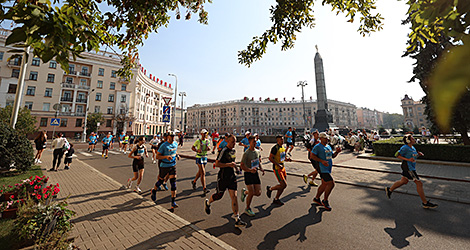
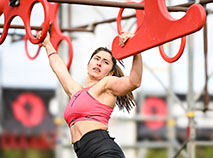
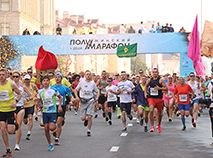
A dynamic segment of event tourism is dedicated to sports and active recreation. In Belarus, where passion for mass sports runs high, numerous amateur tournaments and events are held, including international formats like runs and marathons, sports festivals, holidays, and cycling tours.
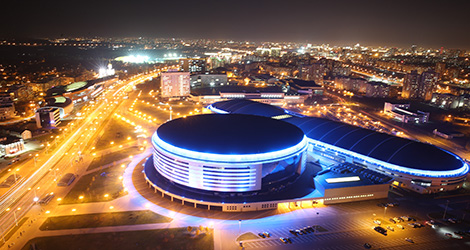
Belarus is also widely recognized as a prominent sporting nation, home to accomplished athletes and an enthusiastic fan base. The country boasts large-scale, world-class venues capable of hosting competitions across a wide range of sports and has a proven track record of successfully organizing prestigious European and world-level events. Today, numerous tournaments continue to be held, despite sanctions from the International Olympic Committee and restrictions imposed by other international bodies against Belarus and its athletes.
Among the largest and most popular mass sports events in Belarus are:
• Minsk Half Marathon, which is the most massive running event in the country;
• Mogilev Half Marathon;
• Vytoki sports and cultural festival;
• Viva Rovar cycling carnival;
• BISON RACE extreme obstacle course racing competition;
• Motol Regatta water tourism festival;
• Neman Spring multi-discipline water tourism competition;
• Susedzi cycling marathon;
• Sol Polesya cycling marathon;
• Yazylskaya Desyatka national running festival;
• Swamp (peat) football tournaments, etc.
Events calendar 2026
When planning a trip to Belarus, you can find out about upcoming events in:
The monthly events calendar on belarus.by;
The seasonal events calendar from the National Tourism Agency .
Venues
Belarus’ visa waiver for event participants and fans
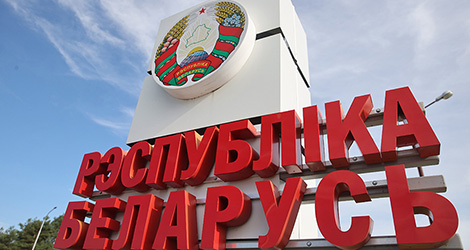
In addition to a long-term visa wiver that citizens of dozens of countries can use when organizing a trip to Belarus, the country also has a practice of introducing visa-free travel for the duration of particularly significant, large-scale events.
Past examples of this include the 2014 IIHF World Championship, the 2019 European Games, and the 2023 CIS Games. This format is used annually for participants and visitors of the international arts festival Slavianski Bazaar in Vitebsk.
The main conditions for the event-based visa waiver are the purchase of tickets to the event and compliance with the entry and exit dates. It is also important to adhere to other rules to ensure the journey is as comfortable as possible.
 print version
 make home page
 add to bookmarks