


Venues
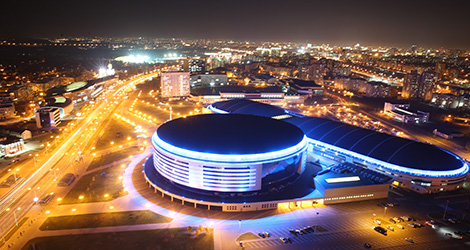
Modern Belarus is actively developing its infrastructure for the convenience of both its residents and international guests. A key priority is the creation and timely modernization of event venues.
Furthermore, when hosting major international events, Belarusian organizers strive to provide the most attractive conditions for all guests, including participants, spectators, and fans alike. These include visa-free travel, a wide range of accommodation options, dedicated fan zones, diverse entertainment, and affordable prices.
Belarus has earned high praise for hosting major international events, such as the Junior Eurovision Song Contest (2010, 2018), the IIHF World Championship (2014), the 2nd European Games (2019), and the 2nd CIS Games (2023).
Belarus now boasts large-scale arenas and facilities designed to host thousands of visitors at once, all outfitted with cutting-edge technology. Many of them are highly ranked among event venues in Eastern Europe and the continent in general.
Today, Minsk is among the top ten largest capitals in Europe and is undoubtedly a comfortable venue for international, regional, and national-level events. This is due in part to its geographical location, high standards of security, and world-class infrastructure.
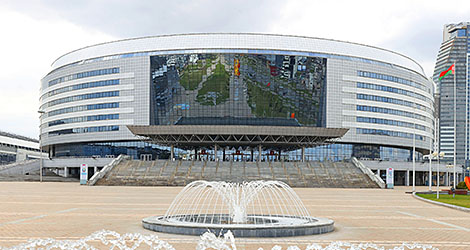
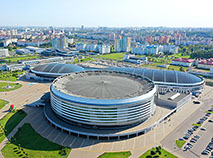
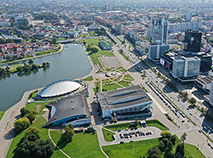
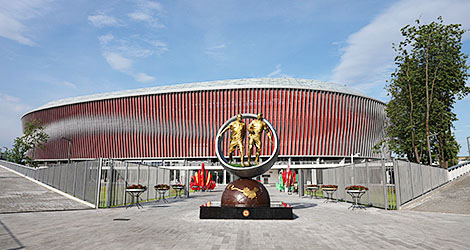
Minsk Arena, one of Europe's largest sports venues, is equipped to host events for over 30 different sports. It includes a multifunctional main arena with a capacity of up to 15,000 people, a speed skating stadium with stands for 3,000 spectators, and a velodrome for 2,000 people. It is the largest indoor venue in Minsk, hosting major sports tournaments, solo concerts and all-star shows, large-scale shows, and state-level events. Minsk Arena is home to HC Dinamo Minsk and ranks as the second-largest arena in the KHL, after St. Petersburg's SKA Arena.
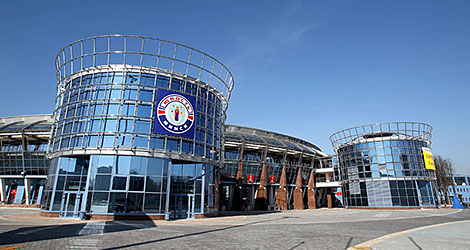
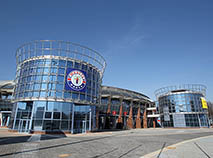
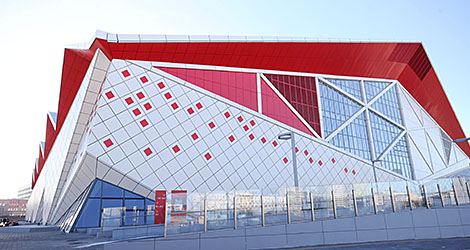
Chizhovka Arena, built in the southeastern part of Minsk on the bank of a reservoir, features an architectural design reminiscent of flowing water droplets. It is the second-largest indoor venue in the Belarusian capital after Minsk Arena and serves as the home venue for HC Yunost. The large-scale complex, with an area of almost 70,000 square meters, includes a main arena (for tournaments and events) and a minor arena (for training and warm-ups). The connecting section between them is a zone for business platforms, press halls, and entertainment objects. The seating capacity of the main arena is about 9,000 people.
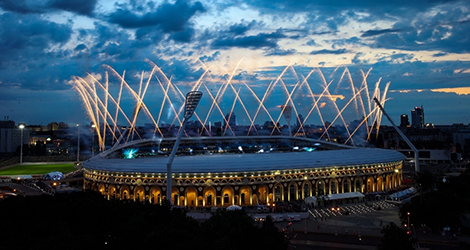
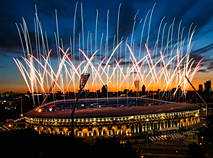
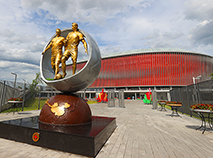
Dinamo National Olympic Stadium is a celebrated historical and sporting landmark in Minsk. Opened in 1934, it has undergone numerous changes over the decades and underwent its most extensive reconstruction between 2012 and 2018. While the legendary stadium's architectural appearance has changed significantly, all its historical elements were meticulously preserved. Following an extensive modernization, Dinamo emerged as a premier, world-class track and field venue. The stadium's capacity is 22,246 spectators. The facility, located in the very center of Minsk, hosts major sporting competitions (athletics, football), concerts, and vibrant open-air music festivals.
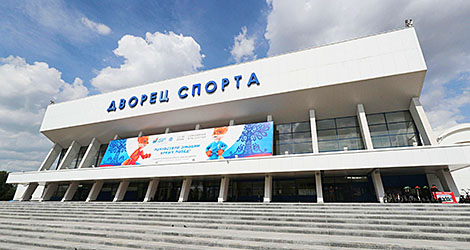
The Minsk Palace of Sports, built in 1966 in the city center on the banks of the Svisloch River, remains one of the most popular sports and entertainment venues and a recognizable architectural symbol of the capital. Today, the complex includes, in addition to the main arena, an indoor ice rink and a mobile seasonal rink. The Palace's main venue has a capacity of 3,000 to 4,500 spectators (with a floor seating arrangement) and can be transformed in just a few hours to host a show or a sporting event (for 22 different sports).
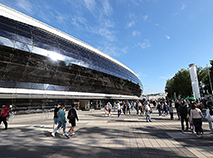
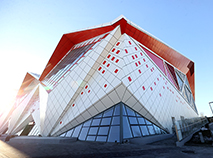
National Football Stadium, opened in Minsk in June 2025, earned the status of the highest-capacity arena in Belarus. Its scale and facilities are impressive: 33,145 seats, VIP boxes, media facilities and a large press center, a gym, locker rooms, a children's center, commercial spaces, underground and surface parking, a park area, and more. As a football venue, it is a world-class arena which complies with the UEFA Category 4 standard, allowing it to host major finals of the FIFA World Cup and UEFA European Championships, the Champions League and Europa League, and the UEFA Super Cup. It has all the necessary features: a pitch heating system, an irrigation system, two large screens, and first-class infrastructure.
A landmark sports facility in Minsk is the world-class swimming pool that opened in 2024. It is a unique venue for Belarus and one of the best in Europe. The facility is divided into competition and public zones. The facility provides athletes with 50-meter swimming and diving pools and a specialized hydro-channel for training, while the public zone offers two 25-meter pools and a pool for children. The complex's stands can accommodate over 6,000 spectators. The swimming pool became the first in Belarus to meet the highest class (AC-5) of World Aquatics, allowing it to host World and European Championships in aquatic sports.
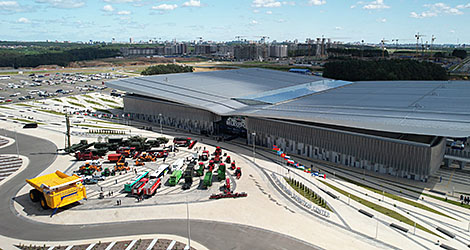
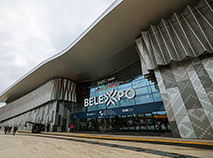
The Minsk International Exhibition Center is the main venue in Belarus for large-scale exhibitions, congresses, business events, forums, conferences, and conventions. It commenced operations at the end of 2024 and was officially opened with the participation of the head of state in May 2025. This modern complex has no equal in the country in terms of its transformational capabilities, innovation, flexibility, and mobility. The Minsk International Exhibition Center occupies a territory of 22 hectares, with a total building area of 37,000 square meters. Inside are two large halls with areas of 6,000 square meters and 8,600 square meters and a ceiling height of 14 meters, allowing for events ranging from small presentations to large-scale gatherings. In addition to multifunctional spaces, it includes a congress hall, conference rooms equipped to modern exhibition complex standards, a large restaurant, and a VIP area for hosting high-ranking visitors. The Minsk International Exhibition Center can accommodate up to 15,000 people per day.
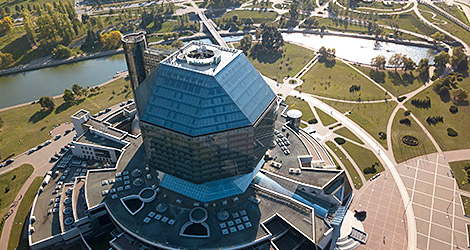
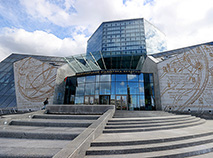
One of Minsk's prestigious event venues is the National Library of Belarus. It is the country's largest information, social and cultural center, a high-status congress and exhibition facility, and, of course, a unique architectural symbol of modern Minsk. The National Library of Belarus is listed among the most unusual buildings in the world.
Modern Minsk is a city comfortable for event tourism. Intuitive navigation, quality transport infrastructure, accessible accommodation options, and a variety of events make a strong case for choosing the Belarusian capital. Moreover, when hosting major international events, Minsk becomes even more visitor-focused, with additional transport routes, service facilities, and entertainment zones being set up. The Minsk Student Village, a unique residential complex in the CIS with all the accompanying infrastructure, capable of hosting about 10,000 people, is transformed into the largest hospitality and affordable accommodation area.
Other major event venues in Belarus include:
-
The Raubichi National Olympic Training Center for Winter Sports (a world-class center for biathlon, cross-country skiing, and freestyle);
-
The Staiki National Olympic Training Center;
-
The National Olympic Training Center for Equestrian Sports and Horse Breeding in Ratomka;
-
The Silichi National Ski Center;
-
The National Olympic Training Center for Rowing Sports (the regatta course in Zaslavl);
-
Borisov Arena;
-
Bobruisk Arena, and others.
 print version
 make home page
 add to bookmarks