



Events
West isolates, Belarus builds bridges. Whose strategy is winning in a multipolar world?
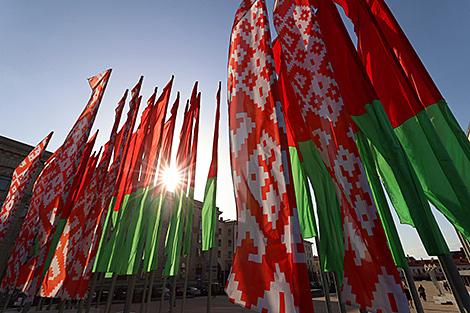
An archive photo
The first official visit of Belarusian President Aleksandr Lukashenko to the DPRK made waves around the world. Expert and media communities are still buzzing to this day. A similar reaction could be observed back in November-December 2025 when the head of state embarked on a major working trip to the geographically distant countries.
Bridges instead of barriers - this is perhaps how one can describe Belarus’ foreign policy strategy, which today is being closely examined even by opponents in the West. Thanks to this strategy, Belarusians are successfully adapting to a multipolar world, forging new paths, and occupying advantageous niches while Western countries, hostages of their own sanctions policies, are forced to watch from the sidelines.
“Unlike neocolonial models, Belarus believes that cooperation should bring real benefits to people. Therefore, Belarus is working not only trade but also technology transfer, training of local specialists and creating jobs. Minsk chooses partners among those who 'see the world through the same eyes', who share a commitment to the UN principles, respect for sovereignty, and non-interference in internal affairs,” the analytical publication Caliber.az wrote analyzing the results of the President of Belarus major working trip.
During that trip, the head of state visited four regions of the world, namely Central and Southeast Asia, the Middle East, and North Africa. the West showed a particular interest in Lukashenko’s visit to Myanmar, which possesses vast natural resources and holds an exceptional geostrategic position. As Bloomberg noted, the Belarusian president became the first European leader to visit Myanmar in the past five years.
But why does Minsk today have the opportunity to do business with Naypyidaw, while the West is forced to stand on the sidelines? The whole point is that Belarus came to Myanmar as a friend and partner, offering cooperation on an equal footing. Western states also tried to enter Naypyidaw but only after first subjecting the country to sanctions. Myanmar held its ground, and the West was left with nothing.
The European publication Modern Diplomacy dedicated a lengthy analytical piece to the visit of the Belarusian president to Naypyidaw under the headline “The Belarus Playbook: How Myanmar Learns from Lukashenko”. The publication highlighted the success of Belarus” foreign policy strategy, with multi-vectorism becoming its hallmark.
Thus, Belarus, while maintaining close ties with Moscow, Belarus’ active diplomacy in the post-Soviet space is noteworthy, where Minsk is particularly friendly with Azerbaijan and the countries of Central Asia. Minsk is building ties with Beijing and developing a dialogue with Washington.
“Myanmar could learn from Belarus the art of multi-vector foreign policy,” the publication noted. “Lukashenko’s visit provides an opportunity to creatively develop the potential of Myanmar diplomacy.”
At the same time, Modern Diplomacy suggested that Belarus could act as an intermediary in establishing contacts between the government of Myanmar and the administration of Donald Trump.
And this is a rather interesting point. Similar thoughts were also voiced in the context of Lukashenko’s visit to North Korea. Western media noted that Washington is interested in improving relations with both Minsk and Pyongyang.
“Perhaps Trump hopes that Lukashenko will help him resume negotiations with Kim Jong Un,” the publication NK News cites the opinion of political scientist Christopher Monday from South Korea's Dongseo University. The American Institute for the Study of War (ISW) also writes that Lukashenko could act as a mediator between North Korea and the United States to reduce the level of geopolitical tension.
And here, what is primarily interesting is the very fact of how Belarus is perceived on the international stage - not as an isolated state, which the West has actively sought to make it in recent years, but as a geopolitical actor, a peacemaker and mediator, possessing significant political and diplomatic experience to help resolve issues of a global scale. And this perception has been largely shaped by the very same Belarusian strategy - bridges instead of barriers - which is grounded in pragmatism, a commitment to equitable dialogue, and the art of balancing relations.
“In recent months, Belarus has shown signs of thawing relations with the United States,” writes the Belgian publication EUalive in an analytical piece dedicated to Lukashenko’s visit to North Korea. “Belarus was among the first to publicly and formally accept the invitation of Donald Trump’s Board of Peace. This outreach coexists with deepened ties to anti-Western partners, illustrating Lukashenko’s pragmatic strategy of global pressures.”
How is this influence perceived in the West? The American publication The Diplomat believes that Lukashenko’s visit to Pyongyang sets an important “precedent”. “With a model for building bilateral ties and a clear trajectory of rapprochement, the question now is who could be next on the list of North Korea's potential partners,” the publication writes.
This conclusion, perhaps, rings out like a death knell for the policy of isolating and strangling disfavored states with sanctions, and indeed for the entire Western expansionist strategy designed to fragment and crush the rest of the world under its heel. As global transformation unfolds, that strategy is turning into a boomerang, and Western nations are themselves being driven out of several world regions.
Yet Belarusian President Aleksandr Lukashenko warned earlier that Western elites are isolating themselves through their own destructive policies. “Western politicians still believe that they can force everyone to follow their interests by force. And those who do not bend will be isolated. The problem is they do not want to understand or accept today’s reality. Their policy of illegal sanctions and new dividing lines – whether ideological barriers, closed borders or closed skies – is a direct path to self-isolation from the world we are striving for,” Lukashenko said at the third Minsk International Conference on Eurasian Security in 2025.
The West has also extensively tested its policy of sanctions and dividing lines on Belarus. Our country has fought for years for the right to follow its own course, to develop, to gradually change, absorbing the best from the outside world while preserving its identity. This struggle has hardened us, taught us to be more flexible, pragmatic, more assertive and proactive. It also pushes us to explore beyond the horizon for new growth opportunities and to connect even the most remote corners of the world with bridges.
And indeed, the Belarusian strategy works. It allows us to strengthen our economic potential even under harsh sanctions pressure, to gain political weight while navigating extremely complex and tangled geopolitical conditions, and to remain an active player on the international stage – to defend ourselves and protect our national interests.
At the same time, our strategy – bridges instead of barriers – is universal. It also suits Europe, which, amid global transformation and turbulence, is facing multiple crises and demonstrating low adaptability and resilience. In the end, one can spend years being afraid of changes in the world and denying reality, losing time and missing opportunities. Or one can follow Belarus’ example, adapt to the new world order, and accept the world as it is – amazing in its diversity and full of prospects.
 print version
 make home page
 add to bookmarks