



Events
Statements, meetings, agreements: New details of Belarus FM’s visit to New York
Screengrab/webtv.un.org
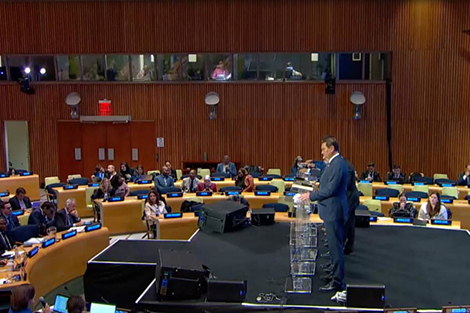
MINSK, 24 September (BelTA) – On 23 September, Belarusian Minister of Foreign Affairs Maxim Ryzhenkov took part in high-level events and held bilateral meetings on the sidelines of the 81st session of the UN General Assembly, BelTA learned from the ministry’s press service.
During the CSTO ministerial meeting, the parties discussed cooperation ahead of the CSTO Collective Security Council session scheduled for 11 November 2026, as well as prospects for building an architecture of equal and indivisible security in Eurasia.
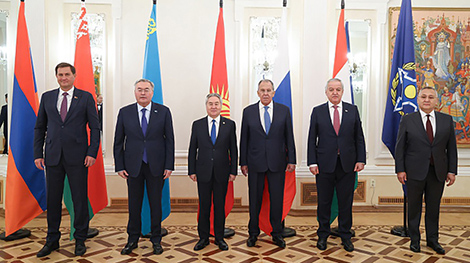
The Belarusian foreign minister pointed to the Eurasian Charter of Diversity and Multipolarity in the 21st Century, talks on which are set to take place at a ministerial meeting of Eurasian countries on the sidelines of the UN General Assembly session on 25 September.
Maxim Ryzhenkov briefed his counterparts on the priorities of the Belarusian delegation at the 81st session of the UN General Assembly. Following the meeting, the CSTO member states agreed to coordinate their actions during the current session.
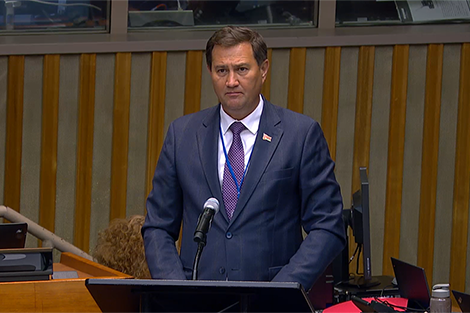
At the High-Level Meeting on Climate Action and the Just Transition, the minister outlined the main reasons hindering an effective response to climate challenges. He focused particularly on illegal unilateral coercive measures that restrict access to clean technologies and renewable energy sources for many nations. Maxim Ryzhenkov stressed that the airspace boycott against Belarus and Russia intentionally extends flight paths and multiplies the carbon footprint. In this context, the Belarusian foreign minister pointed to the West’s manipulation of the green agenda, calling for an end to double standards and the politicization of environmental issues, while advocating for collective efforts to overcome the climate crisis.
At the High-level Meeting to commemorate the 40th anniversary of the Declaration on the Right to Development, the Belarusian foreign minister outlined the main systemic obstacles facing the international community that prevent progress toward adopting an international covenant on the right to development. Among them, he noted attempts by Western states to curb the development of the Global Majority nations through illegal unilateral coercive measures, artificial barriers to trade and technological exchange, and the imposition of so-called democratic models and reforms.
The minister spoke out against the “might makes right” policy and called for the creation of a new architecture of international economic cooperation focused on the interests of people rather than Western elites. Regional blocs such as BRICS and the SCO were cited as positive examples of how such mechanisms operate.
On the sidelines of the UN General Assembly, Maxim Ryzhenkov also held several bilateral talks. During a meeting with Ghana’s Minister for Foreign Affairs Samuel Okudzeto Ablakwa, the parties reviewed the implementation of trade and economic projects outlined by the two countries’ leaders during the official visit of Ghanaian President John Dramani Mahama to Belarus. The diplomats noted the successful experience of cooperation in agricultural mechanization and expressed interest in developing related projects.
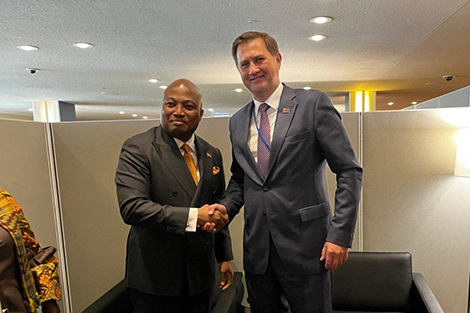
The foreign ministers reviewed food security issues, including supplies of Belarusian food and fertilizers, as well as expanding reciprocal deliveries of Ghanaian products, such as cocoa beans, to Belarus. The parties touched upon cooperation in education and reaffirmed their readiness to continue mutual support on the international stage. Furthermore, the diplomats emphasized the importance of an objective assessment of the historical consequences of colonial policies and agreed to continue joint efforts in this direction.
During the meeting with Minister of Foreign Affairs of the Republic of Maldives Iruthisham Adam, the parties reaffirmed their mutual interest in expanding cooperation in tourism and agreed to step up collaboration within international organizations on issues of mutual interest. The foreign ministers expressed readiness to develop the legal framework, including in the field of air services.
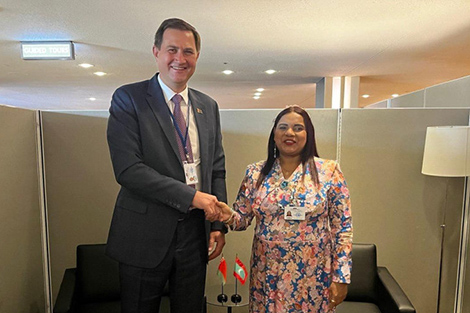
Education, medical training, tourism, recreation, and supplies of Belarusian food products were highlighted among the promising areas of cooperation. Following the talks, the two top diplomats signed an intergovernmental agreement on a mutual visa waiver.
During a meeting with President of the International Committee of the Red Cross (ICRC) Mirjana Spoljaric Egger, the parties emphasized the need for a direct and constructive dialogue. They also exchanged views on the potential contribution of humanitarian organizations to helping resolve the conflict in Ukraine and addressing related humanitarian issues.
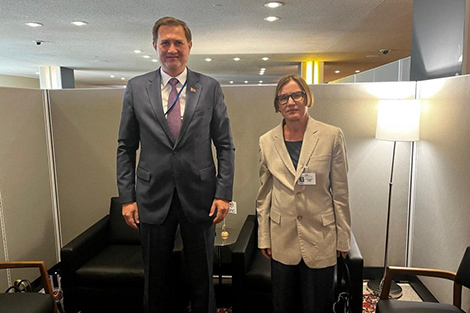
Significant attention was paid to the prospects of expanding ICRC programs in Belarus, including specialized training sessions and briefings, the exchange of expert knowledge, and the provision of technical assistance. The possibility of organizing a visit by the ICRC chief to Belarus was also discussed.
The talks with Azerbaijani Foreign Minister Jeyhun Bayramov focused on key areas of bilateral cooperation. Maxim Ryzhenkov and Jeyhun Bayramov noted the high dynamics of political contacts and coordination between their foreign ministries, including within international organizations. They reviewed prospects for joint trade and economic projects, including supplies of Belarusian machinery and food, alongside Azerbaijani fruit, vegetables, and nuts.
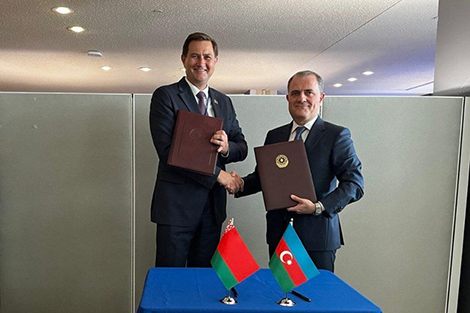
Following the meeting, the ministers signed a cooperation plan between the foreign ministries of Belarus and Azerbaijan for 2027–2028, as well as a memorandum of understanding on cooperation in consular affairs.
 print version
 make home page
 add to bookmarks