
Events
Minister: Belarus’ approach to licensing in education is balanced
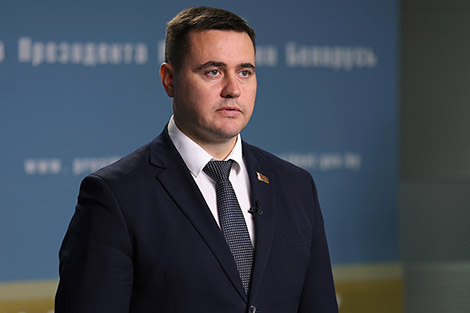
MINSK, 10 September (BelTA) - The approach to licensing in education in Belarus is very balanced, Education Minister Andrei Ivanets told the media following a meeting with the Belarusian president to consider proposals on introducing licensing for supplementary education for children and young people among other topics on 10 September, BelTA has learned.
“The president gave a very clear message: education is a state-forming sector. And it is the state that must coordinate and exercise control over this activity at all levels of education. That was the case in Soviet times and, of course, that is how it should be today,” the minister said. “We are taking a very balanced approach to licensing. Given that a license is issued for an indefinite period, we see no problems either from the point of view of administering this procedure or from the point of view of the costs - both human and financial - of carrying it out.”
At present, five of the six levels of basic education in Belarus are licensed (preschool, general secondary, vocational-technical, secondary specialized and higher education), as well as three educational programs of supplementary education for adults (advanced training of managers and specialists, retraining at the higher education level, and retraining at the secondary specialized education level). In the process of preparing a draft law on licensing in the government, the education ministry proposed expanding the list of licensed educational services to include supplementary education for children and young people.
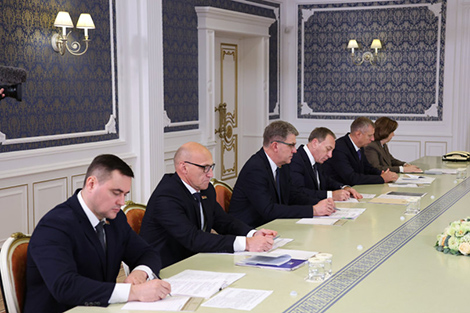
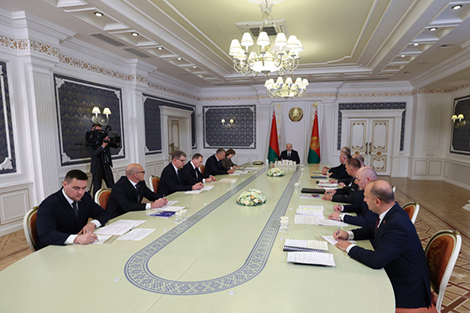
“Every parent who sends their child to an educational institution, regardless of the level, whether it is a kindergarten, school, college or university, wants their child to be safe and to receive a quality education. Supplementary education for children and young people is no exception. That is why the proposed provisions on introducing licensing are not excessive. They are aimed at ensuring the minimum requirements that apply to the educational process in general. These are the availability of suitable premises, sanitary and hygienic certificates, and qualified teaching staff,” the minister said.
Andrei Ivanets noted that Belarus has a very extensive system of supplementary education for children and young people. In addition to numerous state institutions, around 500 private organizations operate in this area. “To start this type of activity, it is necessary to have educational programs approved by local executive authorities. That is why this [the licensing proposal] is essentially a formalization of the work that is already being carried out locally,” the education minister said. “The state creates all the conditions for our children to be able to pursue absolutely all areas in their extracurricular time. Every parent has the right to choose. And we, for our part, must fight for every child, because quality, diversity and the programs on offer should be the only reference points for our children and parents.”
 print version
 make home page
 add to bookmarks