


Events
‘Good neighborliness is the Belarusian way of life.’ How Lukashenko sought new anchors in the East and his message to the West
Every period in the history of independent Belarus can be considered a turning point. Even if it was, by global standards, a perfectly ordinary year. By building relationships with global players and neighboring countries, and by balancing between domestic challenges and major international projects, the young country has successfully demonstrated that its commitment to a sovereign future and a multi-vector foreign policy is not merely a lofty slogan, but a practical strategy for the nation's survival and development. In a new episode of BelTA's YouTube project “How it Was” we go back to 2017. It was a year when Belarus put forward bold initiatives and unexpected solutions, opening itself to the world in a new way. A year when Aleksandr Lukashenko, speaking against freeloading, faced provocations and once again rebuffed the attempts to destabilize the situation in Belarus. A year when the country made breakthroughs in industry, thereby fulfilling the dreams of the head of state. Do you want to know how it was? Let’s dive in.
Why Belarus launched visa waiver
Belarus started 2017 on a positive note. In January, a presidential decree introduced a five-day visa-waiver for citizens of 80 countries. The document was in development for over a year and a half and was thoroughly vetted by all government agencies, primarily from the perspective of potential risks to the country and its allies. However, it appeared that not all neighboring countries were pleased with this decision by the Belarusian side.
“This media campaign, I don't know... Sometimes you read the comments by these authors and you're just astonished. These are the people who either don't understand the essence of the matter whatsoever or are deliberately stirring up tensions. The visa waiver does not mean the abolition of control. Border control remains in place. You will definitely be checked: who you are. Therefore, this outcry from some of our neighboring states is simply an attempt by certain forces to express their dissatisfaction. We have not violated anything in terms of our domestic legislation. It is our sovereign right to allow citizens of other countries to enter and exit the country. And we have not breached any of our agreements with other states. We strictly adhere to everything we have agreed upon,” Aleksandr Lukashenko said as he approved the border security documents.
According to the data from border guards, nearly 80,000 foreigners took advantage of the new opportunity during the year. The most frequent travelers were citizens of Germany, Poland, and Italy. All in all, in 2017 Belarus welcomed visa-waiver visitors from 65 countries, including from the faraway Panama, Nicaragua and Antigua and Barbuda. Overall, the effect of this decision proved to be quite tangible.
At the end of the year, Aleksandr Lukashenko signed a decree establishing visa-free entry for up to 10 days. However, for now, this applied only to visitors of the tourist and recreational zones of Brest and Grodno. Simultaneously, the government was preparing proposals for further liberalization of the visa regime. Step by step, these were implemented, and now Belarus's experience can truly be considered unique.
How Belarus discovered Africa for itself
Where are Belarusians welcomed with open arms without visas, even in winter? That's right, in Egypt. In February 1992, diplomatic relations were established between our countries. Moreover, Egypt was one of the first states to recognize Belarus' sovereignty and independence. On the eve of the 25th anniversary of diplomatic relations, Aleksandr Lukashenko went to Cairo on an official visit.
Following the revolutionary events in 2011 and 2013, Egypt sought to diversify its foreign policy by relying on what it described as its “tested friends”. Among the friends is Belarus. For Minsk, diversifying its trade was equally important, and Cairo became not only a key political and economic partner in North Africa but also a crucial foothold across the entire continent.
Aleksandr Lukashenko and Egyptian President Abdel Fattah al-Sisi agreed to enhance trade and economic ties and establish industrial cooperation using Belarusian technology and expertise. Discussion of humanitarian ties, including cooperation in science, education, healthcare, culture, tourism, and sports, has also become traditional.
“You, Mr. President, said that Belarus has always supported Egypt in all international forums and venues. I want to assure you that we will continue to act and proceed along this course. You will never doubt or regret having good relations with the Central European state named Belarus,” the Belarusian leader said during the talks in Cairo.
Economic and defense issues served as the cornerstone of Belarusian-Egyptian cooperation. Therefore, in Cairo, Aleksandr Lukashenko also held meetings with Prime Minister Sherif Ismail and Minister of Defense and Military Production Sedki Sobhy. The Belarusian president emphasized: no topics were off-limits in the relations between Belarus and Egypt. Minsk was ready to lend a shoulder to its partners on any issue, if they were interested in it.
“Our potential in the economy and in other areas are much bigger than we need. This is partly a legacy from that great country, the Soviet Union, in which we lived. At that time, Belarus was the high-tech hub of the Soviet Union. We hosted all the final manufacturing stages of the goods the county. And a solid scientific foundation supported this entire economic base. We have preserved all of this. Moreover, we elevated it to a higher, modern level. Therefore, we can be competitive in your market. As I have already told the President, this will be significantly cheaper for you than cooperation in these areas with other countries, primarily with Western nations,” Aleksandr Lukashenko said.
Today, many countries, especially major global players, are striving to gain influence on the African continent. Some are stopping at nothing to reach this goal fueling conflicts and eliminating competitors. Others are excessively mercantile, seeking to quickly capture markets or exhaust available resources. Belarus has chosen a different path. It does not merely supply equipment to African partners. It brings technologies, trains local specialists, and establishes joint ventures. In our view, Africa holds a significant promise, and the world will become a better place if all countries adopt a similar approach.
After Egypt, Aleksandr Lukashenko went to Sudan on his first official visit. Upon arrival in Khartoum, the Belarusian leader was personally welcomed at the aircraft steps by President of Sudan Omar Hassan Ahmad al-Bashir. The two nations have built excellent political relations. As Aleksandr Lukashenko noted, the next step is to advance economic partnerships. Belarus possesses technologies capable of enhancing Sudan’s food security and strengthening its agricultural potential in crop production, livestock farming, land reclamation and dairy industry.
“Sudan has become one of our most important partners on the African continent. Our country consistently pursues an independent foreign policy, guided solely by our national interests and not by the interests of global powers. Our approach is to develop relations with all states based on a spirit of mutual respect, non-interference, and an acknowledgment of the diversity of development models. This ongoing visit serves to reinforce our existing achievements and to define new, promising directions for our partnership,” the president said during the talks.
Belarus was ready to participate in projects to develop Sudan’s manufacturing industry and infrastructure. Common ground was found in the agricultural sector and defense. There were a lot of plans, but unfortunately, the political situation in Sudan put relations between Minsk and Khartoum on hold.
Why was Belarus interested in cooperation with Serbia?
Upon returning home, Aleksandr Lukashenko focused on developing cooperation with European partners. During the visit of Serbian Prime Minister Aleksandar Vučić to Minsk, the Belarusian head of state immediately clarified his priorities: Belarus fully respects Serbia’s sovereign path and is committed to maintaining and developing mutually beneficial relations. This model of partnership – free from preconditions or demands, grounded in equal dialogue and unwavering mutual support – stands as a testament not only to genuine friendship but also as an example for many European politicians.
“We have no choice but to build our cooperation in order to withstand and thrive in this turbulent world for the good of our states and peoples. I fully acknowledge that Belarus and Serbia currently find themselves in different circumstances despite a common trend. I have assured my comrade, the president of Serbia, that Belarus will never fault Serbia for pursuing its own path. Indeed, we must reflect on our own role in creating the situation where Serbia found itself; perhaps we did not do enough to build closer ties following the collapse of the Soviet Union,” the Belarusian leader said. “We are ready to do everything in our power for you. Even in the most difficult of times, we have always supported you (and will keep doing it) even when it was to our disadvantage. We held a principled stance, including on such matters as the integrity of your state.”
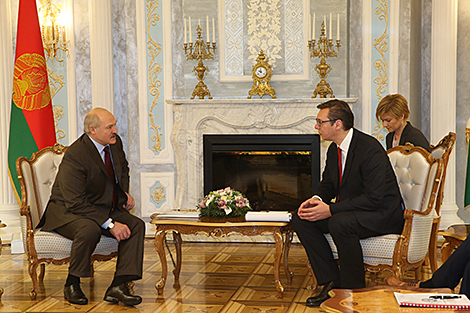
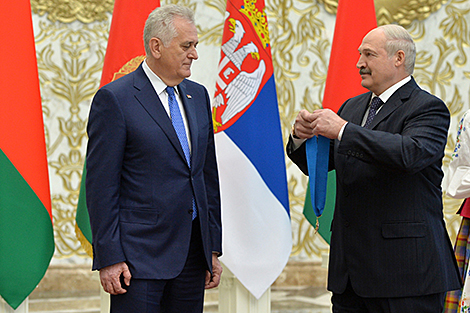
Several months later, Aleksandar Vučić was elected President of Serbia. Aleksandr Lukashenko awarded the outgoing President, Tomislav Nikolić, the Order of Friendship of Peoples for his significant contribution to strengthening peace, bilateral ties and cooperation between Belarus and Serbia.
As we have recounted in earlier episodes, during the NATO bombings, Aleksandr Lukashenko’s daring flight to Belgrade was a bold gesture of unwavering solidarity that surprised many. This act, undertaken on behalf of the Belarusian people, was received with profound gratitude by the Serbian people.
“Tomislav Nikolić visited Belarus even before being elected president, offering his open, honest, and principled support. He took a firm stance in defending the interests of the Belarusian people, and that is what matters most. We have to cooperate with sitting presidents, regardless of personal relations or our attitudes to political regimes in their countries. As an individual, even before his presidency, Tomislav Nikolić had already shown a special regard for our nation,” Aleksandr Lukashenko said upon presenting the award to his Serbian friend.
Why did Lukashenko launch reform of government agencies?
What was Belarus’ domestic situation during this period? Economically, the government was actively seeking new growth drivers, exploring unconventional and innovative solutions. Several promising avenues were identified, which we will examine shortly.
Concurrently, Aleksandr Lukashenko initiated a comprehensive audit of government bodies, beginning with the Belarus President Administration. This reform aimed at enhancing efficiency, eliminating red tape, and improving the government’s agility in responding to political, economic, and social shifts. The head of state’s directive was clear: every issue of concern to citizens must be addressed.
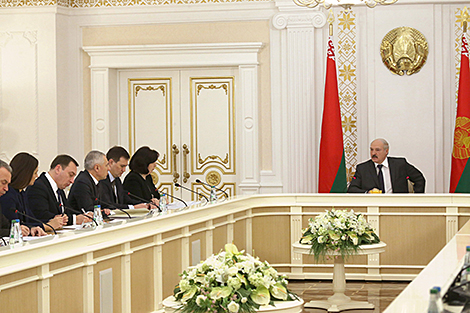
“The imperative to optimize the state apparatus is non-negotiable. Continuous personnel renewal is critical, ensuring that only individuals with passion, a strong work ethic, and a dedication to the state remain in its ranks. This is the only acceptable path. This is the kind of people that should remain.” I reiterate that the key objectives for the president are debureaucratization, alongside sound ideological, personnel, economic, and legal policies. The current practice of passing normative legal acts to the president through your channel is unacceptable. You can't expect me to be an expert in all of them, and I shouldn't have to be. Some documents I simply have to formalize and sign without even reading. And then what happens six months or a year later? You bring me amendments and changes to those very legal acts. What does that tell us? It tells me that you proposed the president to sign an act, we adopted it, but it turned out to be irrelevant in practice or out of touch with reality. Is that normal?” the head of state said.
The fight against social dependency
These criticisms leveled by Aleksandr Lukashenko at his political team were far from accidental. In 2015, Belarus adopted Decree No. 3 “On preventing social parasitism”. On one hand, the authorities aimed to expose those who were allegedly unemployed yet lived comfortably. On the other hand, it was meant to incentivize unemployed citizens to seek work.
The logic was straightforward: if you are able-bodied but choose not to work, contribute to the economy, or pay taxes, should you still be entitled to free healthcare, utility subsidies, and other benefits? It was a somewhat rhetorical question, but one has to admit, it seemed fair.
Decisions were formalized, but not all real-life scenarios were accounted for on paper, leaving some citizens in a vulnerable position. The authorities rushed to correct their mistakes, but the situation was skillfully exploited by genuine freeloaders - those who had never done anything useful for the country but actively tried to turn life in the state upside down.
“I have not repealed Decree No. 3, nor have I even suspended it. Those who are telling you that are wrong. Decree No. 3 is in effect today. The only thing I demanded, since the authorities were at fault - they sent those ‘notifications’ to people who should and shouldn't have gotten them - is that we suspended the fees for this year. But during this time, we will verify all the lists. The deadline is 1 October. This is to avoid unfairness. We will present everyone with a choice: either get a job, or we will find a job for you. And you understand what kind of job I mean.It is not normal when millions of people are working, and 300,000-350,000 people - that will be the minimum by my calculations - are wandering around aimlessly. 350,000 people who should be working, are not, and bear no burden for maintaining our society - utilities, healthcare, education, defense, security, and so on. Everyone must contribute. So you should know that as long as I am President, I will not back down from this. We must establish order in the country,” Aleksandr Lukashenko said addressing the Belarusians.
The sensational decree served as a litmus test for society. Once people realized the authorities weren't backing down, many actually got their act together and started clutching their jobs. Meanwhile, those who’d been working under the table, pocketing decent money tax-free, suddenly scrambled to register.
Against the backdrop of attempts to destabilize the situation in Belarus, both internally and externally, radical forces became more active. Certain parties were very eager to stir up trouble and steer Belarus down the Ukrainian path. But, as the saying goes, they picked the wrong target. By acting boldly and decisively, the authorities managed to extinguish the planned provocations and made it unequivocally clear that any step to the left or right of the law would be suppressed in the harshest manner.
Yes, some might call this a dictatorship or authoritarianism. But as Lukashenko has said repeatedly, you cannot hold power with an open hand. If you look closely at Belarus, you will see human rights, democracy, order, and security for the people. All of this is ensured by the so-called dictatorship. Let's call it a Belarusian-style dictatorship.
How Belarus built relations with Georgia
The results of this approach were appreciated at the time by Georgia. In March 2017, Georgian President Giorgi Margvelashvili paid an official visit to Minsk. Two years earlier, a Belarusian delegation had been received in Tbilisi. The high-level talks gave a completely new impulse and energy to bilateral relations.As with Serbia, this was an example of how two countries that had chosen different economic paths for their development could build cooperation. The main thing is to respect and acknowledge each other's interests, without creating friction or conflict.
“As a friend, I already told you that it is not right that this is your first time in Minsk. You should have come to visit us long ago. In any capacity. We are always happy to see our Georgian brothers in Belarus. We share more than a common history. On the territory of Belarus, thousands of Georgian citizens, Soviet citizens, fought for its liberation. Many of our Georgian brothers, unfortunately, died liberating and defending Belarus. This is a part of history that is never forgotten and cannot be forgotten. That is why you are very close people to us, and we have always held, and continue to hold, the greatest respect not only for your history but also for the people who live on that heroic piece of land, which today bears the name of free and independent Georgia,” Aleksandr Lukashenko said as he spoke to his Georgian counterpart.
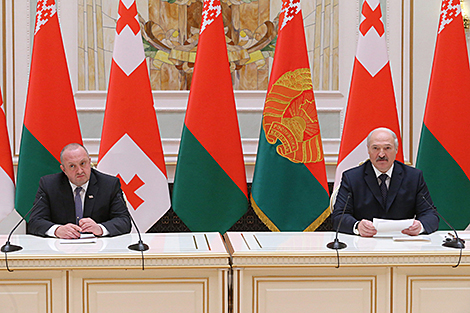
Despite difficulties in the global economy, trade between Belarus and Georgia in those years showed good growth, even if they fell short of planned targets. The parties found many points of mutual understanding and declared their readiness to cooperate in all spheres, bringing, as Aleksandr Lukashenko stated, “the very kindest and most sensitive emotions and notes” to the relationship.
Unfortunately, the shift in the political course of official Tbilisi with the arrival of a new government prevented the implementation of all the planned projects, and the active development of Belarusian-Georgian cooperation was put on pause. However, today, things are slowly falling into place, and perhaps our countries will still manage to reset relations and return to the outlined plans.
Why Lukashenko supported the European Union
Stability is important not only in bilateral cooperation. When the entire region is unstable, what kind of better future can one dream of? Look at what is happening in the European Union. The current situation is merely a continuation of a years-long story that bodes nothing good for this union.
Meeting in 2017 with the Deputy Prime Minister and Minister of Foreign and European Affairs of Belgium, Aleksandr Lukashenko emphasized that Belarus is ready to work for unity and stability in Europe. I don't know about you, but it seems to us that the EU should have valued this approach and supported its Belarusian partners in every way. But the short-sighted and even senseless policy of the Europeans led not just to a freeze in relations with Belarus, but to a fire throughout the entire region. Is there a chance to fix everything? We don't know. Now, we probably have to think about how to prevent even greater problems.
“I am for a multipolar world. And the European Union is precisely one of the most powerful poles, alongside China and the United States of America. The European Union is a strong pillar for the planet; if it disappears, there will be trouble. Therefore, I do not view your ‘Brexits’ positively, and I also do not view your nationalist movements positively. Whatever it takes, the European Union must be preserved. This isn’t just my personal opinion (though it is), but a stance rooted in international state interests. The more pillars there are, the more stable the system. That’s why I’m an advocate for the European Union. But I oppose the double standards the EU sometimes applies. I’d like the European Union to live up to the declarations it presents to the world: honesty, integrity, democracy, and others. We’re not perfect, just like you. But we need to talk and get closer to one another. If you have valuable experience, you should offer and share it. We’re ready to learn. But please keep one thing in mind: sovereignty and independence are sacred for us," the Belarusian leader outlined the major points.
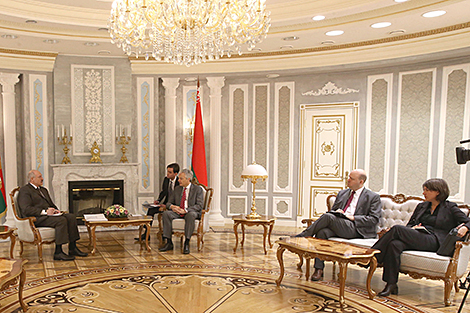
At that meeting, the head of the Belgian foreign ministry noted that Belarus has been increasingly participating in major international processes. Thanks to the positive developments and reforms carried out in the country, significant progress has been made in expanding Belarus-EU cooperation. The European Union saw Belarus as a country that fosters dialogue, though it was not ready for such dialogue itself.
Why Europe feared the Zapad military exercise
Take, for example, the Belarus-Russia military exercise Zapad [West], around which Europeans tried to stir up scandal, artificially escalating tensions and frightening themselves and their populations. Do you think this all started recently?
In fact, the first Zapad exercise was held back in 2009. Even then Belarus and Russia were accused of rehearsing an armed attack on the Baltic states. As you can see, nothing has changed over time. When approving the concept for Zapad 2017, Aleksandr Lukashenko noted that the international situation requires continuous improvement of the skills and readiness of the regional military force to defend the western borders of the Belarus-Russia Union State. In general, Belarus has never hidden and does not hide that even in peacetime it keeps its powder dry.
"The upcoming event is absolutely transparent. I’d like to request that all participants in this event on our country's territory ensure transparency and accessibility for all activities, not only for our friends from the CSTO, EAEU, and CIS but also for representatives from NATO. We have nothing to hide, and we should not hide. If NATO members want to attend our exercise, they are welcome. Moreover, I have already received such signals from them. Once again, I’d like to emphasize to those who are sending these signals: we are not closing ourselves off from anyone. We will invite everyone interested to this exercise. You will see that they are purely defensive in nature,” Aleksandr Lukashenko stressed.
At that time, there was still some uncertainty in Belarus-Russia relations. Certain "experts" even suggested (or perhaps hoped) that the two countries would curtail their military cooperation. But the military exersice became a demonstration of their commitment to ensuring the security of the two brotherly nations.
Economic issues were soon resolved as well. At a meeting in St. Petersburg, Aleksandr Lukashenko and Vladimir Putin found a way to reach a compromise on the oil and gas issues. The presidents also discussed accumulated problems in agriculture and industry and considered expanding joint work in the space sector.
How the old tragedy brought Belarus and Ukraine together
A new chapter also opened in Belarus-Ukraine relations. During meetings on the territories of both states to mark the anniversary of the Chernobyl nuclear disaster, Aleksandr Lukashenko and his Ukrainian counterpart Petro Poroshenko declared their intention to follow a course of friendship and mutual cooperation, developing interaction in a wide variety of areas.
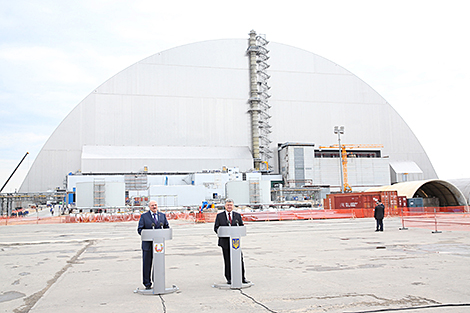
At first, the presidents visited the Chernobyl Nuclear Power Plant, where they honored the memory of the deceased liquidators and laid flowers at the Wall of Remembrance at the Heroes of Chernobyl memorial complex. The heads of state were also briefed on the progress in the construction of a new safe confinement facility and the storage of spent nuclear fuel.
After visiting the nuclear power plant, Aleksandr Lukashenko and Petro Poroshenko together traveled to Belarus to hold negotiations. The heads of state visited the St. Michael’s Church in the agro-town of Lyaskovichi, where they lit candles to commemorate the victims of the Chernobyl disaster. After that they spoke with local residents.During the official talks, the main focus was certainly on trade and economic cooperation. The presidents instructed their governments to make the most effective use of the available tools to support ties between enterprises.
“We agreed to take a fresh look at industrial cooperation and to intensify efforts to create new joint ventures in various sectors of the economy. No topic is off-limits for our states. Priority areas of cooperation include the manufacturing industry, petrochemicals, agriculture, and transport and logistics. Belarus is ready to increase supplies of automobiles, agricultural machinery, fertilizers, and building materials to Ukraine. In turn, we are interested in purchasing metal products and crop and livestock products,” the Belarusian leader said following the talks.
Another topic of the negotiations was the settlement of the conflict in eastern Ukraine. Belarus decided to send humanitarian aid to the people of Ukraine living on both sides of the conflict line to provide them with the most essential support. Petro Poroshenko invited the president of Belarus to pay an official visit to Ukraine in the summer. The Belarusian head of state accepted the invitation and visited Kiev in July.
Belarus’ stance on Ukraine
During the negotiations, the parties reaffirmed their intention to deepen industrial cooperation and promote the active development of trade and economic relations. Ukraine was, at that time, one of the top markets for Belarusian goods, and the Belarusian market was similarly important for Ukrainian products.
“As for our trade and economic cooperation, we have a goal to strive for. We once had $8 billion in annual trade, but we have not yet reached that level again. However, I am confident that we can surpass it. At our private talks, we discussed the most sensitive issues of cooperation. We will continue to moveforward in this direction. As I told you, we do not create an alliance against someone.Together, we want to work with other countries, including the distant ones, and to create any joint product and sell it. We will produce high-tech goods and trade them together in foreign markets,” the Belarusian president said, sharing details of the private meeting.
It is noteworthy that ahead of the talks, Aleksandr Lukashenko visited the National Museum of the Holodomor-Genocide, where a guide told him about the attitude of Belarusians towards Ukrainians in those difficult years: they came to Belarus, and Belarusians shared the little they had. It was a reminder that the two peoples should help each other and always stand by one another. And these are the principles that Belarusians adhere to even today.
Over the past ten years, Belarus has probably taken in hundreds of thousands of Ukrainians who fled the war. And it was not just a shelter; they were granted the same rights as Belarusian citizens. Years passed, and for some reason Kiev decided that it did not need such a partner, one who sincerely wishes Ukraine well and asks for nothing in return…
How Belarus became part of the global initiative
But one partner who certainly did need a country like Belarus was China. Fundamental transformations were taking place in the global economy, and Belarus could not remain on the sidelines of these processes, becoming one of the key platforms of the New Silk Road in the Eurasian region. The global Chinese initiative, so criticized in the West, was paving the way to new markets not by force but through mutually respectful cooperation and investments.
In May 2017, representatives of 130 countries arrived in Beijing. The 2017 Belt and Road Forum was launched there, an initiative aimed not merely at creating new economic growth drivers, but at forging a new type of international relations. Belarus became the first country in Europe and one of the first in the world to join the Belt and Road Initiative in a number of areas. Addressing the summit, Aleksandr Lukashenko called on countries for joint peaceful and mutually beneficial development.
“The weakened global economic growth has a noticeable impact on the deepening of disparities between countries. Contradictions are often resolved with the use of weapons. This is why it is so important today to change the model of interstate interaction. Prosperity can only be achieved through joint peaceful and mutually beneficial development. We are an open country. The principle of Belarusians is good neighborliness. Belarus is eager to interact for the sake of international development,” the head of state said.
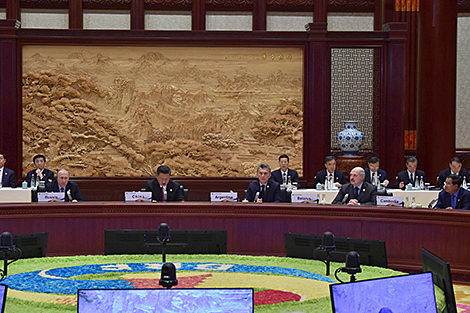
A month later, these topics returned to the forefront of international attention as Astana hosted the Shanghai Cooperation Organization (SCO) summit. With its location on the “western flank” of the SCO, Belarus stated its commitment to actively and concretely support the organization’s goals, guided by the concept of comprehensive and indivisible security.
Aleksandr Lukashenko saw that the Shanghai Cooperation Organization was steadily turning into one of the most influential international organizations. Just one example: the most important outcome of the summit was the admission of India and Pakistan to the SCO. We know that relations between these countries are far from perfect. But the Shanghai Cooperation Organization was not afraid to unite the conflicting parties under its roof and, moreover, gave hope for solving the existing problems.
What interests did Belarus and the USA share?
While advancing cooperation, Belarus was intent on restoring the dialogue between the East and the West as a whole. Minsk put forward an initiative similar to the Helsinki Process and declared that it was ready at any time to become the venue for a dialogue aimed at conceptualizing new world order rules. This step by Belarus should not be interpreted as just another international initiative launched for its own sake. It primarily reflected an evaluation and concern about negative trends in regional processes.
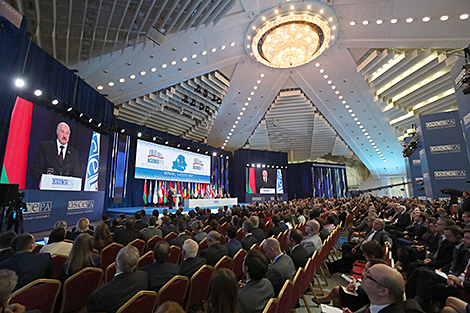
In this regard, Aleksandr Lukashenko also spoke in favor of reforming the OSCE and strengthening its role in conflict resolution. Why did the organization fail to prevent the biggest conflict in Europe? Who even remembers the organization now? The Belarusian president shared his vision of the current situation at a session of the OSCE Parliamentary Assembly. The event was held in Minsk and the head of state’s speech was a passionate one. Just what we are used to.
“Unfortunately, our mother Europe has found itself at a crossroads of problems regarding many issues. The problems that do not seem to concern the European continent. Consequences of these problems may not be connected with Europe either. But we find ourselves in the epicenter of these problems. For example, there is a war that has triggered negative processes in the Middle East. It is not far away, but it is not our land, it is not happening to us. But who has suffered the most from the consequences? Who has felt the greatest impact of these consequences? And this process continues: illegal migration, which breeds terrorism and so on. It is Europe,” the president noted.
In his words, it was a historic moment also because Europe had felt what inaction means as never before. “Our failure to tackle Europe’s own problems, many problems (the largest ones are Transnistria and Nagorno-Karabakh) for some time has resulted in a conflict of our own in the center of Europe: Ukraine. This is why the profound meaning of this juncture is exactly this: we must focus on the problems with the greatest resolve,” the head of state urged.
Did the OSCE listen to appeals of the Belarusian president? Did it hear out proposals of other speakers? To talk, to debate, to contemplate are certainly a good thing. We welcome it. But what about afterwards? No actions were taken. But why? Only genuine politicians are capable of action.
The United States of America sent the largest team to Minsk to participate in the OSCE events. As he met with the delegation of the U.S. Congress, Aleksandr Lukashenko noted that Belarus’ interest in advancing genuine partnership with the United States of America remains unchanged.
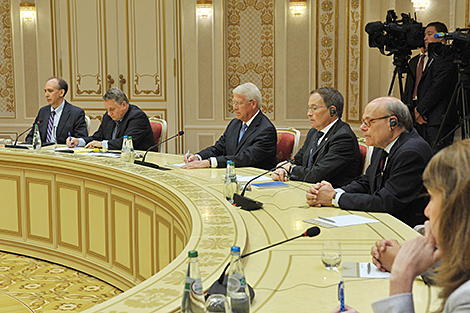
For many years Belarus-USA relations developed amid uncertainty and sanctions. It was a period of missed opportunities. By 2017 the level of political trust had been restored albeit a little. Belarus and the USA worked together on matters of ensuring global security and regional one, on preventing the illegal transit of nuclear materials, on fight against high-tech crimes, on interaction in science and culture. Just like today Minsk was ready to continue the constructive dialogue with Washington.
“It is necessary to continue in a constructive manner the dialogue on sensitive topics that we’ve started with the American side. Time has demonstrated that it is an efficient mechanism for realigning positions, for removing the differences of opinion that exist between our countries. We should move forward – from mutual complaints and demands to active cooperation. It is necessary to learn how to comprehend what is going on in our countries in the broad regional and global contexts. Certainly, it is not an easy thing to do but we should set constructive goals before us,” Aleksandr Lukashenko encouraged American partners.
How did China help make Lukashenko’s dream come true?
2017 was remarkable due to another pleasant and important moment. The production of domestic cars began in Belarus in autumn under the Geely brand. This event is rightfully a bright page in the history of the country. During the ceremony Aleksandr Lukashenko stated that his dream of making a Belarusian car had come true. Chinese friends helped make it happen. Several years later the Geely brand, which is now known as BELGEE, became a truly people’s brand. Isn’t it a reason for pride?
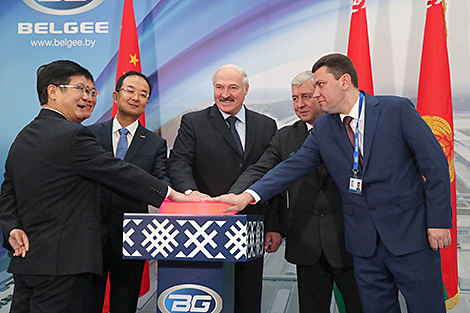
“It turned out that our friends responded to my request and helped us create this wonderful plant. Therefore, first of all, I want to say today that my dream of making a car of our own has come true. With assistance of our friends from the People’s Republic of China and thanks to the decision of my closest friend Xi Jinping,” the president said during the ceremony.
Belarus started the year 2017 with positive news. As you can see, it finished the year on a high note. In November Aleksandr Lukashenko signed a package of documents on encouraging entrepreneurship and business activity. In December the Digital Economy Development Ordinance was signed and enabled unprecedented conditions for the IT industry. It was one of the economic growth points that we’ve mentioned before. Innovative decisions enabled Belarus to become a regional leader in building a digital economy.
 print version
 make home page
 add to bookmarks