



Events
Eurasian shift. How Belarus is creating footholds in turbulent times
An archive photo
The Global South is becoming a global center of power, and Belarus is an integral part of it, Belarusian President Aleksandr Lukashenko said in an interview with the Chinese news agency Xinhua a year ago. Today, the shift of economic power and political influence toward the Global South is being discussed everywhere, including in the West. Belarus is also being talked about. Many are interested in how the country manages to adapt to new realities, what helps it gain a foothold in promising regions of the Global South, and what Belarusian “soft power” is, which is quiet yet highly effective.
Foreign analysts are seeking answers to these questions. Today, we will examine two intriguing analytical pieces. One of them was penned following President Lukashenko's tour of the East and Southeast Asia region, in particular Indonesia. The second is devoted to the July meeting of the leaders of Belarus and Uzbekistan, which, in the author’s view, is an important geopolitical event and provides an opportunity to observe the transformation processes unfolding in a greater Eurasia.
Belarus and Indonesia, two pillars of the Eurasian bridge
Lukashenko’s visit to Jakarta was one of the centerpiece events of the Belarusian leader’s extended tour of Asia. Indonesia is the largest economy of ASEAN and a key transport hub in global trade. The country’s potential is enormous. So is the potential for cooperation between Belarus and Indonesia.
Today, relations between our countries have both an economic and a geopolitical dimension. The foundation of these relations has been diplomacy, above all, the diplomacy of the two countries’ leaders.
“The diplomatic relations officially began on 18 June 1993, but the roots of their interaction can be traced back to the Soviet era, when the Republic of Byelorussia was part of the Soviet Union… After nearly two decades of stasis, the relationship entered a new phase in 2013 when Belarusian President Aleksandr Lukashenko made his first state visit to Indonesia. This visit was a significant moment because it marked the first time the two countries had engaged in dialogue at the highest level, something Lukashenko himself considered a serious omission that needed to be addressed immediately. This statement reflected both countries' awareness of leveraging their vast untapped potential and their commitment to imbuing the relationship with real substance,” Hendra Manurung, an expert in international relations, Professor at a Indonesia Defense University, said in his analytical piece for Seasia.
In the years that followed, bilateral relations between Indonesia and Belarus have developed significantly, evolving from simple diplomatic ties into a multifaceted strategic partnership, Hendra Manurung noted. This has been made possible by the ability of both countries to build their relationship in a way that complements each other’s potential and unlocks new opportunities.
“For Belarus, Indonesia is not just a major Southeast Asian country; it is a key gateway to the dynamic ASEAN region. Conversely, for Indonesia, Belarus offers access to Eurasian markets and technological expertise that can support its industrial modernization and national food security agendas.
This dynamic makes the relationship between the two countries an interesting case study in contemporary international politics, particularly in the context of the shift in the center of global economic power toward the Global South,” the expert said.
Unsurprisingly, the partnership between Minsk and Jakarta is first and foremost about economy. The centerpiece of the Belarusian leader’s trip to Indonesia was the launch of the Roadmap for Strengthening Indonesia-Belarus Cooperation 2026-2030.
This document serves as a five-year framework covering various strategic sectors, from the economy and agriculture to food security, to culture and science. The roadmap marks a shift from an ad hoc approach to a planned and measurable partnership.
“Economic cooperation is a key pillar of this bilateral relationship. The two countries agreed to expand their partnership in the areas of industrial development, agricultural modernization, supply chain strengthening, and technology development,” the expert said. “The Indonesian government views Belarus as a strategic partner for market diversification and strengthening industrial cooperation, particularly in the heavy equipment, agriculture, and chemical sectors, while Belarus views Indonesia as a major market and potential production base.”
One of the most interesting aspects of the Indonesia-Belarus relationship is Indonesia's strategic role as Belarus’ gateway to Southeast Asia. Belarus is actively seeking to strengthen its ties with ASEAN and has proposed acceding to the Treaty of Amity and Cooperation in Southeast Asia (TAC). Indonesia's support, as a founding member of ASEAN, is crucial in this effort. Conversely, Indonesia views Belarus as a bridge to the Eurasian region, particularly through the Eurasian Economic Union (EAEU), where Belarus holds a key position.
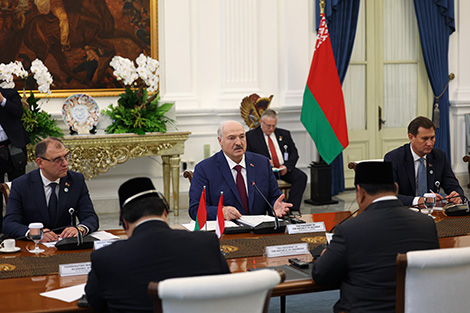
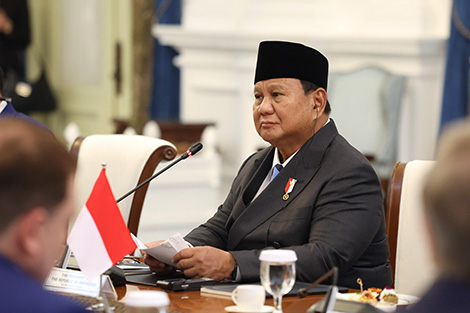
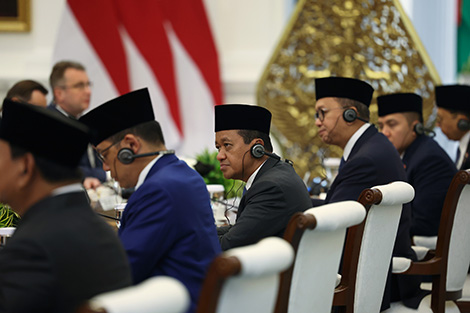
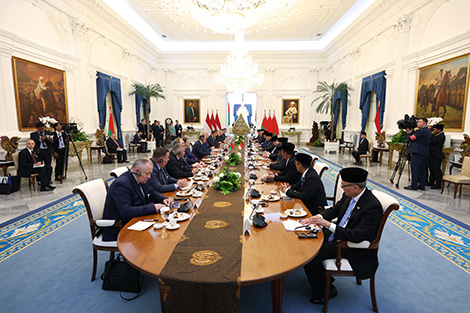
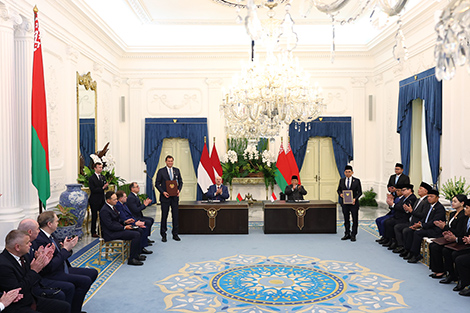
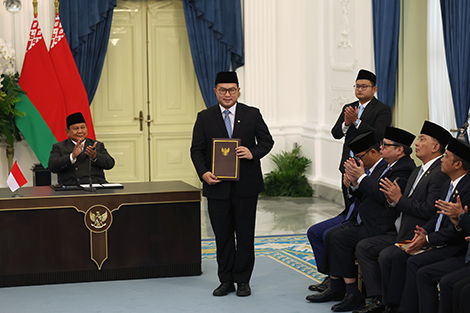
Economics may come first, but the driving force behind building interstate relations is political dialogue. When it comes to Belarus and Indonesia, the political foundation of their relationship is strengthened by a shared understanding of the fundamental principles of the international order. This is something the Indonesian expert also agrees with.
“Belarus, like Indonesia, expressed its commitment to peace, security, respect for sovereignty, and the principle of non-intervention, which align with the values enshrined at the Bandung Asia-Africa Conference,” Hendra Manurung said.
It is worth recalling that the Bandung Conference, held back in 1955, laid the groundwork for a common approach among Global South nations to world politics and economics. It is widely regarded as having laid the foundations for the Non-Aligned Movement.
“This normative foundation creates a conducive space for dialogue, where the two countries can support each other in multilateral forums without pressure from major powers. In this context, President Lukashenko stated that Indonesia will always be one of Belarus’ important partners in Southeast Asia…” Hendra Manurung said.
The geopolitical dimension of this relationship also includes defense cooperation, which, although still in its early stages, shows exciting potential.
“Lukashenko’s visit to Indonesia is said to have opened a new chapter in Indonesia-Belarus strategic relations, and there are indications that the Indonesian Army has begun studying the Belarusian-made BUK-MB2K missile system,” the Indonesian expert said. “This is interesting because it reflects Indonesia's stance of seeking to maintain balance in global politics, not relying solely on a single power bloc. In the context of intensifying US-China competition in the Indo-Pacific region, Indonesia appears to be seeking to expand its strategic options, including by establishing cooperation with countries outside these two major powers.”
In addition to economic and political cooperation, Indonesia-Belarus relations are also strengthened through socio-cultural dimensions and people-to-people contact. The parties are working on the launch of a direct flight route from Jakarta to Minsk to increase tourist flow and cultural exchange. On top of that, Indonesia rolled out a 30‑day visa‑free policy for Belarusian citizens this July. Belarus, for its part, had already granted Indonesian citizens visa‑free entry back in 2017.
Cooperation in the field of education, including student exchange programs and joint research between universities, is also an important agenda in strengthening relations between the two countries.
The Indonesia-Belarus strategic relationship has evolved into a mature and multidimensional partnership, Hendra Manurung said. Although challenges such as geographical distance and differences in economic scale remain, the strong political commitment of both countries, coupled with a mature institutional framework, provides optimism that this relationship will continue to develop and deliver tangible benefits to both countries and their people, the expert believes.
“In an increasingly complex geopolitical landscape, the Indonesia-Belarus strategic partnership also reflects both countries' efforts to expand strategic options and reduce dependence on traditional centers of power,” Hendra Manurung stated.
Investing in long-term cooperation. What makes Belarus attractive to Central Asia?
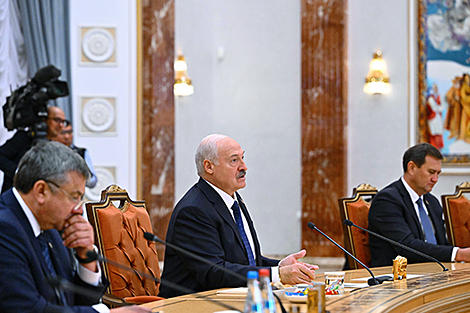
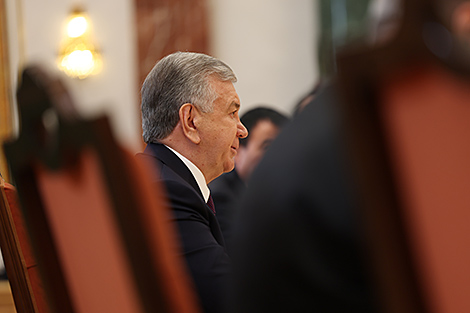
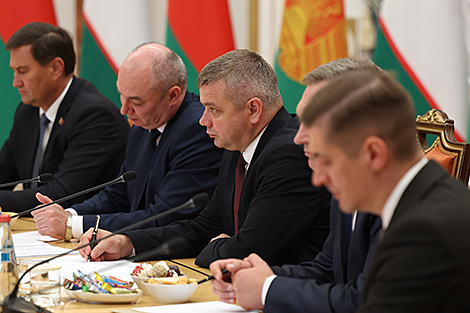
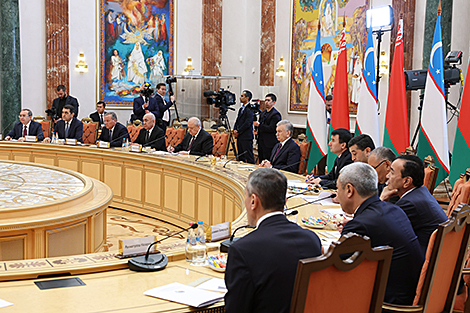
In early July, Uzbekistan President Shavkat Mirziyoyev paid an official visit to Belarus. Mathieu Lemoine, editor of the French publication Novastan, described the visit as a major geopolitical event in Eurasia. It offers an opportunity to take a deeper look at the geopolitical processes unfolding in Central Asia, while also highlighting the effectiveness of Belarus’ diplomatic model and its "soft power”, one that allows Minsk to strengthen its position in a multipolar world, even in the face of Western sanctions.
While Western Europe imposes sanctions against Belarus, Central Asia seeks to strengthen its partnership with Minsk. “Kazakhstan, Kyrgyzstan, Tajikistan, Turkmenistan and especially Uzbekistan have continued to strengthen political dialogue, industrial cooperation, educational exchanges and trade with Minsk,” Mathieu Lemoine wrote in his editorial. “This apparent paradox reveals much about both Belarus and Central Asia. For Brussels, Belarus has become primarily a sanctions problem and Russia’s closest ally. For Tashkent, Astana or Dushanbe, however, Belarus remains something rather different: a producer of tractors, buses and mining equipment, an engineering partner, an educational destination and a familiar interlocutor with decades of technical expertise. That difference in perception lies at the heart of Belarus’ enduring relevance across the region.”
Unlike China, Belarus cannot finance billion-dollar infrastructure projects. In contrast to Russia, it does not provide security guarantees. Unlike the European Union, it offers neither grants nor EU accession prospects. However, Belarus has exactly what Central Asian nations need to modernize agriculture, develop the mining industry, or upgrade municipal transit.
“Belarus remains one of the few post-Soviet states that preserved much of its industrial base after 1991. Companies such as MTZ, MAZ, BelAZ, Gomselmash, Bobruiskagromash and Amkodor continue to manufacture tractors, buses, heavy trucks, harvesters, mining equipment and construction machinery that remain highly competitive across Eurasia,” the author emphasized.
“Belarus offers something few other partners can provide: reliable industrial technologies adapted to post-Soviet realities and available at competitive prices,” Mathieu Lemoine said.
In his view, however, nowhere has Belarus’ eastern strategy proved as successful as in Uzbekistan.
“Successive presidential visits – including Aleksandr Lukashenko’s trips to Tashkent and Mirziyoyev’s visits to Minsk – have transformed bilateral relations from cordial political dialogue into an increasingly comprehensive economic partnership. Trade has expanded dramatically, approaching one billion U.S. dollars annually, while both governments openly discuss reaching two billion dollars over the coming years,” the author wrote.
More importantly, cooperation has moved beyond mere exports. Belarusian and Uzbek partners are developing joint industrial projects. Hundreds of enterprises with Belarusian capital are already operating in Uzbekistan, making the country Belarus’ fastest-growing economic partner in Central Asia.
Mathieu Lemoine noted that Belarus and Uzbekistan have managed to establish cooperation not only at the state level but also at the regional level. This summer, Minsk hosted the third Belarus-Uzbekistan Forum of Regions. According to the Novastan France editor, this event has become an institutional mechanism linking regions, municipalities, universities, chambers of commerce and industry, and enterprises. Belarusian regions now cooperate directly with Samarkand, Bukhara, Fergana, and Tashkent, fostering relationships that continue independently of visits by high-ranking politicians.
“This gradual institutionalization distinguishes Belarus from many other external partners in Central Asia. Rather than relying solely on summit diplomacy, Minsk has invested in long-term cooperation between local authorities, universities and companies,” he wrote.
Mathieu Lemoine also pointed out that Belarus does not merely export goods to Central Asia. It is increasingly taking a direct part in local manufacturing and industrial development.
“Assembly plants now manufacture MTZ tractors, MAZ trucks and Gomselmash agricultural equipment within Kazakhstan itself. More than one thousand enterprises involving Belarusian participation operate across the country, supported by around 170 official Belarusian dealers,” he said, providing an example. “In Tajikistan, cooperation has progressively shifted from trade towards manufacturing. In Hisar District near Dushanbe, Belarusian companies assemble MTZ tractors, Gomselmash harvesters and Bobruiskagromash agricultural equipment, allowing Tajik farmers to access machinery adapted to local conditions while supporting domestic production. More than thirty Belarusian distribution companies now operate in the country, reflecting Minsk’s long-term commitment to the Tajik market. Kyrgyzstan has likewise sought to deepen economic ties. Both governments have adopted ambitious roadmaps to increase bilateral trade, focusing on agriculture, food processing, machinery and logistics.”
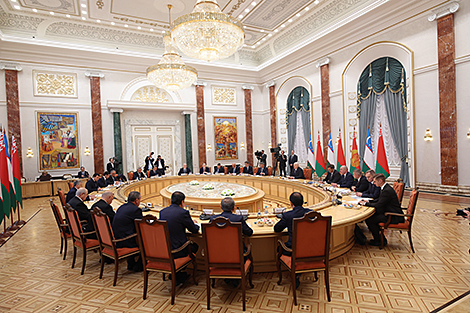
As for Turkmenistan, education takes center stage in its cooperation with Belarus. Thousands of Turkmen students are enrolled in Belarusian universities, particularly in engineering, medical, and technical fields. “These graduates often return home with professional networks that strengthen long-term cooperation between the two countries,” Mathieu Lemoine said.
All this prompts the Novastan France editor to reflect on Belarus’ “soft power.” In other words, it highlights Minsk’s ability to achieve its foreign policy goals through its own attractiveness and the voluntary cooperation of its partners, rather than through coercion or threats.
“Unlike Russia, Türkiye or China, Belarus has never projected influence through grand geopolitical narratives. Its soft power is considerably quieter. It is found in universities rather than television channels, engineering schools rather than cultural institutes, and technical cooperation rather than ideological messaging,” Mathieu Lemoine wrote.
At the same time, education represents a key component of Belarus’ “soft power.” Belarusian universities attract students from across Central Asia by offering Russian-medium instruction, recognized technical qualifications, and relatively affordable tuition fees.
“For many Central Asian families, Belarus represents a practical alternative. It offers a familiar academic environment outside Russia, while maintaining close links with industries that remain highly relevant to Central Asian development. Education therefore performs several functions simultaneously. It generates revenue for Belarusian universities, strengthens professional networks and creates generations of engineers, doctors and public officials familiar with Belarusian institutions and technologies. This represents a distinctly Belarusian model of soft power: practical, technocratic and long-term,” the author stressed.
Returning to the topic of Mirziyoyev’s visit to Minsk, Mathieu Lemoine pointed out that many observers are quick to evaluate the talks in the Belarusian capital solely through the lens of signed agreements or trade figures. However, the Novastan France editor believes that this visit holds broader significance. It reflects the shaping of a Eurasia whose political geography no longer aligns with the sanctions map.
“This does not mean that Kazakhstan, Uzbekistan or their neighbors have chosen Belarus over Europe, or Russia over the West. Quite the opposite. Their continued engagement with Minsk illustrates the essence of multi-vector diplomacy: the refusal to view international relations as a zero-sum choice between competing blocs,” the author said.
For over three decades, the Central Asian region has been refining what is often called a multi-vector foreign policy. Instead of aligning exclusively with a single geopolitical center, Central Asian governments seek productive relationships with multiple partners simultaneously.
For instance, Russia remains indispensable in security matters. China has become the region’s top economic partner and a major infrastructure investor. The European Union offers opportunities for investment. Türkiye has significantly expanded its cultural, educational, and political presence. Meanwhile, Japan and the Republic of Korea remain valuable partners in technology.
“Belarus occupies a different niche. It neither competes with these actors nor seeks to replace them. Instead, it provides industrial expertise, engineering education, agricultural technology and manufacturing partnerships that complement rather than challenge Central Asia’s broader foreign policy strategy,” Mathieu Lemoine emphasized.
In turning to the East, Minsk has found not a replacement for Europe, but a region willing to evaluate it not so much by its geopolitical alignment as by practical cooperation. Amid an increasingly fragmented international order, this could prove to be one of the most significant shifts in Eurasian diplomacy, the Novastan France editor stated.
Vita Khanatayeva,
BelTA
 print version
 make home page
 add to bookmarks