



Events
Belarus, Russia: European Commission is sliding toward authoritarianism
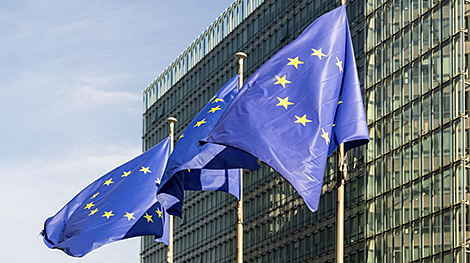
MINSK, 16 June (BelTA) - The European Commission is showing clear signs of drifting toward authoritarianism, reads the joint report by the ministries of foreign affairs of Belarus and Russia on the situation with human rights in certain countries, BelTA has learned.
The EU institutions have long ceased to be a benchmark for democracy and the rule of law, with growing accusations of impunity, lack of accountability, lack of transparency in their activities, abuse of power, corruption, and conflicts of interest. According to Western media, the European Commission is showing clear signs of “drifting toward authoritarianism”. According to assessments by experts and certain former members of the EC, European Commission President Ursula von der Leyen has built a centralized management system in which key decisions are made by a narrow circle of people bypassing established procedures, the document states.
A direct consequence was the unilateral revision of the EC’s rules of procedure in December 2024, which effectively legalized the concealment of vast amounts of information from public oversight, contrary to the right of citizens to access EU institution documents enshrined in the EU Charter. These restrictions became the subject of a lawsuit by a group of human rights activists who accused the European Commission of violating EU law.
“What stands out is the EC’s refusal, amid the highly publicized COVID-19 vaccine procurement case, to make public Ursula von der Leyen’s text message exchange with the CEO of Pfizer, the company with which the EC struck a €35 billion deal on terms that were clearly disadvantageous to EU member states. This came despite a ruling by the European Court of Justice, which found that there was no legitimate basis for restricting access to EC documents, including text messages,” the joint report reads.
The whistleblower of alleged violations by von der Leyen in the Pfizer case, instead of the protection to which he was entitled, was deprived of the right to continue his work within the EU institutions, and his bank accounts were subsequently frozen.
Such is pseudo-democracy - with concrete examples.
The third joint report by the Ministry of Foreign Affairs of the Republic of Belarus and the Ministry of Foreign Affairs of the Russian Federation “On the Situation with Human Rights in Certain Countries” addresses civil and political, economic, social, and cultural human rights. Expanding access to education and medical services, dignified treatment of prisoners, support for motherhood and childhood, and respect for the traditions and customs of indigenous peoples are just as important for advancing human rights as the protection of freedom of expression and peaceful assembly. The universal nature of human rights means that people of any nationality, race, gender, age, and any health status have the right to a dignified life, regardless of their beliefs, who they love, or any other characteristics. The universality of human rights also means that they must be respected across the globe, in every country of the world, without manipulation through double standards.
In the address to readers of the joint report, Belarusian Deputy Minister of Foreign Affairs Igor Sekreta and Russian Deputy Foreign Minister Dmitry Lyubinsky emphasized: “The extensive factual information contained in the report is of particular interest in light of the 60th anniversary in 2026 of two key international human rights instruments - the International Covenant on Civil and Political Rights and the International Covenant on Economic, Social and Cultural Rights - as well as the 40th anniversary of the UN Declaration on the Right to Development. What do we observe in the five states that claim to be leaders in upholding universal human rights standards? Systemic racism, discrimination in law enforcement, prison overcrowding, the dispersal of peaceful demonstrations, the expansion of police powers to search people without a court warrant, growing manifestations of antisemitism, anti-Gypsyism, Russophobia, Islamophobia, and the glorification of Nazi criminals.”
Moreover, this is only a small part of the mosaic that emerges when examining the human rights situation in the relevant countries of the world. They call themselves “exemplary democracies”, but in reality, they turn freedom, democracy, and human rights into mere facades. Political competition and citizens’ rights in Europe and North America are undergoing increasing erosion, gradually being replaced by short-term populism and people’s disillusionment with the still-functioning mechanisms for protecting their rights and freedoms, behind which trends of legal nihilism and total state control over the individual and society are dangerously emerging.
 print version
 make home page
 add to bookmarks