




Opinions & Interviews
‘More complex than June 1941’: Belarus’ top general comments on current situation
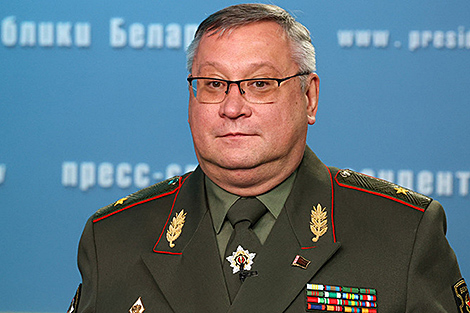
Pavel Muraveyko
MINSK, 9 December (BelTA) - The current situation with regard to Belarus is even more complex than it was in June 1941, on the eve of the Great Patriotic War, the Chief of the General Staff - First Deputy Defense Minister of Belarus, Pavel Muraveyko, said when taking a question from BelTA.
“If we compare it to June 1941, the situation now is arguably even more complex. This is because countries have grown significantly stronger economically and intellectually; weaponry and military technology have become far more advanced. The factors that influenced the wartime situation in 1941 are no longer dominant today. What we see today are mutual, unclear grievances, and the policy of sanctions, which will not lead to anything good in the near term," Pavel Muraveyko said. “The West is essentially preparing for war. This is why we hear revanchist undertones in the rhetoric of Western politicians. They are actively engaged in the activities to improve and build up their armed forces procuring modern weapons, among other things.”
“Naturally, there is a way to resolve this process. And our head of state has spoken about this many times. We must sit down at the negotiating table and reach agreements. Unfortunately, this common sense is not currently prevailing in Europe. We hope that this position will soon find a response, countries will come to the negotiating table and begin to tone down the aggressive rhetoric and aggressive actions,” the chief of the General Staff added.
In response to a clarifying question on whether Belarusian military personnel still hold hope for peace, Pavel Muraveyko stated: “It is not hope for peace that we have, but confidence that we will preserve peace, that the voice of common sense, of our country, and of sound nations that stand for peace, will resonate far louder than the voice of those who seek war.”
Regarding the presence of nuclear weapons in Belarus and plans for the deployment of the Oreshnik missile system, the chief of the General Staff emphasized that these are primarily factors of deterrence. Such types of weaponry possess immense destructive power.
“Before launching an attack on our country, everyone must consider the response that might follow. There is such a thing in military history as 'Pyrrhic victory' [victory gained at such a cost to the victor that it is tantamount to defeat]. In other words, victory is possible. The question is, what will you be left with afterward? Therefore, these capabilities serve as a certain deterrent against possible aggressive ambitions toward our country,” Pavel Muraveyko stated.
 print version
 make home page
 add to bookmarks