


Press releases
Expert sheds light on longstanding debate about Chagall’s birthplace
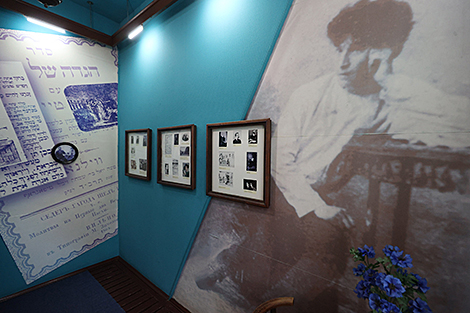
The Marc Chagall Museum in Vitebsk. An archive photo
VITEBSK, 28 January (BelTA) – Where was the famous artist Marc Chagall actually born, and what sources mention his homeland? Irina Voronova, Director of the Marc Chagall Museum in Vitebsk, explained it all to BelTA.
For many years following his emigration in 1922, Marc Chagall’s life and art remained unstudied in his native country. France, his home for most of his life, embraced him as one of its own, and he became an integral part of the international art scene. It was only during perestroika in the late 1980s, coinciding with the 100th anniversary of his birth, that his homeland rediscovered him and started to actively discuss and celebrate the legacy of this outstanding native son. There was no precise information about his place of birth. However, researchers studying the artist’s life and art managed to find the few documents that shed light on this matter.
“Wikipedia states that Chagall’s hometown is Liozno, referencing the Great Soviet Encyclopedia as its source. This information isn’t simply outdated – it’s inaccurate. How did such an error find its way into a reputable publication? The debate over the artist’s birthplace was already brewing in the 1990s, as efforts grew to reclaim his legacy for his homeland. Both the European historical sources on Chagall and the artist’s own autobiography record his birth as having taken place on the outskirts of Vitebsk, on the very night a major fire consumed much of the city. According to archival documents, it happened on the night of 6-7 July 1887. The reference to Liozno entered Soviet historical accounts via a single questionnaire held in the Tretyakov Gallery archives, in which Chagall once listed his place of birth and origin as ‘Vitebsk, Liozno.’ The fact is that at that time, many of the artist’s relatives on both his mother’s and father’s sides lived in the town of Liozno. One can find their family names, for instance, on the Liozno obelisk commemorating Holocaust victims, a memorial to the civilians murdered by Nazis. There is no doubt that this town held great importance in Chagall’s life; it later inspired a series of his paintings that even bear ‘Liozno’ in their titles. While the Chagall family’s roots were in Liozno, as the artist himself noted in that form, the actual birthplace of the artist remains Vitebsk. This very fact is confirmed on the official website run by his heirs. For accurate information, this is the source to consult, not Wikipedia. Despite our persistent efforts to correct the Chagall entry there, our edits are consistently reverted and never stick, no matter how hard we try to achieve historical truth,” Irina Voronova said
In his autobiography My Life, Marc Chagall tells much about his relatives from Liozno: what they did, how he spent summers with them. “Both in this book and in interviews, the artist’s story never wavered; he recounted everything exactly as he wrote in his autobiography. That is why researchers adhere to this information,” Irina Voronova emphasized.
The expert added that for Chagall, Vitebsk was never merely a geographical location or the town of his birth; it was an ideal image he did not want to destroy. His paintings of the city can be compared with old photographs of Vitebsk, revealing the precision with which the artist captured the layout of its streets and buildings, immortalizing on canvas what he longed to preserve not only in his memory. During his only visit to the Soviet Union in 1973, Marc Chagall never came to his hometown. He wanted to protect the memories of his childhood and young adulthood, keeping the past intact in the form it had taken within his mind.
The Marc Chagall Museum complex in Vitebsk today encompasses multiple sites celebrating his legacy: his former home (now a house-museum), an Art Centre, and a museum dedicated to the history of the Vitebsk People’s Art School, an institution he himself established. Each year, it draws tens of thousands of Belarusian and international visitors who come to experience the inspirational source of the pioneering 20th-century master.
 print version
 make home page
 add to bookmarks