




Events
Lukashenko shares results of drafting negligent farm workers into army
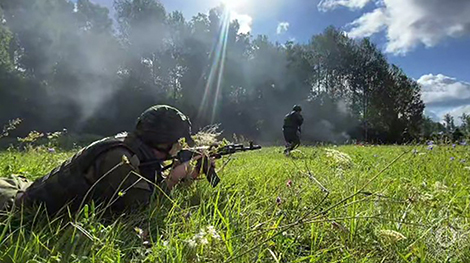
MINSK, 27 August (BelTA) – Belarusian President Aleksandr Lukashenko shared the unexpected results of drafting negligent agricultural workers into the army during a meeting on social and economic development on 27 August, BelTA has learned.
This disciplinary practice was recently introduced during the harvest campaign following a directive from the head of state.
Aleksandr Lukashenko reiterated his core thesis: “We must work if we do not want to fight.” This refers to everyone working conscientiously in their positions and strictly adhering to all necessary technological standards, which ultimately strengthens the nation’s economy. In agriculture, this is especially critical during the harvest season, which is why the head of state had previously ordered drastic measures against negligent workers.
“Let me give you an example. Some people just chuckled when I said at the conference call: send the negligent ones, the drunkards, and others who refuse to work on the land during the harvest to the ‘front lines.’ Send them to the army, to the special operations forces, to the border – to Krupko and Parkhomchik, with Khrenin [the heads of Gomel Oblast and Brest Oblast, and the defense minister, respectively] being responsible,” the head of state recalled.
Aleksandr Lukashenko noted that he initially thought there could be thousands of them, but in the end, with the help of local authorities, about 500 people were tracked down and drafted.
The president stated that he had already asked Defense Minister Viktor Khrenin multiple times how these negligent workers were handling their military service. He even asked to double-check the information several times when he was told that the army had no issues with them. “I didn’t believe it. I said, ‘Double-check it, go see for yourself.’ A week later, I asked again. He told me, ‘Aleksandr Grigoryevich [Lukashenko], request permission to commend them.’ I said, ‘Are you out of your mind? These are drunkards, they are good-for-nothings…’ But their faces are bright, they work, and they do everything the officer tells them. There are absolutely no complaints,” the Belarusian leader said.
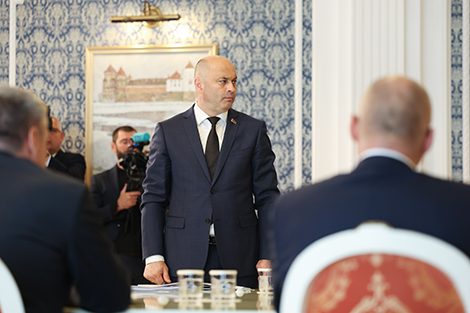
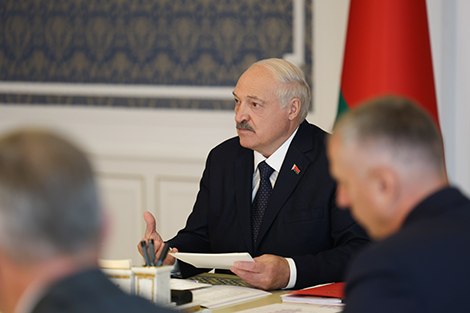
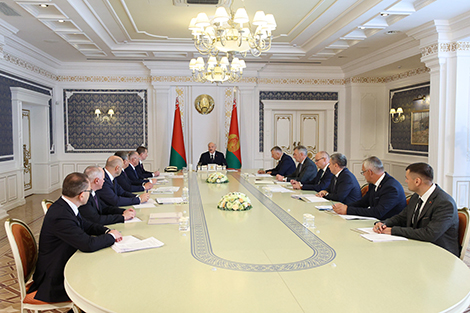
“And some people say that the army is not an educational camp, as Volfovich [the state secretary of the Security Council] said. Yes, it’s not a camp. But it is an excellent school of discipline,” Aleksandr Lukashenko said. “They turned out to be normal men. They completed retraining. I told them: ‘Give everyone weapons, just like real soldiers. Dress them up, shave them, cut their hair, and send them out.’ Combat cohesion was completed according to the latest standards. Mobile groups, tactical groups – everything we need for border defense. We are not fighting in Ukraine, but we must protect our border. And we deployed 170 of them there right away.”
The president pointed out that even out there, there were absolutely no complaints about these people: “They built dugouts that are better equipped than apartments in Minsk. Not bad.”
Aleksandr Lukashenko emphasized that this raises the question of why they couldn’t be properly managed at their regular jobs: “We failed to organize them. Yet, in the army, Khrenin and his officers managed to organize their work and are now asking to reward them. I told him: ‘Let’s start by having you award them, I am not against it.’ He will decorate the best individuals there. This means these people can actually work.”
The president stressed that there are certain methods and leverage to deal with those who refuse to perform their duties properly. He underscored that while people must be treated with decency and respect, demands must remain firm and unyielding.
 print version
 make home page
 add to bookmarks