




Events
Lukashenko highlights the need to bridge city-countryside gap
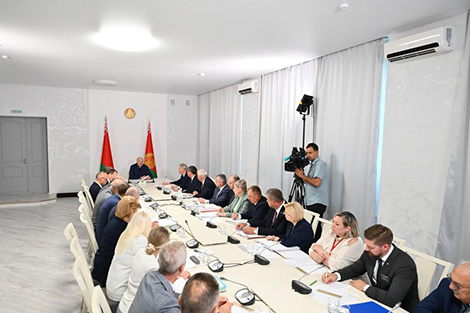
VILEIKA DISTRICT, 7 August (BelTA) – It is important to bridge city-countryside gap as much as possible, Belarusian President Aleksandr Lukashenko said during a meeting on providing rural communities with a full and diverse range of goods to cover all their needs, BelTA has learned.
The event was dedicated to improving the standard and quality of life for rural communities by providing them with all necessary goods and services. The head of state noted that he is closely watching the regions: how people live, whether there is decent work, housing, social facilities, and so on.”
“The task facing the vertical of power is to erase the differences between city and countryside as much as possible but to do so without erasing the village itself,” the head of state emphasized.
To this end, Belarus is developing anchor rural settlements (agrotowns and large villages), repairing and building new roads, and steadily raising service standards in rural areas. And here, trade is a crucial aspect. The president is confident that in the future, agrotowns and large villages, former centers of collective and state farms, will remain and continue to develop. For trade, it is convenient that they are mostly located near major roads. Smaller villages, however, may partially disappear and transform into other formats.
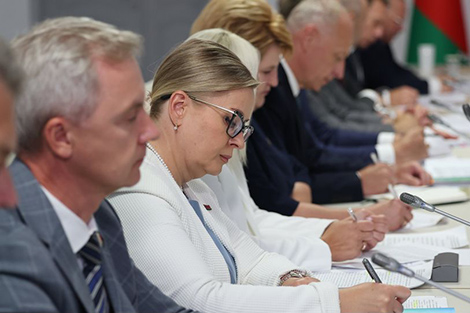
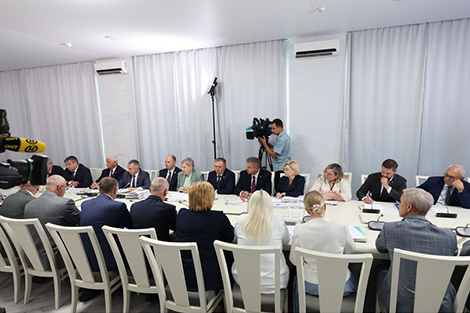
Aleksandr Lukashenko recalled that a year ago, in August 2025, a meeting was held to discuss the efficiency of the trade service system for the population across Belarus. That discussion, he said, was meant to serve as a starting point for concrete steps to correct mistakes and improve the situation. The current meeting is a follow-up: a frank assessment of what has been accomplished over the year.
“Execution will be strictly monitored,” the head of state emphasized.
The president noted that since the beginning of 2026, the country has been implementing two programs: one for the development of trade, public catering, and consumer services through 2030, and another for the development of consumer cooperation system for 2026-2027. In other words, goals and objectives have been set, and the stage of practical implementation is underway.
“But unlike what looks smooth on paper, the practice in many cases leaves much to be desired," Aleksandr Lukashenko noted. During the meeting, the president outlined the main problematic aspects.
 print version
 make home page
 add to bookmarks