




Events
Lukashenko: Belarus will support young people, but only those willing to work
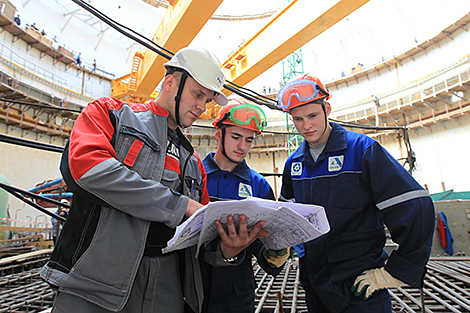
An archive photo
MINSK, 19 December (BelTA) – Belarus will support young people, but only those willing to work, Belarusian President and Chairman of the Belarusian People’s Congress Aleksandr Lukashenko said during the session of the 7th Belarusian People’s Congress on 19 December, BelTA has learned.
“We will support the youth. Those willing to work and earn a living – we will spare neither money nor time for that. But [we will support] only those willing to work,” the Belarusian leader stated.
“We must carefully introduce the youth to work, without scaring them off. Once a person truly experiences what labor is, he will become a patriot and a responsible individual. He will never leave the country thoughtlessly, as some of our compatriots did, only to then face the harsh realities of life,” the president said.
“We should approach young people in a reasonable way. The youth must be shaped by labor and by tackling the challenges we have today. If young people are brought up and educated in this manner, incidents like those in 2020 will not happen again,” the president is convinced. “Once they have children, they become completely different young people. Because children become the center of their attention. Therefore, not all young people are the same. Some people have gotten used to an easy life and believe that potatoes and apples grow on the internet. Others have truly known what hard work is. It is the latter kind of young people we must foster and educate.”
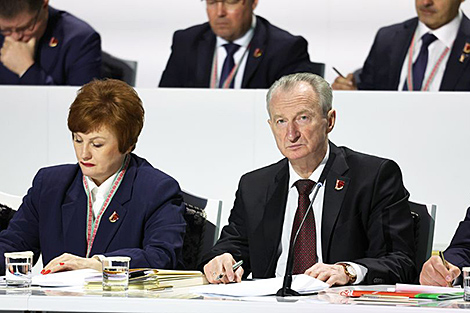
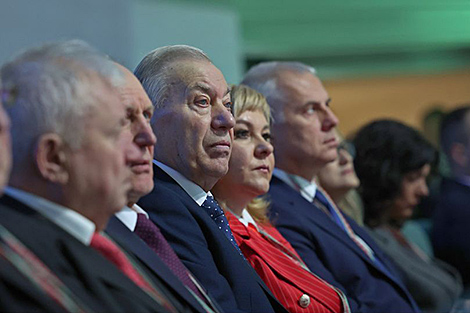
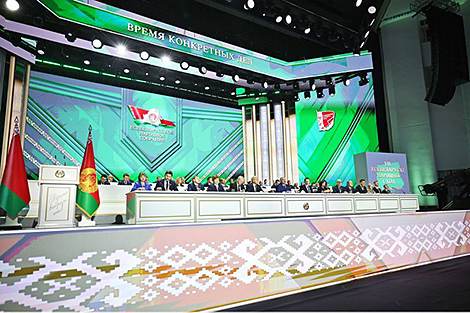
In this regard, the head of state pointed out that the course of youth policy is being cautiously adjusted. “I am gradually starting to steer us towards this path. Cautiously, however, as society has no need for quick decisions,” Aleksandr Lukashenko stated. “We need to talk to young people openly. We should not deceive them that we will create some kind of paradise on earth. A huge number of young people create opportunities for themselves. They only need help.”
“After the war, nobody cried, wailed, or overthrew the constitutional order. And the West didn’t even try to interfere. Because these people had endured such a war. They worked and raised new generations [after the war]. It was common to see families with nine children or more. And nobody asked for maternity capital or anything. Because people had survived such a war amid hunger and cold. The decade that followed brought no relief. There was simply no room in people’s minds for plots or upheavals,” the head of state said, reflecting on history.
 print version
 make home page
 add to bookmarks