



Events
Belarusian People’s Congress: Key points for upcoming session
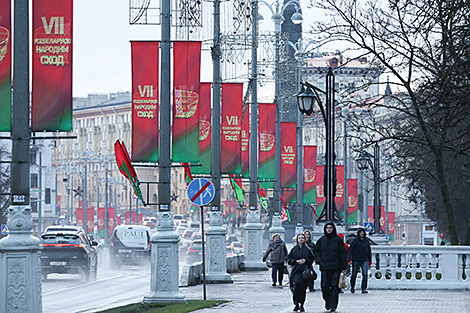
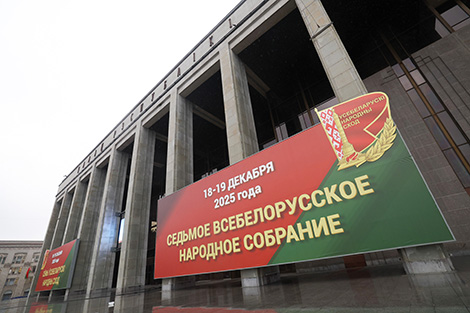
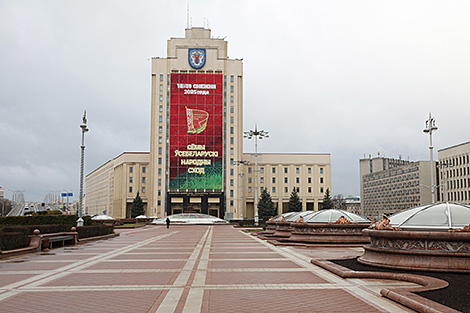
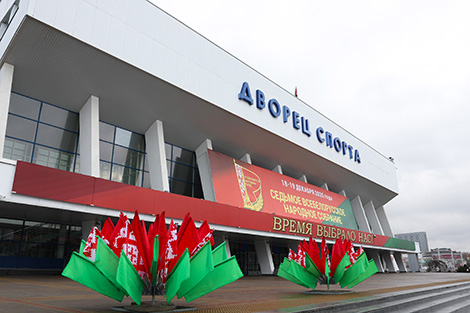
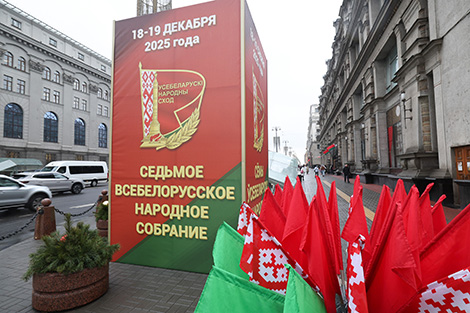
The second session of the 7th Belarusian People’s Congress will take place in Minsk this week, on 18-19 December. Preparations for this large-scale forum have been long and thorough. It was initially expected to be held in the spring; however, there is no need for haste in such matters, as treating such events, and this is one of the most important political events in the life of our country, as a mere formality is a path to nowhere. The Belarusian People’s Congress is set to approve the program for the country’s social and economic development for the next five-year period. Belarusian head of state Aleksandr Lukashenko will address the Belarusian people and parliament. Furthermore, delegates will need to resolve a number of personnel matters. What is known about the upcoming session, how do the authorities view the immediate future of the country, and what danger did the president warn about? We have gathered the key points about the event in this article.
The history of the Belarusian People’s Congress
The Belarusian People’s Congress needs no introduction. However, it was only a couple of years ago, in February 2022, that it received constitutional status, transforming from just a platform for brainstorming and discussing prospects into the highest representative body of people’s power in Belarus. Decisions of the Belarusian People’s Congress are now mandatory for implementation and can override legal acts of state bodies and officials if they contradict national security interests, with the exception, of course, of acts by judicial bodies.
The first Belarusian People’s Congress was held in 1996. It was a time of economic chaos and political conflict. Life demanded urgent decisions, and at that time, only the people had the right to decide their own fate, as Aleksandr Lukashenko stated.
However, there is an opinion that the history of the Belarusian People’s Congress began long before that. Historian Igor Marzalyuk recalled the ancient Belarusian veche, our age-old tradition of popular governance.
“The veche was a popular assembly, though participation was not universal. Initially, only adult married men with full legal capacity, who defended their country when necessary, meaning they bore arms, and owned property could participate. It’s important to understand that these were primarily heads of households. Later, representatives of the most important and significant clans took part. But the most crucial aspect was that this veche represented all strata, all groups of the free population (in this case, of the Polotsk land),” he explained.
Who becomes a delegate to the Belarusian People’s Congress
According to the law, the maximum number of delegates to the Belarusian People’s Congress is 1,200. These individuals are primarily representatives from all branches of government, local Councils of Deputies, and civil society, i.e. various social strata and groups within the country.
In this structure, representatives from the legislative, executive, and judicial branches of power, as well as deputies of the Minsk City Council of Deputies, are delegates to the Belarusian People’s Congress by virtue of their positions. Representatives from other local Councils of Deputies, as well as from civil society, are elected in the manner prescribed by law.
You can read about the individuals of the Belarusian People’s Congress, the ordinary people, in our dedicated section of the same name. We considered it important to introduce you to those who represent our country’s interests, to share their values, views, and what motivates the people involved in shaping Belarus’ future.
What was discussed at the first session of the 7th Belarusian People’s Congress
The first session of the 7th Belarusian People’s Congress was held in April 2024. Notably, this forum was conducted for the first time in its new status as a constitutional body, which determines the strategic directions for the development of society and the state and ensures the inviolability of the constitutional order, the continuity of generations, and civic accord.
The delegates elected Belarusian President Aleksandr Lukashenko as Chairman of the Belarusian People’s Congress. Aleksandr Kosinets was chosen for the position of Deputy Chairman of the Belarusian People’s Congress. Furthermore, the members of the Presidium of the Belarusian People’s Congress were appointed.
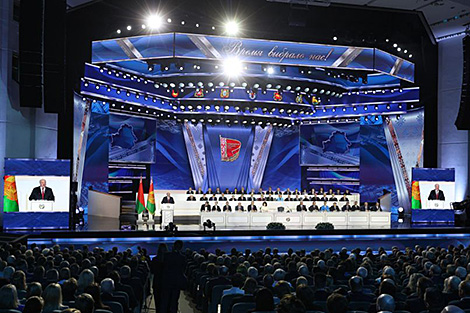
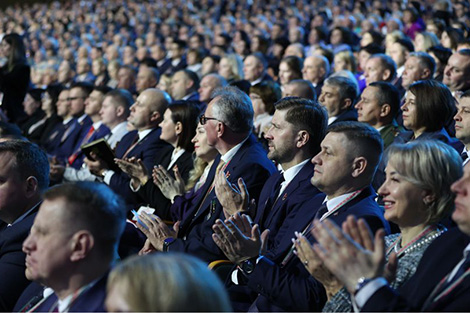
At that time, two important documents were presented for the delegates’ consideration: the National Security Concept and the Military Doctrine of Belarus. These documents codify the fundamental approaches to ensuring the security of the state and society in various spheres of life, taking into account the prevailing geopolitical situation, modern challenges, and threats.
What is known about the new five-year social and economic development program
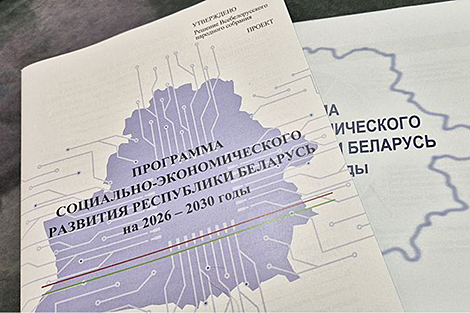
Belarus’ social and economic development program for 2026-2030 will be the key document for delegates of the 7th Belarusian People’s Congress to approve. They are, of course, already familiar with the draft document, and delegates have managed to submit their proposals, over 1,000, to the government and other bodies. Platforms for gathering public proposals were also launched, receiving 70,000 responses.
Prime Minister Aleksandr Turchin will present the draft program at the session. He will, in particular, report on the implementation of the previous five-year program. Among the priorities outlined in the new document are demographic security, youth policy and the development of human capital, including education, creating cozy and comfortable living conditions and decent work, advancing the digital economy, robotics, automation, building strong regions, ensuring peace and security, as well as tourism.
“Our population is very concerned about the issue of jobs. Key questions include whether the One District–One Project initiative will continue. Over 150 projects have already been implemented, and another approximately 100 are in various stages of development,” said Head of the Belarus President Administration Dmitry Krutoi. “I think special emphasis will be placed on additional benefits, incentives, and preferences that will enable more active job creation outside major communities, specifically on an industrial basis.”
According to him, the issues of technological sovereignty and import substitution run like a red thread through the entire program. For instance, in the Export section, the share of exports to distant markets (currently around 20-22%) is to be increased by 10%.
Roman Golovchenko, Chairman of the Board of the National Bank, who headed the working group for preparing the new social and economic development program, stated that one of the most complex sections of the program is Strong Regions.
“We are a small country, but nevertheless, there are certain regional differences both in the distribution of productive forces and in priorities. Therefore, it is very important to strike the right balance here and to ensure that we have considered everything as we should,” the head of the National Bank emphasized. “The program includes what we traditionally call ambitious targets for growth in household incomes, wages, and investments. These are factors whose successful implementation should make our country better, its people wealthier, and business initiative more unconstrained and free. But it is important to see the concrete tasks we must solve behind the numbers. We tried to highlight and emphasize technological development and technological self-sufficiency in the program.”
In turn, the Economy Ministry noted that the social and economic development program for 2026-2030 is a mirror reflection of society’s demands. “The overview shows that the issues concerning delegates lean more towards a comfortable living environment. This includes transport accessibility, housing and utility services, territorial development, and the creation of new industries. All these topics are addressed in the social and economic development program,” the ministry said.
Meanwhile, the Economy Ministry believes that the greatest risk today is global instability and the potential slowdown of the world economy. “Therefore, our program is primarily oriented towards domestic resources, because no one but ourselves can build a state for our citizens,” First Deputy Economy Minister Ivan Vezhnovets said.
The new five-year program initially had two drafts. The first version was developed by the government, and the second by the very working group headed by Roman Golovchenko. How did this come about?
“As the saying goes, two heads are better than one. The delegates of the Belarusian People’s Congress expressed a desire to actively participate in finalizing the document. I supported this initiative and instructed to involve our leading economists and individuals who could contribute their views. A working group was formed to include delegates with significant experience and expertise in various fields. It is headed by the chairman of the Board of the National Bank, the former prime minister [Roman Golovchenko],” Aleksandr Lukashenko explained at a November meeting. “On one hand, it’s good that there are several opinions on the document as a whole. On the other hand, we must arrive at a unified version. People need a realistic, concrete, and understandable document, not only for every delegate but for every citizen of our country.”
What else will be discussed at the second session of the 7th Belarusian People’s Congress
Among other items on the agenda for the second session of the 7th Belarusian People’s Congress is the election of a member to the Presidium of the Belarusian People’s Congress (replacing Konstantin Burak, who was appointed in April 2025 as Presidential Aide – Inspector for Grodno Oblast). This decision will be made by secret ballot.
The Belarusian People’s Congress session will for the first time consider personnel matters for the Constitutional Court and the Supreme Court (this now falls within the Belarusian People’s Congress competence). Specifically, delegates will need to elect five new judges to the Constitutional Court, as that many are retiring upon reaching the maximum age limit of 70.
What will the president’s address to the Belarusian people and parliament be about
According to the updated Constitution, the head of state’s annual addresses are now delivered exclusively at the Belarusian People’s Congress. The president’s speech will, of course, be the central event of this forum. We are confident it will attract attention not only from the delegates themselves and all Belarusians, but also from audiences abroad, both near and far, ranging from ordinary people to high-ranking politicians.
“The president will deliver his address. This is what everyone is eagerly awaiting. Everyone understands the gravity of the moment and the importance of the president’s speech precisely at this time, a programmatic, fundamental address. It will undoubtedly be just that. The president understands this better than anyone. He is already preparing it,” Natalya Eismont, the head of state’s press secretary, said.
The head of state will certainly pay special attention to national security issues. It is also quite possible to expect sensational announcements. For instance, Defense Minister Viktor Khrenin, when once asked by journalists about the time for the Oreshnik missile system to go on combat duty in Belarus, said: “That is the competence and prerogative of the President of the Republic of Belarus. Wait for the Belarusian People’s Congress. The president will say everything there.”
What dangers exist for the Belarusian People’s Congress
At a recent meeting of the Presidium of the Belarusian People’s Congress, Aleksandr Lukashenko noted that the Belarusian People’s Congress has been operating for several years, but for the first time, it is facing such intense scrutiny, both in substance and in form. The Belarusian leader stressed the need to develop a style of work for the Belarusian People’s Congress and its Presidium that would endure forever. It may take years to establish, but the process must begin now.
“The most dangerous thing for us, and people, especially specialists, have noted this, would be if the Belarusian People’s Congress (not today, of course) were to start conflicting with the president in the future. That would be a disaster. There should be no conflict whatsoever. Therefore, in structuring the work of the Belarusian People’s Congress and its Presidium, we must ensure that everyone minds their own business,” the Belarusian leader emphasized. “The President is the President. it is the head of state; the president’s powers have been established for decades, roughly speaking, in popular terms, and we must not undermine that. This arrangement yields certain benefits.”
According to the head of state, the Belarusian People’s Congress should focus on larger, more global issues. “We have agreed, and this is now set for sure, that it determines the areas for the state’s work for the foreseeable future, its strategic tasks,” Aleksandr Lukashenko said.
However, the key question that Belarusians must answer at the upcoming Belarusian People’s Congress session (and indeed, one we should always keep in mind) is: what kind of people do we want to be, and what kind of country do we want our homeland to become? On this, there should be no disagreement.
 print version
 make home page
 add to bookmarks