

Events
Belarus in Africa: Why Mozambique could be Minsk's next strategic foothold
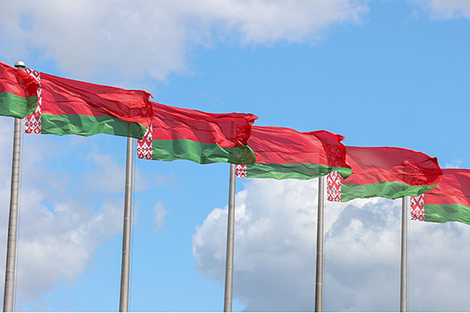
An archive photo
Africa has long ceased to be a distant and underdeveloped part of the world for Belarus. In recent years, Minsk has been steadily expanding its circle of partners here, doing so across several areas simultaneously. In the south of the continent, Belarus has partnered up with Zimbabwe; in the west - Equatorial Guinea, Togo, Ghana, the Republic of Congo, and Nigeria; in the north – Egypt and Algeria. Now, the eastern vector is becoming increasingly noticeable, where Mozambique, a country located on the Indian Ocean, could take a special place. It would seem difficult to imagine two more different geographies. But this geography is no coincidence. Behind Minsk’s interest in Maputo lie not only agriculture, machinery, and natural resources, but also ports, regional markets, and the opportunity to strengthen its positions in southern and eastern Africa. Might Mozambique turn out to be far more valuable for Belarus than initially meets the eye? Read more in this BelTA’s piece.
Old idea, new substance
In Africa, Belarus is not merely looking for new sales markets, but for countries with which it can build long-term economic chains: supplying machinery and technologies, creating maintenance infrastructure, training personnel, participating in industrial cooperation, and using the most promising states as gateways to broader regional markets.
“We are not an empire. We are not the Americans and we cannot cover the entire continent. We need footholds from which we can operate in the countries that interest us. That is the main thing,” Belarusian President Aleksandr Lukashenko noted.
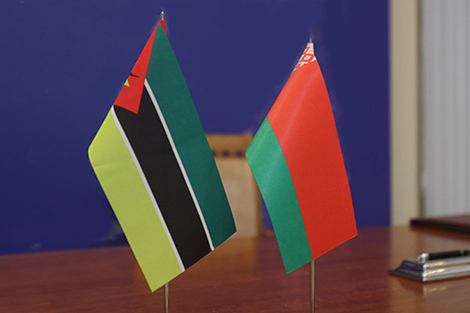
In this logic, Mozambique looks particularly promising. It is a country on the Indian Ocean coast, bordering six states by land, and is a member of the Southern African Development Community (SADC). It has large reserves of natural gas, mineral resources, significant agricultural potential, and three major transport corridors linking the coast to the region’s inland markets.
Minsk’s interest in Mozambique is not a recent development. As early as 2014, Belarusian President Aleksandr Lukashenko, while receiving Prime Minister Alberto Vaquina, spoke of seeking footholds in Africa. In the Belarusian leader's view, Mozambique, a promising and resource-rich country, could become one of them.
“The future belongs to countries like Mozambique,” Aleksandr Lukashenko said. “You should know that here you are not among strangers. We are ready to cooperate with you in all areas. No topics is off limits in our cooperation.”
The parties signed a general cooperation agreement. This fact today is interesting not so much historically as conceptually. Even then, Minsk viewed Maputo not merely as a stand-alone trading partner, but as a state with a favorable position in southeastern Africa.
However, the potential that both parties saw back in 2014 was slow to materialize. Trade remained relatively modest, and political contacts did not evolve into major systemic projects. Twelve years later, more favorable conditions have emerged for realizing the agreements that had been set out: Belarus has significantly expanded its presence in Africa and Mozambique’s regional importance has grown markedly. Over the past decade, Maputo has found itself in the spotlight of global energy due to major natural gas discoveries. The importance of its ports and transport corridors has increased, and the need to modernize agriculture has become even more pressing.
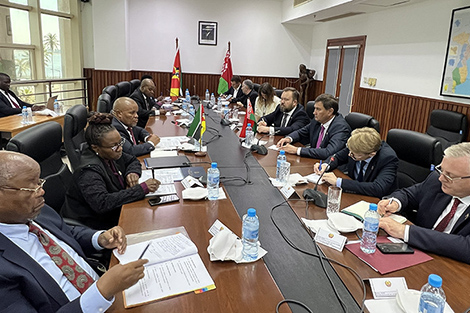
In July of this year, Belarusian Minister of Foreign Affairs Maxim Ryzhenkov visited Maputo. This visit, the first by a Belarusian foreign minister to Mozambique in the history of bilateral relations, was not just another diplomatic meeting but a landmark event ushering in a new phase in the relations between the two countries. During the talks, the discussion focused on concrete projects: from agricultural mechanization to mining, fertilizers, logistics, and the use of Mozambican ports to access regional markets.
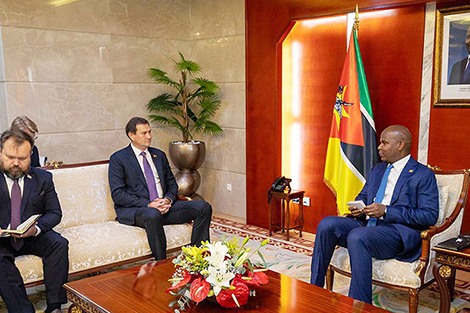
The result is a kind of African mosaic: Belarus is gradually assembling it from different sides of the continent. In this geography, Mozambique is capable of occupying a special place, not only as a promising market and resource partner, but also as an important logistics gateway to the Indian Ocean and the markets of southern and eastern Africa.
Why Mozambique’s geography matters more than the size of its market
On the map, Mozambique looks unusual: a narrow, elongated country stretching 2,500 km from north to south along the Indian Ocean. To the west, it borders Malawi, Zambia, and Zimbabwe; to the southwest - South Africa and Eswatini; to the north - Tanzania. To the east, across the ocean, lies Madagascar.
This position makes Mozambique a kind of bridge between the inland part of southern Africa and global maritime trade routes. This is not merely a geographic feature.
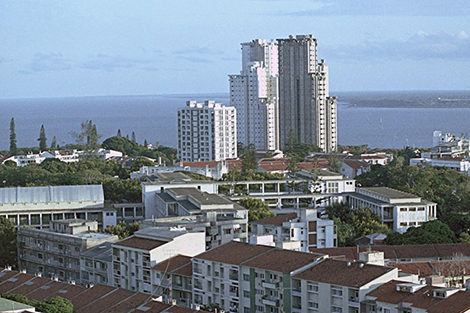
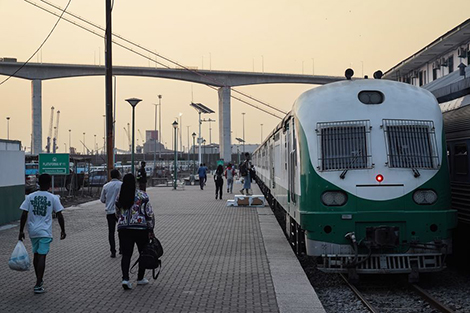
For Zimbabwe, Zambia, and Malawi, access to Mozambican ports means the ability to reach international markets. That is precisely why three major transport corridors have taken shape in the country: the Maputo, Beira, and Nacala corridors. The World Bank explicitly characterizes them as key corridors linking the region’s landlocked states with Indian Ocean ports.
The Beira corridor is particularly important for Zimbabwe, Malawi, and Zambia. The Nacala corridor connects the northern parts of the region to the ocean. The Maputo corridor is also oriented toward South Africa. This creates a structure of considerable interest to Belarus: a tractor or other machinery that arrives in or is jointly assembled in Mozambique could potentially be destined not only for the Mozambican market. Through the transport corridors, products can move further inland.
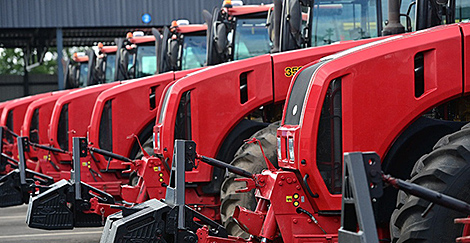
This is precisely why port infrastructure featured prominently in the Belarusian-Mozambican talks.
A foothold on the Indian Ocean
Even before Ryzhenkov's visit, Aleksandr Lukashenko had proposed exploring the possibility of trilateral cooperation between Belarus, Zimbabwe, and Mozambique, including the construction of a seaport.
“We badly need a foothold on the coast of the African continent, in the southeast. This means that together we should work with Zimbabwe on building a port in Mozambique, your neighboring state. If we could implement this idea together with Mozambique and Zimbabwe, if we can do this and restore rail links through your neighbor (it's a short distance) into Zimbabwe, then your country would become a good hub in southern Africa for goods and sought-after products not only from Belarus, but also for goods from other states,” the Belarusian president said during a meeting with President of the Senate of Zimbabwe Mabel Memory Chinomona in Minsk.
The very emergence of such an idea is telling. Belarus has no access to the sea and is forced to factor in the cost and reliability of transport routes. For it, the African country with major ports can hold significance far exceeding the volume of bilateral trade.
If a stable logistics chain is established, Mozambique could potentially become one of the channels for delivering Belarusian products to the member states of the Southern African Development Community, a region already comprising 16 countries. The organization aims for economic integration, trade development, industrial cooperation, and the creation of a more efficient regional market.
That’s why Mozambique is of interest to Minsk not so much for the size of its own market, but for its position, which allows Belarus to expand its presence in this part of the continent.
An economy of great potential and great contradictions
Mozambique may give the impression of a country that could simply tap into its own natural wealth to get rich quickly. In practice, things are far more complicated.
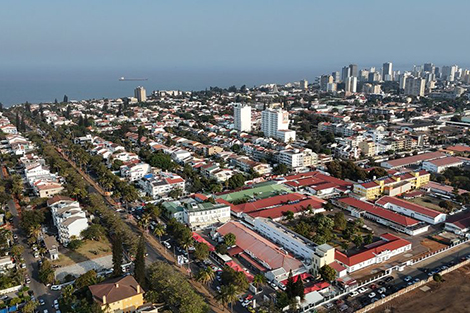
The country has enormous resources, yet at the same time it faces persistent poverty, weak infrastructure, a shortage of skilled personnel, heavy dependence on agriculture, and serious budget constraints. Mozambique’s population is about 34 million, with roughly two-thirds of its citizens living in rural areas. The country possesses natural gas reserves, mineral deposits, agricultural land, hydropower potential, and significant natural resources. Under the current circumstances, this is both an advantage and a challenge.
Economic analyst Georgy Grits, Candidate of Economic Sciences, also draws attention to this situation: “Mozambique is a complex country. They had nearly two decades of civil war, and the consequences are still felt today. Macroeconomic GDP indicators have still not returned to pre-war levels. Yet despite these problems, the country is still a dynamically developing one. Almost 40% of the population are citizens under 16 years of age. This points to future prospects. The same is true in terms of GDP. Over the past decade, the average GDP growth rate has been around 5%. That is above the global average.”
Speaking about the demographic situation in Mozambique, the economic analyst also drew attention to the high birth rate. “Children and young people need to be given the opportunity to study and earn money. Another aspect is health. So education, healthcare, and pharmacology represent potential areas of interest for mutually beneficial cooperation,” Georgy Grits believes.
Mozambique’s main asset
Mozambique’s main resource asset is natural gas. Gas projects have attracted the world’s largest energy companies to the country. But gas alone does not solve the problem of development: if the state exports raw materials, a significant portion of the added value can be generated outside the national economy. That is why Maputo is interested in using gas as the foundation for a broader industrial chain.
And this is where an intersection with Belarusian interests emerges. One of the topics discussed during Maxim Ryzhenkov’s visit to Mozambique was fertilizer production.
“Our state is ready to work jointly with Mozambique in mining and processing. This is the experience that the Republic of Belarus has today, including the production of complex fertilizers and the transfer of competencies for deeper gas processing in Mozambique,” the Belarusian minister of foreign affairs said after talks with Mozambican President Daniel Chapo.
At first glance, these are separate industries. In fact, they are directly linked. Mozambique needs to increase yields, and for that it needs mechanization, seeds, fertilizers, irrigation, storage, and processing. At the same time, the country has gas, which can potentially be used as a raw material for the chemical industry.
Thus, a whole system of interconnected areas can be seen here: natural gas, fertilizer production, mechanization, yield growth, processing, and food security. Belarus has significant experience in mineral fertilizer production, agricultural machinery, and the organization of agricultural production.
That is why Minsk’s interest in Mozambique in this area is entirely understandable.
Agriculture: the most practical area
For all the talk about gas, agriculture will likely remain the most tangible point of contact between the two countries. Belarus knows how to produce machinery, and Mozambique needs to mechanize its agriculture.
“Mozambique has a great deal of fertile land. But unfortunately for them, only 15% of the area is currently being cultivated. That means the remaining 85% needs to be developed or brought back into use,” said economist Georgy Grits.
During Maxim Ryzhenkov’s visit, the parties signed a contract for the construction of four agricultural mechanization centers. Supplies of around 4,000 units of agricultural machinery were also discussed, including 1,000 tractors.
This is fundamentally more important than a standard export contract. A mechanization center implies the presence of machinery on site, its repair and maintenance, spare parts, and personnel training. That is, Belarus is offering not just a product but the infrastructure for its use.
From agricultural machinery to industrial policy
This is where a more interesting story begins. If Belarus supplies tractors to Mozambique, that is exports. If it helps create a mechanization system, service centers, and personnel training, then it is already technological presence. And not just in one specific country, but, considering the experience of cooperation with Zimbabwe, in a small but significant African region.
If, at the same time, cooperation emerges in fertilizer production, agricultural processing, mining, and infrastructure, industrial cooperation is taking shape.
It is precisely this transition from trade to cooperation that will be the main test of the Belarusian-Mozambican partnership. Because selling machinery to many countries is one thing, but integrating into a country’s economy for decades is much more difficult.
What Belarus stands to gain
Putting diplomatic language aside, Minsk’s interest in Mozambique can be boiled down to several practical objectives.
First, a market for Belarusian machinery. Mozambique’s agriculture needs mechanization, and infrastructure construction and mining require the relevant equipment. Second, technological cooperation. Belarus can offer not only machinery but also training, service, and agricultural technologies.
Third, new raw material and industrial chains. Gas and minerals create opportunities for deeper processing. Fourth, logistics. Mozambique’s ports can become part of Belarusian export routes to the region.
Fifth, political presence. Mozambique is an important SADC state and an independent player in African politics.
What Mozambique gains
For Maputo, the interest is also fairly obvious. Belarus can offer relatively affordable mechanization technologies. Equally important is its experience in building entire production chains. For a country trying to move from raw material exports to a more complex economy, this matters.
Mozambican President Daniel Chapo himself has said that the experience of Belarusian enterprises and companies is significant and promising for the Mozambican market. During a visit to the Made in Belarus exhibition at the Zimbabwe International Trade Fair in 2025, he announced the start of work on shaping a business agenda for trade and economic partnership at the level of sectoral ministries and agencies.
In other words, the interests of both sides here genuinely align. Mozambique says: we need technology, machinery, and industrial expertise. Belarus responds: we can offer that. Mozambique says: we have resources, land, ports, and regional markets. Belarus sees opportunities to expand its own presence.
“Industry in Mozambique is in its formative stage. Today, there are no internally competitive, let alone export-oriented, industrial production facilities there. If we could find a way to co-finance these projects through development institutions and international organizations, we could create export growth points for joint activities within the next five years. But we must consider the competitive landscape. South Africa holds a very strong position in this market. We also need to bear in mind that Mozambique is a former Portuguese colony and has a fairly high level of cooperation with the EU. And then there is India. All of this suggests that the market here is not empty - it is highly competitive. So we need to work across all fronts,” Georgy Grits said.
Indeed, one should not expect an immediate surge in Belarusian exports to Mozambique. African markets take time. Service centers need to be established, financing, insurance, and logistics issues need to be resolved, specialists need to be trained, and machinery must be adapted to local conditions.
This is especially true for agriculture: Mozambique differs greatly from Belarus in terms of climate and technological development. But that is precisely why the project with four mechanization centers could prove more important than just another tractor supply contract. If the centers become operational, they will create infrastructure around which further cooperation can be built.
From a foothold to a regional hub
In 2014, Aleksandr Lukashenko saw Mozambique as a potential foothold for Belarus in Africa. Today, 12 years later, that definition can be interpreted much more broadly.
Mozambique can be not just a foothold, it can become a hub. A hub between Belarus and the SADC markets. Between Belarusian industry and Mozambican agriculture. Between natural gas and fertilizer production. Between the Indian Ocean ports and the countries of interior Africa. And finally, a hub between two already developing directions of Belarusian policy - Zimbabwe and the eastern coast of the continent.
That is why Minsk’s current interest in Mozambique is significant far beyond the framework of bilateral trade.
The outcome of Maxim Ryzhenkov’s visit to Maputo was notable not only for the discussion of possible prospects. Belarus and Mozambique agreed to continue work at the technical level, prepare the necessary legal instruments, and develop cooperation in agriculture, industry, mining, security, education, and logistics. The minister delivered a message from Aleksandr Lukashenko to Daniel Chapo and extended an invitation to visit Belarus.
Belarus is expanding its presence in Africa consistently, not in one leap, but step by step, gathering partners in the north, west, south, and now increasingly in the east.
Algeria, Egypt, Ghana, Nigeria, Zimbabwe, Kenya, Equatorial Guinea, and other states are forming an ever-widening geography of Belarus’ African direction. And in this geography, Mozambique may prove to be a particularly important player - not because it is one of the continent’s largest economies, but because several factors converge here: resources, agriculture, ports, transport corridors, and membership in one of Africa’s key regional organizations.
Minsk’s main task is to connect the existing and emerging footholds in Africa into a functioning system.
Photos courtesy of BelTA, MFA, Xinhua, RIA Novosti
 print version
 make home page
 add to bookmarks