



Opinions & Interviews
Those interested in getting Belarus on agenda of UN Human Rights Council sessions pointed out
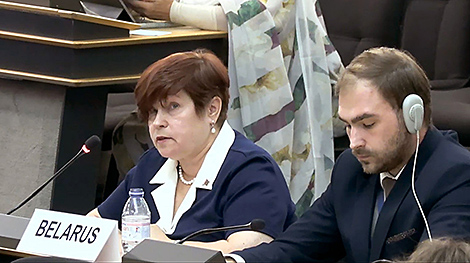
Photo by MFA
MINSK, 18 September (BelTA) – The “Belarusian question” on the agenda of the UN Human Rights Council (HRC) has nothing to do with genuine concern for human rights, but serves to promote the foreign policy goals of a group of countries, primarily the European Union. Permanent Representative of Belarus to the UN Office in Geneva Larisa Belskaya made this statement during an interactive discussion held within the framework of the 63rd session of the UN Human Rights Council, BelTA learned from the press service of the Belarusian Ministry of Foreign Affairs.
“For more than 20 years the initiators of the HRC resolutions on Belarus have been fighting against Belarus on political and economic fronts and are already rattling weapons near our borders,” the diplomat stressed.
She drew attention to the fact that the group of so-called independent experts continues engaging in falsifications and label-sticking. “Heeding the interests of its founders, it seeks the destruction of the Belarusian state, working to undermine the peaceful development of my country, change its political system and foreign policy. This is not an exaggeration. This is a statement of fact,” Larisa Belskaya said.
In her words, the activities of this group are an integral part of a massive repressive machine launched against the Belarusian state and people. It creates the necessary background for militarization and ramping up military-political tension at the western borders of Belarus and serves as a tool of disinformation about the situation in the country and the state policy.
“Their reports are driven not by an impartial analysis, but by the sick imagination of the authors, hatred toward my country, powerlessness, and common lies, the dissemination of which receives funds even amidst a shortage of resources. Think about who needs this and who benefits from this,” the diplomat stated.
For years the focus of their so-called expert analysis has been the topic of alleged violations during the 2020 presidential election and fabrications about alleged repressions. “In reality, behind this lies a painful desire for ‘revenge at least on paper’ for the failure of the color revolution organized according to Western manuals, and an effort to portray as innocent victims those who broke the law and suffered well-deserved punishment for it. The group’s reports are a deliberate attempt to denigrate the actions of the legitimately elected leadership of the country and the entire law enforcement system meant to protect the interests of the people and the state. This is an attempt to give a semblance of legality to massive sanctions designed to strangle the economic development of Belarus. And finally, this is an attempt to distort the real choice of the people who supported the president’s actions and have supported his domestic and foreign policy all these years,” Larisa Belskaya is convinced.
She believes that the “Belarusian question” on the agenda of the UN Human Rights Council has nothing to do with genuine concern for human rights, but serves to promote the foreign policy goals of a group of countries, primarily the European Union.
“The format for considering the human rights situation in Belarus imposed on the HRC by a group of Western countries is a dead end. We have said it many times. And as a responsible participant of international relations, we will clarify our position, promote common sense, and advocate true cooperation on human rights without politicization and manipulation,” the permanent representative of Belarus to the UN Office in Geneva stated.
 print version
 make home page
 add to bookmarks