

Opinions & Interviews
Survey: Trust in Belarusian state media is on the rise
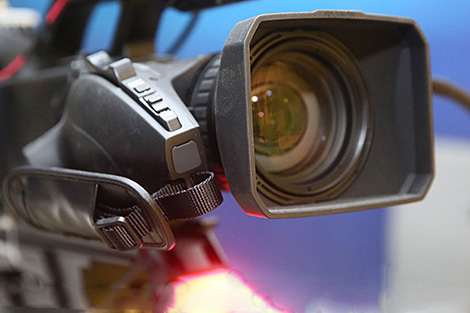
An archive photo
MINSK, 23 September (BelTA) - Trust in Belarusian state media is growing, Director of the Institute of Sociology of the National Academy of Sciences of Belarus Nikolai Myslivets told BelTA as he commented on the results of a comprehensive nationwide sociological survey covering current issues on the international and domestic agenda.
A total of 63.8% of Belarusians trust state media. “These figures testify to an objectively high demand among the country’s population for reliable and quality information. Grodno Oblast stands out with the highest level of public trust in state media, 87.6%. At the same time, overall, the level of trust in state media across the country’s regions is relatively even,” Nikolai Myslivets said. “Based on many years of practice in conducting sociological research, it can be stated that trust in Belarusian state media is growing every year. This trend allows us to speak of their growing popularity and demand on the part of the Belarusian media audience.”
Trust in the media is above all the audience’s conviction that mass information is reliable. “The high level of trust in state media, according to the data of a large-scale sociological survey, is due to significant public demand for reliable, objective and substantive information. In conditions of global information turbulence, characterized by the active spread of fakes and technologies for manipulating public opinion, the Belarusian viewer, reader and user of the online space want to receive truthful information about events taking place in the country and the world. Domestic journalism and the Belarusian media space as a whole are responding confidently to external information challenges and threats emanating from the information resources of unfriendly states, including the unjustified blocking of state media resources on the YouTube video hosting platform. The development of authorial journalism, thematic diversity, a focus on analytical content and the active involvement of experts from a wide range of fields in commenting on the current information agenda have led to the fact that state media are precisely the platform that the Belarusian audience actively visits to obtain objective and reliable information,” the director of the Institute of Sociology said.
The sociological survey was conducted in July-August 2026 by the Institute of Sociology of the National Academy of Sciences of Belarus on behalf of the Belarusian Institute for Strategic Research (BISR). The study involved 2,045 respondents from every region of the country. The first part of its results, on current issues of Belarus’ social and economic development, was presented in Minsk on 10 September. The second part, on social and political topics, followed on 16 September. On 23 September, sociologists presented the third part, covering current issues on the international and domestic agenda.
 print version
 make home page
 add to bookmarks