



Opinions & Interviews
Kochanova: Parliamentary diplomacy is essential for international peace and security
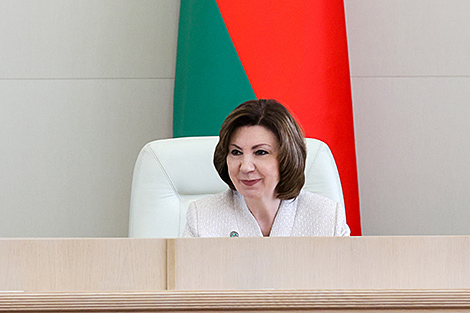
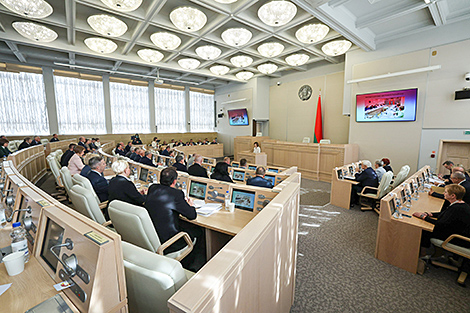
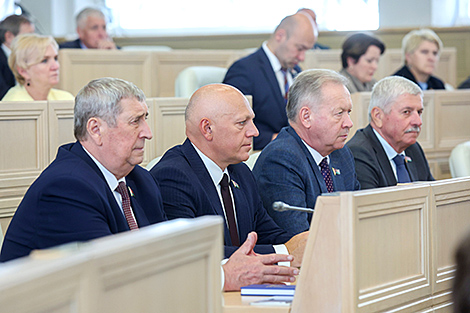
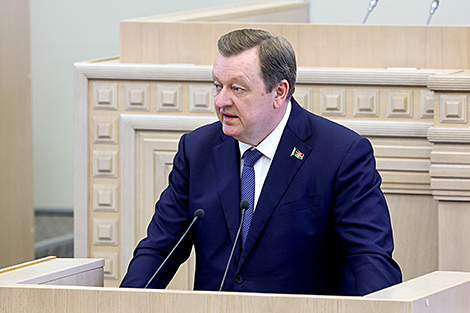
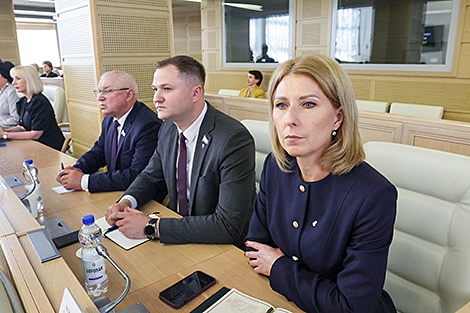
MINSK, 15 September (BelTA) - Parliamentary diplomacy should be used to maintain international peace and security, Chairperson of the Council of the Republic of the National Assembly of Belarus Natalya Kochanova said during the first meeting of the fifth session of the Council of the Republic of the eighth convocation on 15 September, BelTA has learned.
International situation
“The international situation today is characterized by a combination of acute geopolitical contradictions and growing economic fragmentation. The struggle for critical resources, trade protectionism, and sanctions regimes are becoming key factors changing established patterns of international cooperation. Today we are effectively witnessing a confrontation between military and political blocs, between supporters and opponents of a multipolar world. As our president noted, direct massive military aggression has returned in an ostentatious manner. Amid escalating regional conflicts and rivalry among major powers, the level of trust between states is declining noticeably, diplomatic channels are often operating in a limited capacity, while numerous international institutions are facing a lack of consensus and political will. Our task is to preserve peace and calm in Belarus. In conditions of global interdependence, any escalation of tensions can undermine achievements in social and economic development and destroy all the years of effort made by entire generations,” Natalya Kochanova said.
In her view, parliamentary diplomacy should be used to the fullest extent in maintaining international peace and security. “Belarus is a peace-loving country. We consistently convey this message to the international community through numerous international contacts with speakers of parliaments, heads of diplomatic missions, senior officials of foreign ministries, business delegations, and friendship groups. We should continue working to promote on the international stage the initiative of the head of state to launch a global dialogue on security. In furtherance of this initiative, members of the Council of the Republic are helping promote the idea of creating a new architecture of Eurasian security. Our MPs raised this issue at events of the Inter-Parliamentary Union, the Parliamentary Network of the Non-Aligned Movement, and the Parliamentary Assembly of the Collective Security Treaty Organization. We proposed that the Parliamentary Assembly of the CIS adopt a statement in support of drafting the Eurasian Charter of Multipolarity and Diversity, as well as a similar statement in the ‘Eurasia’ geopolitical group of the Inter-Parliamentary Union,” she said.
She also stressed that the Council of the Republic should continue to publicly respond to events affecting the country’s security. “For example, we initiated the adoption of a statement following the attack on a bus carrying Belarusian children in Bryansk Oblast of the Russian Federation. The document was sent to media outlets and parliamentary organizations. Thus, by objectively informing the international community, we are breaking through the censorship that Western media impose around such incidents,” Natalya Kochanova said.
Interparliamentary cooperation in the Union State of Belarus and Russia
Among the priority platforms is the Parliamentary Assembly of the Union State of Belarus and Russia. It is here that a common legal framework for the Union State is being formed and approaches to social guarantees, industrial cooperation, and the protection of our common historical memory are being synchronized.
Close cooperation has been established between the parliaments in ensuring the security of the Union State. The parties hold consultations every year to coordinate their approaches to the current international agenda. The next such consultations will take place in Minsk before the end of 2026. “Interparliamentary diplomacy today is an essential tool for promoting national interests and creating favorable conditions for our economy. Promoting trade and economic interests in the context of the tasks set by the head of state for the entire government system is our absolute priority. The president, by his personal example, pays visits to foreign countries, including those in the ‘far arc’, and reaching agreements with their leaders, opens doors to markets that are difficult to enter amid fierce global competition,” she emphasized.
She also drew attention to the significant economic effect of international forums held under the auspices of the Council of the Republic. In June, Minsk and Minsk Oblast hosted the 13th Forum of Regions of Belarus and Russia, which set new records for the number of contracts and cooperation documents signed. As Natalya Kochanova stressed, the standing committees of the Council of the Republic should exercise special control over the implementation of agreements reached at the forum. The key role in monitoring the implementation of the forum’s decisions remains with the Interparliamentary Commission on Interregional Cooperation, which should ensure substantive content for meetings between the chairmen of the Council of the Republic and the Federation Council between forums, taking into account the joint decision to hold the forum once every two years.
Cooperation with CIS countries
According to Natalya Kochanova, the Interparliamentary Assembly of the member nations of the CIS should continue efforts to harmonize the legislation of the CIS countries. At Belarus’ initiative, 12 of 134 documents were included in the prospective plan for model legislation for 2026-2028.
CIS Interparliamentary Assembly events will be held in Turkmenistan in November.
“It would be appropriate for us to use the visit of the parliamentary delegation to this country to hold talks with the Turkmen side on the entire range of bilateral cooperation, as well as with our other partners. This is a unique platform for holding such meetings and negotiations. We need to continue implementing the Belarusian initiative to hold events under the auspices of the CIS Interparliamentary Assembly dedicated to preserving traditional family values,” Natalya Kochanova said.
The key areas of work in the Parliamentary Assembly of the CSTO remain ensuring collective security, harmonizing the legislation of member states, and expanding interparliamentary cooperation to counter modern challenges and threats.
At the end of September, the Uzbekistan-Belarus Interparliamentary Forum will be held in Khiva, Uzbekistan, alongside the fourth Women’s Business Forum. According to Natalya Kochanova, the change in the format of the forum and its upgraded status are not accidental. During the visit of the Uzbekistan President Shavkat Mirziyoyev to Belarus in July 2026, the countries formalized their strategic partnership by signing the relevant declaration. Belarus is preparing for the forum and is putting together a portfolio of commercial contracts and agreements. This will be an effective contribution to implementing the roadmap for developing trade and economic cooperation between Belarus and Uzbekistan and achieving the task set by the two heads of state of reaching $2 billion in bilateral trade by 2030.
Cooperation with countries of the ‘far arc’
“Our activities in parliamentary structures should be based on an unconditional priority of national interests and support for unifying and constructive initiatives. In early October, the 153rd Assembly of the IPU will be held in Tanzania. It is fundamentally important for us to maintain continuity in the approaches to the work of this oldest international organization, to prevent its politicization or a decline in its effectiveness, as we have seen with other institutions. In this context, one of the main issues for us at the upcoming assembly will be the election of a new President of the Inter-Parliamentary Union. Work is also underway on the IPU youth track: our colleague Aleksandr Lukyanov took part in the Global Conference of Young Parliamentarians in early September,” she said.
There is growing interest in interparliamentary cooperation among countries of the ‘far arc’. In July 2026, Belarus hosted a delegation of the Arab Parliament representing the interests of 22 member states of the League of Arab States. During the visit, the National Assembly and the Arab Parliament signed a memorandum of understanding, opening up new prospects for cooperation with the Arab world. Following a meeting with the president of Myanmar in August 2026, a fundamental agreement was reached to step up interparliamentary contacts. Preparations are currently underway for the first official visit in the history of Belarusian-Myanmar relations by the chairman of the upper house of Myanmar’s parliament to Belarus.
Last week, a delegation of the National Committee of the Chinese People's Political Consultative Conference visited Belarus on a working visit. The parties confirmed their commitment to further deepening the Belarusian-Chinese all-weather and all-round strategic partnership and expanding cooperation between regions and along the lines of public, women’s and youth organizations.
Natalya Kochanova also announced an upcoming official visit by the Chairman of the Senate of the Parliament of Pakistan. The parties plan to sign a bilateral memorandum of cooperation.
“Implementing the agreements reached with our foreign partners, primarily at the highest level, is a nationwide task. We need to work more actively on current issues of the international agenda, the resolution of which is sometimes unreasonably delayed. We have a wide range of tools for this: in the eighth convocation of the National Assembly, 10 delegations have been formed to work in international parliamentary organizations, along with six high-level commissions and committees and 42 country-specific working groups, many of which are headed by members of the Council of the Republic. Today, a high level of activity can be seen in the work of a number of these groups and commissions: with the Federation Council of the Federal Assembly of Russia, the National People’s Congress of China, and the Senate of the Oliy Majlis of the Republic of Uzbekistan. The remaining friendship groups should step up their work, expand formats of interaction and make a substantial contribution to further strengthening bilateral relations,” she stressed.
Election monitoring
Natalya Kochanova described the participation of Council of the Republic members in monitoring elections and referendums as a contribution to ensuring the electoral sovereignty of states friendly to Belarus and strengthening regional security. In August 2026, Council of the Republic members took part in international observation of the elections of deputies to Kazakhstan’s Kurultai. This week, MPs are scheduled to join international observer groups monitoring elections to the State Duma.
“Objective assessments are particularly important at a time when Western countries and biased organizations continue attempts to interfere in major domestic political events in our countries. In the context of this election campaign, the practice of Council of the Republic members participating in monitoring elections at Russian diplomatic missions in Belarus will be expanded,” she said.
Sustainable Development Goals
Council of the Republic member Sergei Aleinik is the national coordinator for achieving the SDGs. “The work is systematic, and our country has much to be proud of. Belarus is among the leaders in achieving the Sustainable Development Goals, ranking 35th in the international ranking of 169 countries. The level of SDG achievement is about 83%. Global progress remains too slow, while the situation is worsening in a number of areas,” Natalya Kochanova said.
A landmark event: SCO forum on sustainable development, with the participation of national coordinators, will be held in Minsk in November. “We should use this forum to thoroughly examine issues that hinder global progress toward the SDGs, such as illegal sanctions, the arms race and support for armed conflicts,” she added.
 print version
 make home page
 add to bookmarks