


Opinions & Interviews
BRICS, reciprocal visits, Bollywood: Indian ambassador on cooperation with Belarus
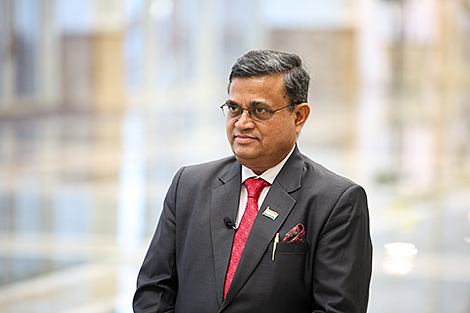
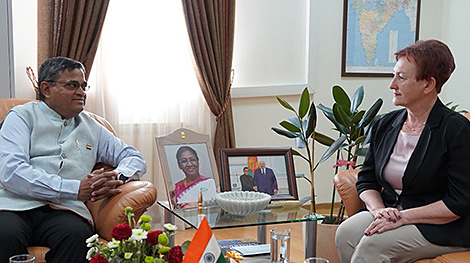
An archive photo
Political dialogue between Belarus and India remains resilient despite global upheavals, Ambassador Extraordinary and Plenipotentiary of India to Belarus Ashok Kumar BelTA on the occasion of Independence Day on 15 August. In his interview, the diplomat outlined the growth of bilateral economic ties, noted why Indian students prefer Belarusian universities, and shared how the country could appeal to Bollywood directors.
Your Excellency, how would you describe the current state of political dialogue between Belarus and India amidst contemporary global conditions?
Today, the political dialogue between Belarus and India is steady, friendly, and mutually respectful, driven by a shared aspiration to deepen interaction. I must underscore that India was among the first nations to recognize Belarus’ independence in 1991 and establish diplomatic relations in April 1992. Both India and Belarus value an independent foreign policy and support the importance of the role of the UN and other multilateral institutions.
Belarusian President Aleksandr Lukashenko visited India in 1997, 2007, and 2017, while Indian President Pranab Mukherjee paid a visit to Minsk in June 2015. These visits became major milestones in advancing Belarus-India cooperation.
Furthermore, bilateral relations received a new impetus in 2025, when the eighth round of consultations between the ministries of foreign affairs of Belarus and India took place in Minsk. The meeting covered the entire agenda of Belarusian-Indian relations, including ways and mechanisms to intensify political dialogue, mutual trade and industrial cooperation, expand the legal framework, and boost bilateral interaction in other areas.
In 2026, India holds the BRICS presidency and is hosting the BRICS summit in September. Belarus became a BRICS partner country in 2024, and the Belarusian side is invited to this event. I believe that Belarus-India cooperation through BRICS will provide an additional boost to Belarus-India bilateral relations.
Which Belarusian products are currently in demand in India? How would you describe the overall trade and economic partnership, and what are the trade indicators?
Bilateral trade between India and Belarus has shown good growth over many years. I would like to draw attention to the fact that the main goods supplied from India to Belarus are pharmaceutical products, medical devices, engineering products, cotton yarn, and industrial equipment.
Meanwhile, the main export items from Belarus to India are potash fertilizers, flax, engineering components, and textiles.
Trade is increasing, and a number of events have certainly contributed to the growth of economic contacts. These included reciprocal visits by business delegations from both nations. In March 2026, Minsk was visited by a 45-member delegation led by the director general of the Pharmaceuticals Export Promotion Council of India (Pharmexcil).
In June 2026, the third meeting of the Indian-Belarusian joint working group on pharmaceuticals was held in an online format. The development of ties in the pharmaceutical insustry is particularly important for Belarusian-Indian cooperation.
Furthermore, a delegation from India’s Marine Products Export Development Authority (MPEDA) visited Minsk in 2026 to boost direct trade and supply ties. The event hosted major Indian seafood exporters and Belarusian importers for focused B2B talks, which proved highly productive and set the stage for future cooperation.
I would also like to point out that the 12th meeting of the Belarusian-Indian intergovernmental commission on cooperation in economy, trade, industry, science, technology, and culture is scheduled to take place in New Delhi in September. This event will offer an excellent platform to discuss and analyze bilateral relations in all important areas with the aim of expanding contacts.
Your Excellency, educational ties between Belarus and India have a long-standing tradition. What makes Belarus such an attractive study destination for Indian students?
I am glad to note that Belarus is a welcoming country for Indian students, particularly in medical fields. Right now, around 900 Indian students are pursuing medical degrees at state universities across Minsk, Gomel, Grodno, and Vitebsk.
A key factor driving many Indian students to choose Belarus for their medical studies is that the courses are taught entirely in English.
As we can see, the agreement between the Indian Ministry of Human Resource Development and the Belarusian Ministry of Education on educational cooperation, which was signed in November 2012, is being effectively implemented.
Mr. Ambassador, India is experiencing a real boom in tourism, particularly in the outbound sector. What draws Indian travelers to Belarus?
The Indian tourism industry is indeed growing rapidly, with both domestic and outbound tourism developing.
More and more Indians are looking for new tourist destinations that offer travelers a diverse culture, beautiful nature, along with safety and good value for money. Belarus boasts stunning locations with lush woodlands, lakes, national parks, and numerous historical landmarks, making it an incredibly appealing destination.
I would suggest that Belarus organize tourism roadshows and other events to promote Belarusian tourism in major Indian cities.
I am convinced that Belarus should participate in such major Indian tourism exhibitions as SATTE. The event takes place annually in New Delhi and serves as the largest B2B platform for hoteliers, tour operators, airlines, and national tourism offices from all over the world to meet. Also important are TTF (a tourism fair in Mumbai) and BLTM (India’s leading international travel show focused on the business, corporate, and leisure tourism market in New Delhi).
By the way, the Embassy is also making efforts to promote tourism to India among Belarusians.
It is very important that air links between India and Belarus is developing. A direct flight from India to Minsk is operated weekly, as well as connecting flights from Moscow, Dubai, Istanbul, and other cities, which contributes to the further development of tourism between our countries.
Bollywood is known all over the world. In recent years, interaction has also been established with Belarusian filmmakers. The national film studio Belarusfilm signed a cooperation agreement with Indian filmmakers…
Bollywood has become synonymous with Hollywood in terms of viewership, and this audience is rapidly growing worldwide. Bollywood has also helped many countries develop tourism.
I hope that Belarus will attract more Bollywood film directors, as Belarus has very interesting locations for filming movies. This will not only strengthen commercial ties but will also expand people-to-people relations and cultural understanding.
Alina Grishkevich,
BelTA
 print version
 make home page
 add to bookmarks