


Press releases
Survey reveals Belarusians’ main sources of information
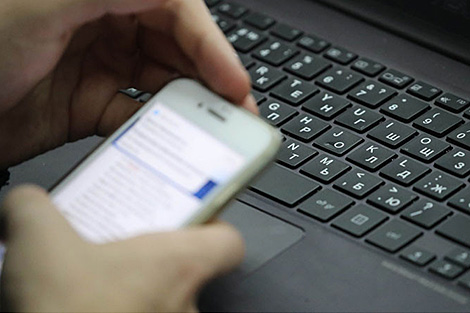
An archive photo
MINSK, 23 September (BelTA) - Internet resources and television are the main sources of information for Belarusians. These are the results of a comprehensive nationwide sociological survey covering current issues on the international and domestic agenda, BelTA has learned.
One of the survey questions was devoted to the sources of information that Belarusians use. According to the data obtained, 57.4% of respondents use internet resources (websites, portals, etc.), 52.3% prefer television, 48.4% turn to social networks and messengers (TikTok, Instagram, Telegram, Threads, Facebook, etc.), 44.1% chose personal communication, 17.5% the press (newspapers, magazines, etc.), 13.3% communication with colleagues, and 9.9% radio.
“Despite the considerable popularity of digital media, the results of the study indicate a continuing high level of audience interest in television as a source of information. Internet sources as a means of mass media are more in demand among the urban population - 59.2%, whereas residents of rural settlements more often prefer television - 58%. The preservation of a strong tradition of television viewing is an important part of media consumption, ensuring diversity and choice for the audience,” said Director of the Institute of Sociology of the National Academy of Sciences of Belarus Nikolai Myslivets.
The Belarusian capital traditionally serves as a center of concentration of digital infrastructure. Eight out of ten Minsk residents (78.3%) actively turn to online sources, which speaks to a high level of digital literacy, the accessibility of infrastructure and the demand for modern formats. Minsk residents are more often employed in fields where the internet is an integral part of everyday and professional life, which naturally forms the habit of turning to online sources for news as well. In addition, Minsk is home to a larger number of young and active users, for whom the internet is a familiar environment.
According to Nikolai Myslivets, in the era of digitalization, the widespread use of gadgets and the almost daily consumption of information content from the online space, the internet and social networks will occupy significant positions in the domestic information field and maintain steady demand from the audience.
“At the same time, I would like to note the high levels of demand for television as a source of mass information. In conditions of the transformation of the media space, within which there is a redistribution of audience attention from traditional sources of mass information to online resources, the continuing high demand for television content speaks to the popularity of Belarusian television and its effectiveness as a channel of information and communication. Belarusian television confidently withstands competition with online resources, retaining its audience and viewers in the era of the internet and digitalization. This trend is largely ensured, among other things, by the high levels of trust in the information content of Belarusian television on the part of the audience, objective commentary on the current information agenda by experts and the media community, and prompt informing of the population about significant events in the country and the world,” he emphasized.
Personal communication (family, friends, neighbors) is also an important channel for obtaining information. “This testifies to the significance for Belarusians of such an important attribute of traditional values as the institution of the family, which also plays a significant role in shaping the picture of the world in the everyday life of Belarusians. Interpersonal communication, trusting relations within the family, and joint discussion of the current domestic and external information agenda can become an alternative to the information influence of online resources in the domestic media space,” the director of the Institute of Sociology said.
The sociological survey was conducted in July-August 2026 by the Institute of Sociology of the National Academy of Sciences of Belarus on behalf of the Belarusian Institute for Strategic Research (BISR). The study involved 2,045 respondents from every region of the country. The first part of its results, on current issues of Belarus’ social and economic development, was presented in Minsk on 10 September. The second part, on social and political topics, followed on 16 September. On 23 September, sociologists presented the third part, covering current issues on the international and domestic agenda.
 print version
 make home page
 add to bookmarks