



Press releases
Marc Chagall Museum in Vitebsk adds rare memoir etching to its collection
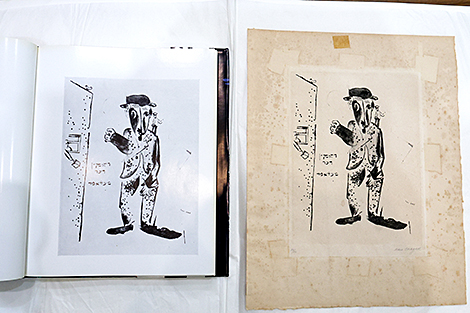
VITEBSK, 22 July (BelTA) – The Marc Chagall Museum in Vitebsk will exhibit a rare etching by Marc Chagall titled The Talmud Teacher after its professional restoration. Created over a century ago as an illustration for his memoir, the artwork was gifted to the Vitebsk museum in 2026, Irina Voronova, director of the museum, told BelTA.
In early July, a patron donated a rare graphic work created by the artist using the etching and drypoint technique to the Marc Chagall Museum. The artwork is more than a century old. “Marc Chagall left Russia permanently in 1922. While in Berlin, he crossed paths with the German artist Hermann Struck and started taking lessons from him. He was mastering etching and lithography for the very first time, having never tried them before. Chagall’s mentor was an outstanding teacher who managed to pass on all the vital techniques to the artist from Vitebsk. His students included Leonid Pasternak, the father of poet and writer Boris Pasternak. In his memoirs, Leonid noted that Struck used to engrave portraits of his students, who would then engrave a portrait of their master upon finishing their training. The portrait of Chagall done by Struck is part of our museum’s holdings – it was donated to us back in 2017,” Irina Voronova noted, explaining how these rare pieces arrived at the museum.
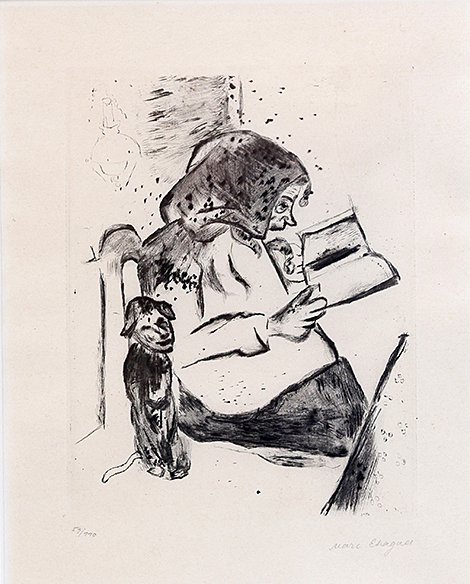
Chagall created a series of etchings to illustrate his memoir My Life, which he finished writing that same year, 1922. “There are only 20 illustrations in total, and The Talmud Teacher is one of them. In 1923, Berlin publisher Paul Cassirer, together with Chagall, published this series of illustrations as a standalone portfolio. The portfolios were released in a limited edition of just 110 copies. Each print in the series was numbered. The first 26 sets were printed on Japanese vellum, a so-called buffalo paper. It is very thin and yellowish, yet extremely durable. The remaining sets were printed on laid paper, which is thicker, denser, has a yellowish-white tint, and features watermarks in the form of longitudinal lines. The Talmud Teacher is number 17 out of 110, meaning it is printed on Japanese paper. Our collection includes another etching from this same series titled Grandmother. It is numbered 59, so this print is on laid paper. It was donated to us in 1999 by the patron Heinrich Mandel. It was one of the most valuable items in his collection, and this long-time friend of the museum decided to pass the artwork on to us,” the museum director noted.
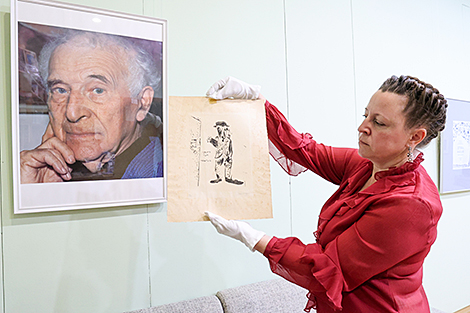
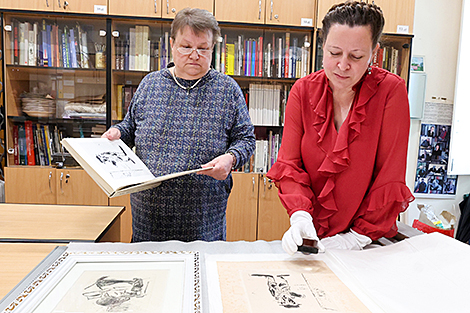
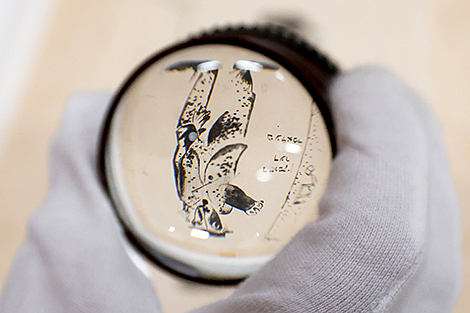
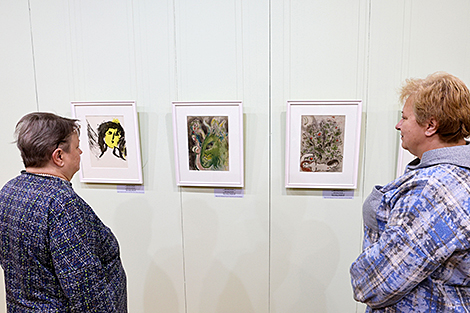
She explained how such illustrations were created. The design was scratched onto a metal plate using a drypoint needle. There was no room for error, because the lines could not be wiped away or corrected. The resulting fine grooves were then inked, and under heavy pressure from a printing press, the plates were pressed against paper, transferring the ink. On thin paper, the plate’s beveled edges were barely visible, while on dense paper, it left a deeper indentation. The size of this etching is 18.8 x 24.5 cm.
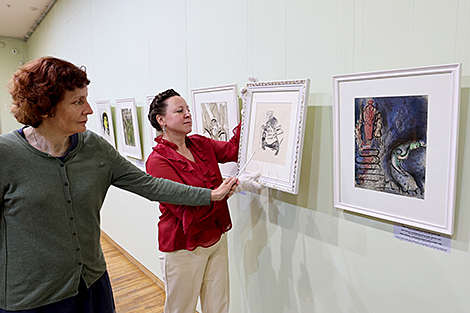
The patron purchased The Talmud Teacher print at an auction, and it was framed in a mat. “We unframed it and checked the dimensions, as well as whether the print features the corresponding number and Chagall’s own signature. Everything is there, and we concluded that this is indeed an authentic piece from the artist’s original etching series. Since the work was not matted by museum professionals, the cardboard, possessing a chemical composition highly volatile for such a rarity, affected the paper over all this time. The paper absorbed the acid, causing yellow spots to appear along the edges. This could impact the preservation of the artwork in the future, so we will soon hand the print over to professional restorers so that experts can wash the paper and eliminate the negative effects of the acids. After that, we will be able to include The Talmud Teacher in our permanent exhibition. We also have an idea to frame both of our prints, including Grandmother, in a matching style so they can be displayed side by side,” Irina Voronova emphasized.
 print version
 make home page
 add to bookmarks