
Press releases
From regional to international: The birth and evolution of Call of Polesie festival
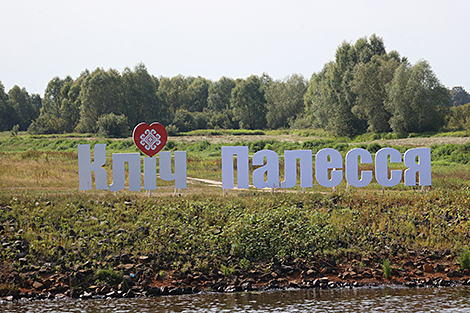
An archive photo
GOMEL, 13 August (BelTA) – The Call of Polesie festival has steadily gained momentum over the years and has now reached an international scale, BelTA has learned.
The Gomel Oblast Center of Folk Art has traced the origins and evolution of Call of Polesie festival.
Its roots lie in the very heart of the Pripyatsky National Park – the agrotown of Lyaskovichi. The event was conceived to introduce thousands of people to the unique culture and traditions of the Poleshuks (the inhabitants of the historic Polesie region), featuring ancient holidays and rituals, songs and dances, legends and folklore, as well as the exceptional skill of artisans and arts and crafts masters.
A decision of major regional significance to organize the festival was made right there in Polesie, by a sturdy, centuries-old oak tree. The head of state greenlit the birth of a new tradition – the Call of Polesie festival of ethnocultural traditions. Soon it became clear that the decision made by the president at the time served as the very foundation for creating such centers of attraction. Call of Polesie rapidly gained momentum, evolving into a large-scale festival now widely known far beyond the region and the country.
The first open festival of ethnocultural traditions Call of Polesie took place in 2010. It became a trademark event, showcasing the region’s ethnocultural traditions on a grand scale, while also helping to strengthen creative ties among the people of Polesie across Belarus, Russia, and Ukraine. Judging by the immense interest it garnered, it was already clear back then that the brand had a bright future, and the fest would become a new driver for the development of cultural, historical, ethnographic, and ecological tourism.
That was when the tradition was born: creative groups, artisans, and arts and crafts masters set up traditional homesteads in Lyaskovichi to showcase their land. They represented eight districts of Gomel Oblast (Yelsk, Zhitkovichi, Kalinkovichi, Lelchitsy, Mozyr, Narovlya, Petrikov, and Khoiniki), three districts of Brest Oblast (Luninets, Pinsk, and Stolin), and the team from the Pripyatsky National Park. Visitors could also sample regional Poleshuk cuisine. These locations became the main Polesie trademark and have remained the highlight of the event for many years.
Back then, the lumberjack competition featuring contestants from the Polesie districts sparked great interest among the spectators. Fishing competitions were also held for both adults and youth. Visitors thoroughly enjoyed carriage rides along the waterfront, as well as boat and cruise ship excursions down the Pripyat River. Meanwhile, a mini-train proved to be a popular way for both children and adults to tour the agrotown of Lyaskovichi.
In 2010, the Call of Polesie festival welcomed more than 500 performers and keepers of Belarusian folk culture, around 100 artisans and arts and crafts masters, and hundreds of honored guests from Belarus, neighboring countries, and further abroad.
The Call of Polesie festival gained such momentum that it was granted national status as early as 2012, with a schedule established to hold the event once every two years.
The president arrived in Polesie for the opening of the celebration. It was then that the head of state spoke the words that would define the festival’s future: “This is a colorful rural holiday that will live on for centuries.” Aleksandr Lukashenko proposed upgrading the festival to international status.
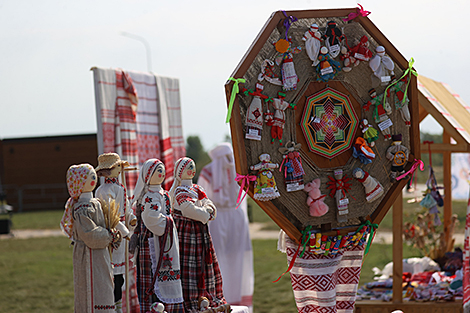
Year after year, interest in the festival events grew noticeably. By the second Call of Polesie, an international scientific and practical conference Traditional Culture of Polesie and the Modern World was held with the participation of scholars from Belarus, Russia, Ukraine, and Poland. For the first time, an exhibition of works by artists from Gomel and Gomel Oblast, a mini open-air painting session, and performances by poets and writers from the region, among other events, took place on the banks of the Pripyat for festival guests and participants. People of all ages took part in the second edition; the youngest participant was 6 years old, the oldest was 85.
A new feature of the 2012 festival was the official opening of the Nature Museum, which was visited by the head of state.
The third edition of The Call of Polesie was held in 2014, now with international status. For the first time, an art plein air, Land Under White Wings, featured artists from Gomel and Brest. An ethnographic camp, Summer Camp in Petrikov District, presented a program that included expeditionary work to collect folklore material from local tradition bearers, workshops, and a round table on the region’s traditional folk culture.
For the first time, the central concert venue hosted the award ceremony for the Honorary Poleshuk commemorative badge, which is still presented to distinguished residents of Polesie, as well as the ceremonial cancellation of a special postage stamp, during the opening of the 3rd International Festival. A new festival tradition was the Paleskaya Prygazhunya [Polesie Beauty] beauty contest.
The festival stage featured performances by groups from Belarus, Russia, Ukraine, Poland, and Moldova. Later, artists from Lithuania and Latvia also joined The Call of Polesie.
In 2016 and 2018, Polesie revealed itself ever more brightly and broadly. Every year, The Call of Polesie resonates in the hearts of tens of thousands of admirers of authentic, original folk culture.
The 6th International Festival of Ethnocultural Traditions, The Call of Polesie, took place on 29 August 2020. The unique culture of Belarusians was showcased through homestead displays, exhibitions, workshops, and concerts. The main festival venue was upgraded and visitors could explore the open-air historical and ethnographic complex, Museum Under the Open Sky. The season’s concept was dedicated to the Year of Native Land, featuring the region’s ethnic mythology and revealing the Secrets of the Poleshuks. For the first time, diplomats from Armenia, Azerbaijan, Bulgaria, Iran, Lithuania, Pakistan, Palestine, Russia, Sudan, and Uzbekistan were among the festival’s guests. On the eve of the event, during the Trade Advisor Day, they explored the potential of Pripyat Polesie at the Mozyr Economic Forum.
Tens of thousands of guests responded to the Call of Polesie in 2022 and 2024. Each festival season remained in people’s hearts for a long time.
On 15 August, the Call of Polesie gathers friends for the 9th time. In the Year of the Belarusian Woman, the festival is dedicated to the theme of the female image. Its leitmotif is The Female Voice of Polesie: A Living Heritage. The large-scale celebration will take place over an area of more than nine hectares. Two concert venues will be used - the main stage and a smaller stage. The festival will feature 13 hospitable homesteads, which will introduce guests to the authentic creativity and culinary heritage of eight districts of Gomel Oblast, four districts, and Pinsk of Brest Oblast. Each homestead will present vivid female images, both historical and contemporary.
 print version
 make home page
 add to bookmarks