




Press releases
Feeding bison in winter in Grodno District
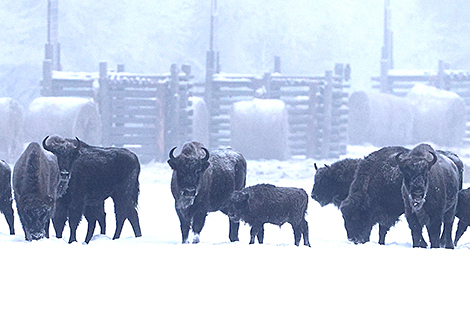
GRODNO DISTRICT, 14 January (BelTA) – Every day employees of the Ozery Grodno District Agricultural Production Cooperative feed bison inhabiting the national landscape reserve in Grodno District, BelTA has learned.
We lay out feed (20 special sites have been designated for that) as early as August after the harvest. From that time, wild animals are offered seed cleanings for sustenance, and salt is made available to them year-round. With the arrival of cold weather, additions are made to the menu. It consists of silage, beets, apples, and hay. As soon as the cold weather sets in, we lay out feed every day, on one day at two sites, the next day at three, and so on, replenishing all the time. We monitor how much feed is consumed. In a season, we use 50 tonnes of hay, 50 tonnes of apple waste, 5 tonnes of salt, about 80 tonnes of seed cleanings, and nearly 500 tonnes of haylage, said Stanislav Basko, the chief specialist of hunting and fishing at the Ozery Grodno District Agricultural Production Cooperative. “For example, we lay out fresh bales of hay and silage. Twenty minutes after we put it out, the animals are already running to the site, they know our machinery. Overall, in winter, they don't even wander far from the feeding sites; they stand in the forest and wait."
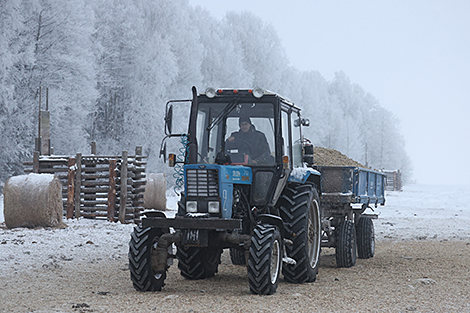
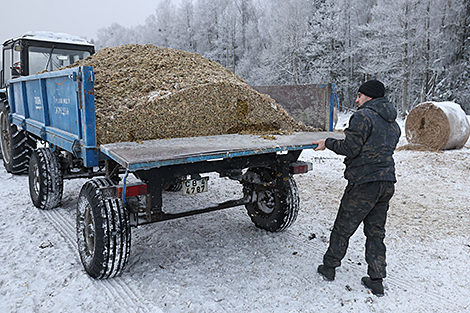
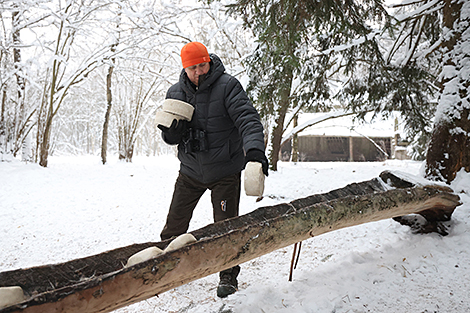
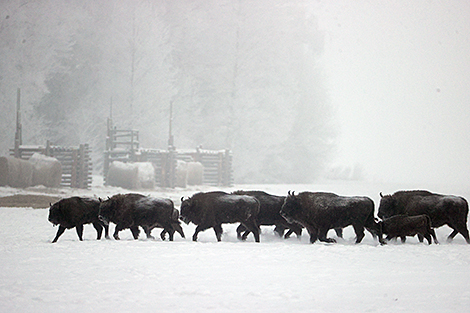
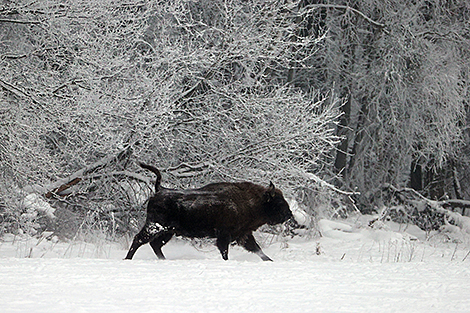
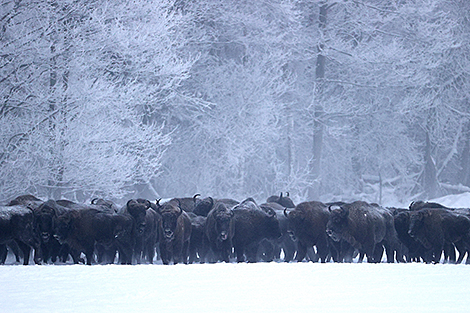
Stanislav Basko added that this winter is harsh, so more supplemental feeding is required as it is difficult for the animals to find food on their own. “Winter is tough for them. There's a lot of snow, and they can't even get themselves something to eat. There might be some winter crops or greenery somewhere, but it's all buried under the snow. For instance, when there's minimal snow, a roe deer can dig something up with its hooves, but in these conditions, it's impossible; the snow is knee-deep. In winter, heat loss is significant, so they need to feed intensively,” he said. Incidentally, the cooperative employs a diversionary tactic by planting special fields with winter crops to prevent the animals from encroaching on its cultivated fields or heading toward the road.
The animals are constantly monitored here, and a census is conducted at the end of a year. Currently, 500 bison inhabit the reserve, and the herd has been increased by 28 calves. Specialists note that this is a very positive result. The reserve is also home to 286 deer and 120 roe deer.
 print version
 make home page
 add to bookmarks