



Press releases
‘Even children were given no peace.’ Surviving the concentration camp as a child
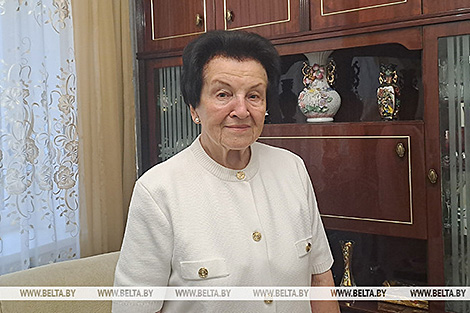
Inessa Kirilyuk
On the Day of Remembrance for the Victims of Fascism, we recall those whose fates were rewritten by the war. Inessa Kirilyuk from Brest is one of those who went through a fascist concentration camp as a child. Her story is testimony to the fact that even in the most terrible circumstances a person is capable of surviving and continuing to enjoy happy moments. In a conversation with BelTA, Inessa Kirilyuk shared her memories.
She was born in 1938 in Minsk. Her mother worked in a government position, and her father was a diplomat stationed abroad. When the war began, the girl and her mother were at a dacha. “We made our way back as best we could - sometimes on a cart, sometimes on foot. Minsk was already being bombed, it was burning. Everything happened very quickly. When it started, my mother was an underground fighter. In late 1943 she was arrested. I remember that well, even though I was only 5. Tall officers entered the apartment and searched for something. They found nothing, but they arrested my mother. She never came out of prison - she died under torture. Then my mother’s sisters, who lived with us, were arrested, and I and my cousin were sent to a children’s shelter,” Inessa Kirilyuk said.
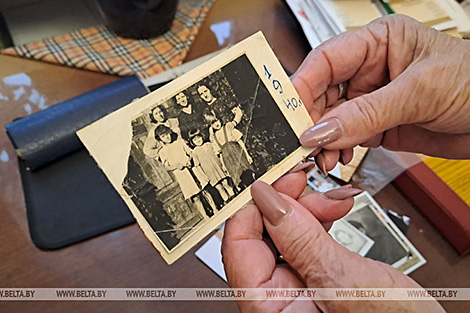
Salvation came from her mother’s sister, who lived separately. “She took us away. A couple of days later the children from that shelter were taken to Trostenets – they all died,” she recalled.
But the dangers did not end. In early 1944, the girl and other children were seized and sent to Königsberg. “A full freight car. Plenty of such cars. First they brought us to Plattling. We were led into a large room. Suddenly the floor shuddered and began to tilt, and there was a gas chamber. The floor rose - half the people remained, half went down below, and they died,” Inessa Kirilyuk said.
Next, the little girl ended up in the Mauthausen concentration camp, where she remained from 1944 until liberation in 1945. “A camp behind barbed wire, with sentries, with dogs. A men’s barrack, a women’s barrack, a children’s barrack. I was in the children’s one - even children were given no peace. I already called my aunt ‘mama’ - we spent a lot of time together. She was moved far away from us. Then a doctor began working with us. Outside the camp fence there was a private clinic where German doctors and nurses worked. We were taken there one by one. They undressed us, washed us, dressed us in white clothes. At first they took blood. But how much blood does a small child have? We returned to the barracks weakened, completely without strength. Those who could not walk were carried by those who still had some strength left. When there was already little blood, they performed various experiments. They used X-rays to check how the internal organs reacted. It was painful, but the children knew that crying was not allowed. Anyone who screamed was taken away. Most likely to the crematorium,” the Brest resident shared her memories.
In April 1945, the prisoners were liberated by Allied troops. “Tall soldiers came in - Americans, Englishmen. We were frightened - we thought someone had come again. A dark-skinned soldier ran up to me. I got scared - I had never seen people like that. And he picked me up in his arms and cried. He cried because of what he saw, at the state the children were in. And I cried from fright. We did not yet know that freedom had come. Then that soldier took some chocolate out of his pocket for me. And I looked at him, not knowing what would happen. What if it was poison,” Inessa Kirilyuk said.
After liberation, the sick children were taken to Czechoslovakia. “I had double pneumonia. My sister and I were brought to a sanatorium,” she continued.
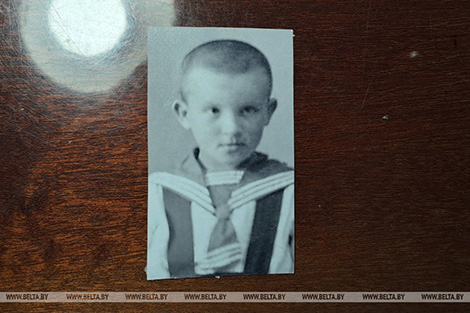
They returned to Minsk only in September 1945. “My father, who was abroad, also died. Our apartment was occupied. We settled with my mother’s sister, who had saved us. Later the documents were restored. The apartment was returned to us,” the Brest resident said.
First grade became a new trial for a child with such a history. “I was very thin and had my hair cut short. The children somehow took to me badly. Every day my nose bled, and I had to run out of the classroom. I stopped going to school, because they kept pulling me by the hair or by my uniform. But the teacher came to my home, learned the story from my mother and insisted that I return. When I came back, the children treated me completely differently: someone would give me a sweet, someone an apple, a biscuit. At noon the nurse would stand outside the classroom door - she knew I would have a nosebleed. They said it was possibly a consequence of the concentration camp,” Inessa Kirilyuk shared.
Every summer the girl was sent to a sanatorium-type children’s camp. She was fed five times a day. Over time, everything stopped hurting. Life was getting back on track, while memories of the war remained off-limits for many years.
After her studies, Inessa Kirilyuk worked at the Brest Civil Engineering Institute. “I started as a secretary. Then I worked in the department of foundations and footings, engineering geology and geodesy. At 68 I left work to care for my sick husband. But my public activity continued. For 20 years now I have been the executive secretary of the university’s veterans’ council, now a technical university. And for the same length of time with the regional and city organization of former concentration camp prisoners. There are very few of us left now. As of 10 January, I always compile the lists, there were 53 of us,” she said.
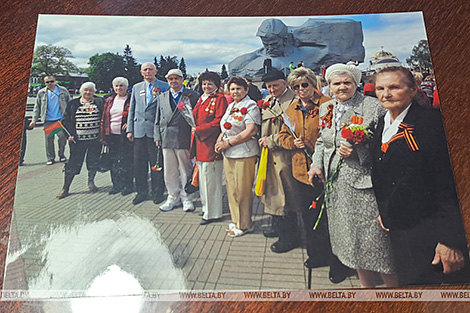
As she spoke about the war, the pain she had lived through was visible in her eyes. “Victory Day is truly my holiday. Because I came home. My parents died, but I was saved by people who became my new family. They were the most wonderful people. All my relatives treated me warmly. The whole family was strong and close-knit,” the woman emphasized.
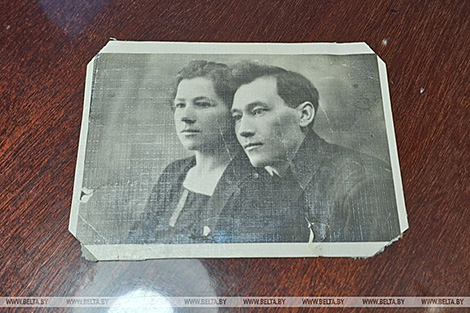
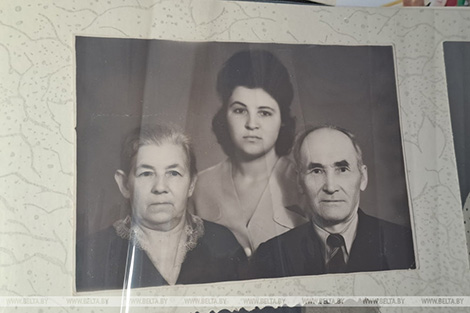
Inessa Kirilyuk now lives in Brest near her daughter. Her hobby is tending the flowers in the front garden by the house. She also listens to opera and audiobooks and watches ballet on her laptop. “I love opera and ballet very much. I listen to old operas and watch detective stories,” she said.
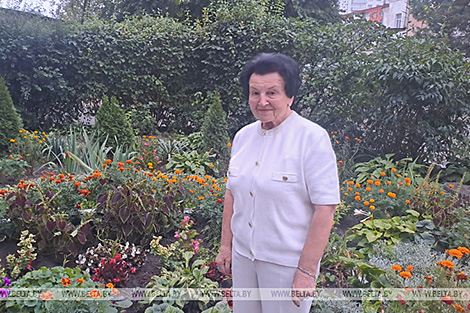
The happiest moments of her life were the births of her son and her first granddaughter. “There was also the occasion when my middle granddaughter got married. A wedding in a restaurant. My son-in-law plays the saxophone, my daughter plays the piano, and my granddaughter sings at the microphone. It was so wonderful! Such a beautiful event. I have a daughter, a son, three granddaughters, one grandson, three great-granddaughters and one great-grandson. The children come to see me in Brest in the summer during their holidays. Family has always been the main value in my life, in any period,” Inessa Kirilyuk concluded.
Darya PARASEVICH,
BelTA.
 print version
 make home page
 add to bookmarks