



Press releases
Belarusian archaeologists uncover traces of 1st millennium armed conflict
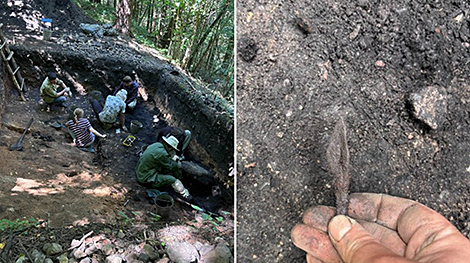
MINSK, 20 July (BelTA) - Archaeologists from Belarusian State University have discovered traces of an armed conflict from the mid-1st millennium AD, BelTA learned from the press service of the university.
The discovery was made during the annual fieldwork of history faculty students at the archaeological site near the village of Rechki in Vileyka District. The excavation is led by Polina Kurlovich, Head of the Department of Archaeology and Special Historical Disciplines.
Remains of fortifications destroyed by fire have been uncovered. Specifically, this refers to an earthen rampart that once supported a wooden wall. Arrowheads found at the site indicate that the fortified settlement was destroyed in an armed conflict.
“The artifacts discovered in the layer of fire suggest that these events can be tentatively dated to the era of the Great Migration of Peoples (4th – first half of the 5th century). Excavations are also ongoing at an unfortified settlement at the foot of the hillfort. Numerous items have been found that characterize the material culture of that time: iron and clay tools, clothing accessories, bone artifacts, and ceramic vessels,” the press service reported.
The study of the archeological site is being carried out as part of the National Archaeological Projects concept. The research will help provide a better understanding of how people lived in the 1st millennium AD and yield new data on the settlement of Slavs in the territory of Belarus.
The expedition at Rechki will continue until 28 July. The discovered artifacts will be sent to the educational laboratory of museum studies at the History Faculty of BSU, where they will undergo further analysis in a laboratory setting before being added to the exhibition displays.
Field research expeditions for history students have been conducted annually since 1954. Excavations in various regions of Belarus help uncover the distinctive features of material culture from the Stone Age to the Modern period.
 print version
 make home page
 add to bookmarks