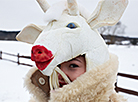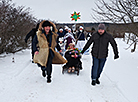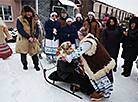



Kolyady 2026 in Belarus: Unique ancient rituals in the countryside and colorful performances on city streets
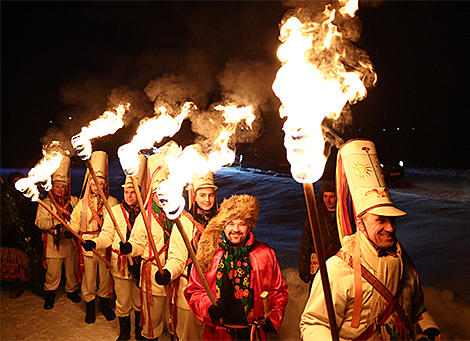
Kolyady is the most colorful and symbolic period in the winter calendar of the Slavic peoples. Belarus’ unique historical and religious makeup means that ancient traditions here last longer than elsewhere continuing from 24 December right through to 19 or 22 January.
In paganism, Kolyada signified the change of the annual cycle, the winter solstice, the sun’s transition from winter to summer, and the inevitable victory of good deities over evil spirits. Later, the pre-Christian and Christian elements merged, and the symbol of this unity became the Kolyada star, which for some represents the sun, and for others the Star of Bethlehem, which showed the Magi the way to the infant Christ. The celebration of Kolyada itself was marked by particular merriment and optimism, becoming a symbol of faith in the inevitable triumph of good over evil. Ethnographers identify three common elements in the caroling of Belarusian Catholics and Orthodox:
- the poor (hungry) Kutia, or Vigilia, a time of strict fasting and silence in anticipation of the Nativity of Christ;
- the celebration of the New Year, which coincides with the Generous Evening (Shchodryk), when people set a bountiful table, visit each other, and have fun;
- Epiphany (19 January in the Orthodox calendar), or Theophany (Feast of the Three Kings) observed by the Catholics on 6 January
The days between Christmas and Epiphany were called wicked days, which emphasized their sacred, special significance. Our ancestors believed that during this period, the gates between the world of the living and the spirit world are opened and the two dimensions may interact. Therefore, fortune-telling and encounters with “guests from the other world” were permitted.
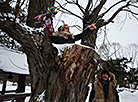
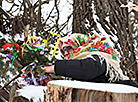
One of the significant events of the cycle was the send-off of Kolyada (21 January), which in different localities had its own traditions and symbols. For example, in Berezino District, Kolyada, in the form of a sheaf or a pot of kutia (grain dish), was taken up to an oak tree, for which the most agile young man was chosen from among all the carolers. In other regions, this day was called Razbryk-Kalyada or Paabed Kalyada, and Kolyada was seen off before dinner... with golden pancakes.
Many of the Kolyada rituals have been restored in Belarus and the most famous ones include:
- Kolyady Tsars, inscribed on the UNESCO List of Intangible Cultural Heritage (village of Semezhevo, Kopyl District, Minsk Oblast);
- Pulling Kolyada onto the Oak (village of Noviny, Berezino District, Minsk Oblast);
- Tereshka's Wedding (village of Anoshki, Lepel District, Vitebsk Oblast);
- Koniki (town of David-Gorodok, Stolin District, Brest Oblast).