


News & Events in Belarus
Lukashenko receives credentials from ambassadors of nine countries
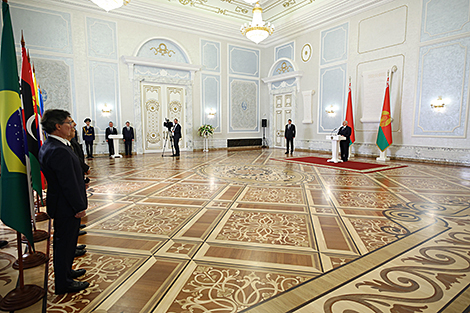
MINSK, 28 July (BelTA) - Belarusian President Aleksandr Lukashenko received credentials from the ambassadors of nine countries on 28 July, BelTA has learned.
The head of state was presented with credentials by diplomats from Uzbekistan, Brazil, Peru, Mongolia, Myanmar, the Republic of Korea, Saudi Arabia, Libya, and Rwanda.
The president congratulated the ambassadors on the official start of their diplomatic missions and expressed confidence that their tenure would be filled with significant events and concrete achievements. “Any proposals aimed at developing friendly, good-neighborly ties between your countries and Belarus will be promptly and carefully considered,” the head of state assured. “We are ready for result-oriented cooperation.” Aleksandr Lukashenko noted that the success of diplomats depends not only on their own efforts but also on steps taken by Belarus. “But we will always walk our path with dignity,” the Belarusian leader stressed.
Addressing the diplomats, the president noted that many of them represent countries of the global majority, whose role in international affairs is rapidly and, most importantly, deservedly growing. “The countries that are part of it share similar approaches to world order, partnership building, and conflict resolution. They are characterized by respect for national sovereignty, rejection of pressure, diktat, and illegal sanctions. Belarus rightfully considers itself part of this global majority,” he emphasized.
“Our heroic and at the same time tragic history of resisting numerous attempts at colonization and the destruction of Belarusians has predetermined the exceptional importance for us of independence and the right to ‘be called people’, as the Belarusian classic put it,” the head of state stated.
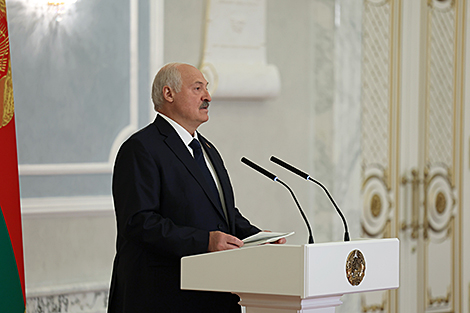
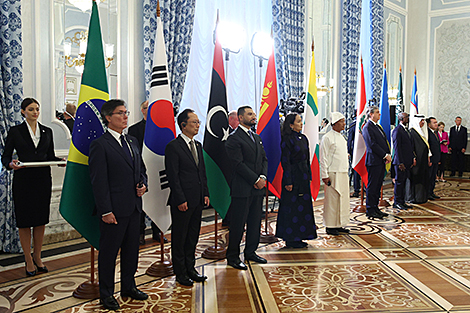
Aleksandr Lukashenko expressed confidence that the shared views of the global majority countries would provide a solid foundation for the diplomats’ successful mission in Belarus.
The president called the Slavianski Bazaar in Vitebsk arts festival a vivid symbol of Belarusian hospitality, noting that over its 35-year history, it has welcomed participants from 85 countries, including Uzbekistan, Brazil, Mongolia, Myanmar, and the Republic of Korea.
“Despite the events unfolding near our borders, now as in all years, the festival stage has featured the Belarusian, Russian, and Ukrainian languages, as well as songs from other countries and brotherly peoples. This is an example of how art overcomes barriers and unites us all - people,” the head of state emphasized.
Aleksandr Lukashenko also spoke, as is tradition, about Belarus’ relations with each of the countries, noting the importance of and interest in developing cooperation with them.
On Uzbekistan
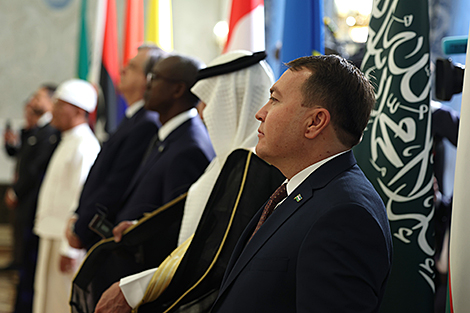
The president described Uzbekistan as a key country for Belarus in Central Asia.
“The recent historic visit of the president of Uzbekistan to our country marked a new stage in bilateral relations, which have been elevated to the level of strategic partnership,” the Belarusian leader emphasized. “This has been greatly facilitated by the high dynamics of trade and economic cooperation. We are ready to expand it comprehensively, with a focus on industrial cooperation.”
On Brazil
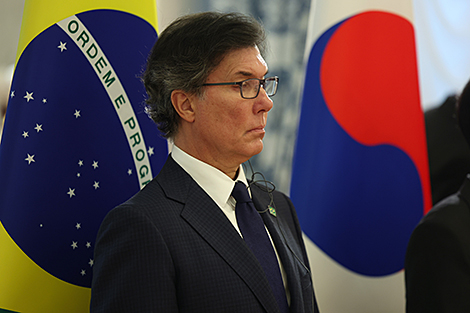
The head of state noted that Belarus’ attention to Latin America is primarily driven by confidence in the prospects of mutually beneficial ties with the region’s countries.
Aleksandr Lukashenko welcomed the growing international significance of Brazil and its contribution to shaping the global agenda. “For Belarus, your country is the most important trade and economic partner in the Western Hemisphere,” the president emphasized.
On Peru
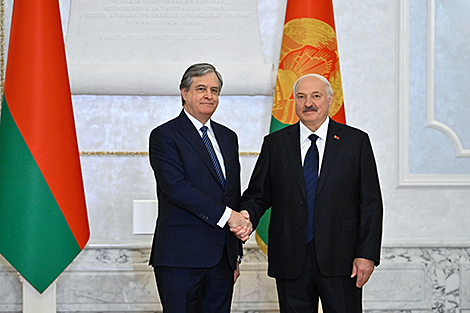
Speaking about this country, the president noted that its successful development is largely driven by strong momentum in the agricultural sector and mining. “In Belarus, you will find a wide range of machinery and equipment essential for these industries,” the Belarusian leader pointed out.
On Mongolia
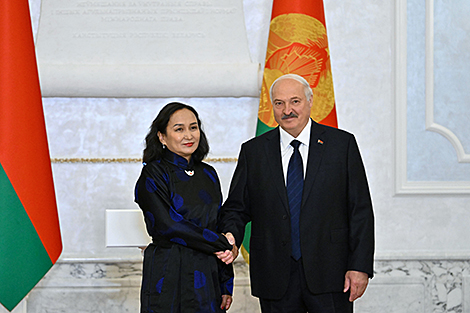
“In Asia, figuratively speaking, the heart of the modern world beats, and we are glad to partner with countries in this region,” the head of state emphasized. “Belarus sincerely counts Mongolia among its friends. The foundation of strong relations between our countries and peoples is the memory of our joint struggle against Nazi Germany and militarist Japan.”
According to the president, Belarus places great importance on strengthening high-level contacts. The country also hopes that the mutual appointment of new active ambassadors and the entry into force of the Interim Trade Agreement between the Eurasian Economic Union and Mongolia will contribute to expanding economic cooperation.
On Myanmar
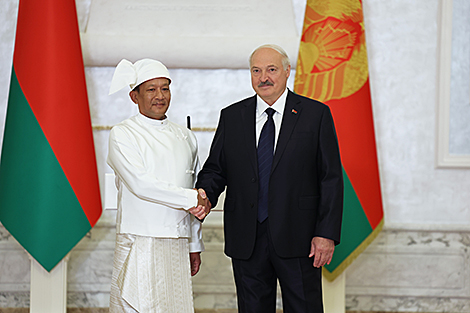
Aleksandr Lukashenko noted the significant efforts made recently to revitalize dialogue with Myanmar in the political, humanitarian, trade and economic sectors.
“A number of specific projects in industry, agriculture, pharmaceuticals, and the humanitarian sector are currently in the works,” said the Belarusian leader.
On the Republic of Korea
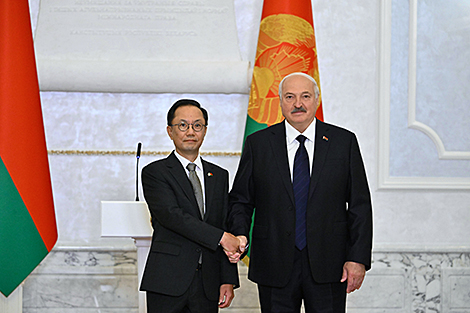
Describing Belarus’ relations with the Republic of Korea, the head of state noted their healthy pragmatism. The president expressed readiness to develop cooperation in areas of mutual interest.
“We would welcome steps by Seoul to revitalize Belarusian-Korean ties, primarily in the economic, technological, and investment sectors,” said Aleksandr Lukashenko.
On Saudi Arabia
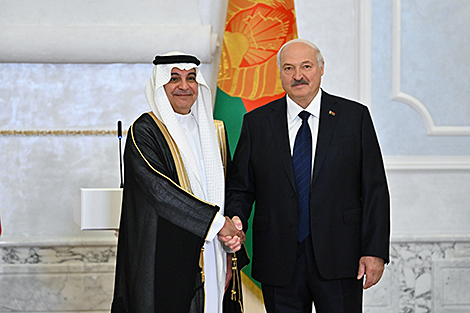
The president emphasized that Belarus maintains active contacts with the countries of the Middle East.
“Saudi Arabia is an authoritative political and promising trade and economic partner for us, particularly in agriculture and food security, industry, information technology, and other areas,” said the head of state.
Aleksandr Lukashenko stressed the importance of joint efforts to boost trade and investment cooperation, in order to add several success stories to the bilateral relations portfolio and take Belarusian-Saudi interaction to a qualitatively new level.
On Libya
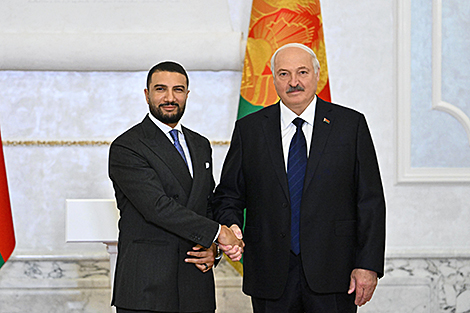
“The complex geopolitical situation has long prevented us from fully realizing the existing potential for cooperation with Libya,” said the Belarusian leader.
The head of state expressed readiness to develop relations with this country, supply agricultural machinery and medicines to Libya, increase exports of Belarusian medical and other services, as well as transfer technologies and train Libyan specialists in Belarus. “I am confident that the conditions for revitalizing joint work are favorable today,” Aleksandr Lukashenko emphasized.
On Rwanda
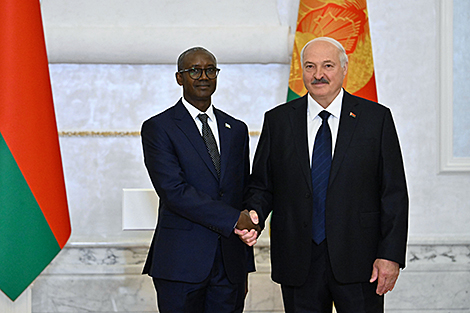
“Belarus seeks to expand relations with Rwanda. We attach particular importance to the economic component of interaction as the foundation for developing political dialogue,” said the Belarusian leader.
The president identified industry and agriculture, education, information technology, defense and security as priority areas. Aleksandr Lukashenko also suggested creating conditions for the growth of mutual trade and establishing a joint cooperation commission for this purpose.
 print version
 make home page
 add to bookmarks