



News & Events in Belarus
Lukashenko convenes meeting with Council of Ministers
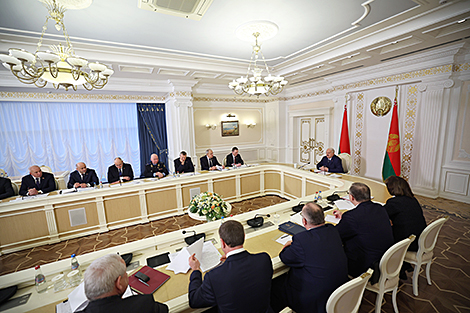
MINSK, 6 February (BelTA) - Belarusian President Aleksandr Lukashenko convened a meeting with the Council of Ministers on 6 February, BelTA has learned.
Key items on the agenda were the work of crisis managers and new measures to safeguard workers against wage arrears.
Discussing the issue of settling organizational insolvency, Aleksandr Lukashenko recalled that a new law in this sector was adopted two years ago, which had been discussed several times at the presidential level. “We changed our approaches to the procedures, shifting the emphasis from bankruptcy to rehabilitation and the preservation of enterprises, and consequently, jobs. Report on how the innovations of that law have impacted the reduction of loss-making in the economy,” the Belarusian leader said. “Are there any bottlenecks identified in practice that should be eliminated to further prevent bankruptcy?”
In this connection, the Belarusian leader focused on the institution of crisis managers. “I would like the speaker on this issue, the economy minister, to report to us on where this phenomenon came from in Belarus, what it means. And most importantly, why we need it. After all, this is a new phenomenon in independent Belarus,” the head of state addressed the meeting participants. “What effect have we got from these very crisis managers?”
According to Economy Minister Yuri Chebotar, the insolvency regulation law adopted in late 2022 granted local authorities powers to prevent the bankruptcy of private organizations. “Experience has already been gained. Since the law came into effect, eight private organizations have entered rehabilitation at their own initiative,” he said.
Another key change was to bolster the creditors' council. For systemically important enterprises, ministries and regional authorities gained the right to appoint a trusted delegate. Additionally, the law strengthened labor representation by mandating that the council include an employee to monitor wage payments and employment contract matters.
The discussion touched upon the effectiveness of the mechanism for appointing crisis managers to troubled organizations. The president was skeptical of the practice where a trusted outsider is put in charge of a firm but not formally recognized as its head. “The issue is: I’m not the manager or director, so I'm not directly accountable,” the Belarusian leader said.
Earlier, the Supreme Court, among others, had proposed introducing the institution of crisis managers to reduce the number of court cases concerning the economic viability of enterprises. “They rigged up this system for a so-called market economy that has never existed and never will. Everywhere requires management and oversight,” the head of state said. “So what have these managers actually delivered for us? Absolutely nothing.”
Based on his personal experience, Aleksandr Lukashenko is convinced that the issues of specific enterprises should still be handled by local authorities: “They have a better view. Let them direct efforts there and be held accountable.”
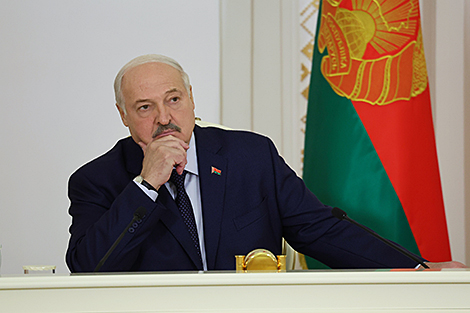
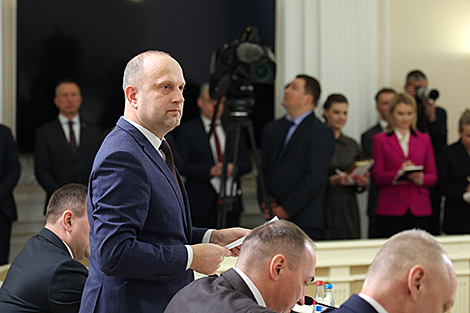
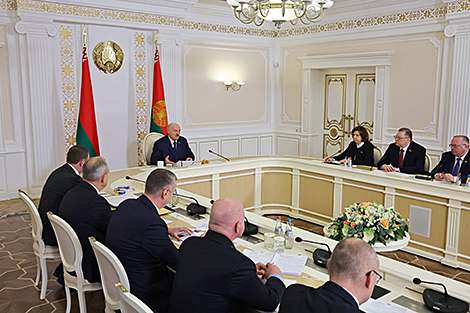
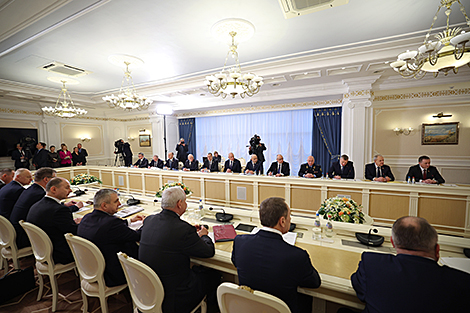
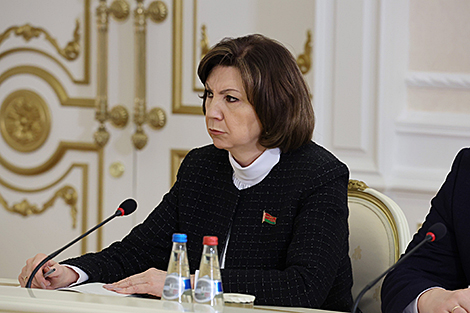
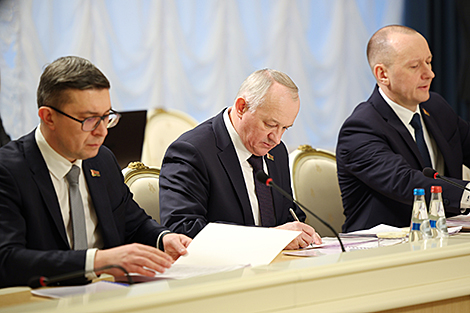
The president stated that decisions must primarily be made to yield results, and this is only possible with the involvement of the district or oblast executive committee, which is directly familiar with the situation at a given organization. Court proceedings, the head of state believes, cannot guarantee that all nuances are taken into account. “The court made a decision, bypassing the authorities - the district executive committee, the oblast executive committee - and washed its hands of it,” he said.
Following these remarks, the head of state asked what specific new measures were being proposed in this area and how they would improve the situation.
A draft decree to guarantee compensation for completed work was submitted for consideration. “It would seem that a clear system has been built in the country, thanks to which everyone receives payment for their work,” the president said. “If we promised something and didn’t pay, where is a person supposed to go, how are they supposed to protect their interests here? They are forced to go to court, find money for it, taking away from family and children, get stressed, waste time, and so on.”
Aleksandr Lukashenko sought clarity on how the decree would integrate with pending parliamentary bills designed to strengthen accountability for wage arrears.
Following the meeting with the head of state, Economy Minister Yuri Chebotar told the media that requirements for the qualifications of crisis managers in Belarus are planned to be raised. According to him, this could be done as part of finalizing the law “On the Regulation of Insolvency”. Plans are in place to finalize the document by the end of the year.
“I believe that as part of finalizing the law, we will certainly raise the qualification requirements,” he said. “There is an understanding that any enterprise should have a qualified specialist who, with the help of local authorities, can put the enterprise in order.”
Yuri Chebotar also pointed out that crisis managers sometimes face scrutiny from law enforcement, regulatory agencies, and the Economy Ministry. This necessitates the development of clear and unambiguous requirements for crisis managers to prevent legal breaches.
 print version
 make home page
 add to bookmarks