




Business news
Belarus’ PM visits Orsha Meat Canning Plant
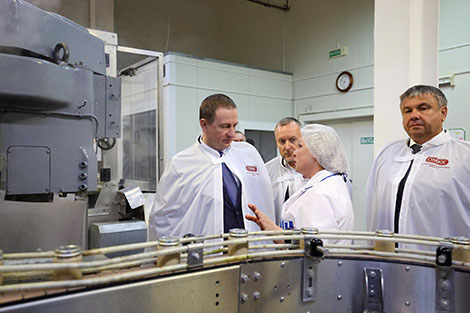
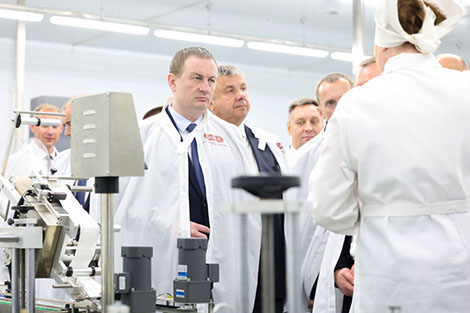
ORSHA, 18 August (BelTA) – Belarusian Prime Minister Aleksandr Turchin visited Orsha Meat Canning Plant on 18 August, BelTA has learned.
The plant has been placed under the trust management of Agrokombinat Dzerzhinsky. Key topics of discussion included capacity utilization, development of the raw material base, and prospects for increasing production volumes, including canned meat and baby food.
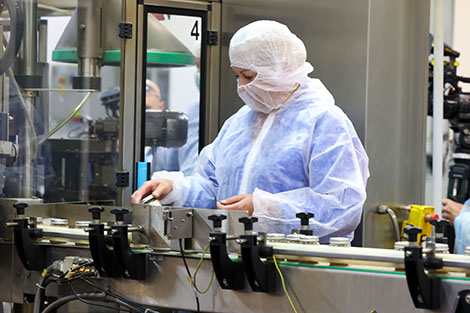
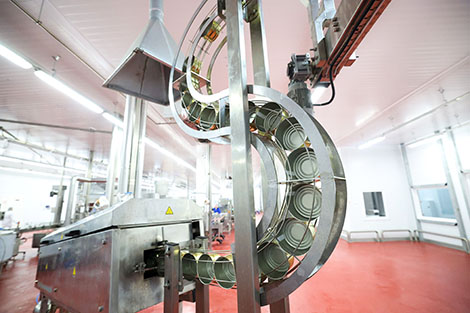
The enterprise is one of the country’s largest producers of canned meat and meat-and-vegetable products for baby food, as well as general consumer products. It operates an automated line for baby food production, using meat from young animals raised without growth stimulants or antibiotics. The plant produces 12 types of meat purees for infants and has switched to glass packaging for baby food. The range of canned meat and meat-and-vegetable products includes 16 items, and animal feed - four. In July alone, the plant sold 1,109,000 cans of canned meat, in addition to baby food.
According to Pavel Rynzak, manager of Orsha Meat Canning Plant, the products are actively supplied to the domestic market and Russia. “Adult canned food production volumes have grown by about 15% over the past six months. We are launching a new, more automated and advanced canned meat production facility, which will allow us to further increase volumes and meet all consumer demand. In the future, we plan to build another facility on the site to produce pet food in pouches - so we will be producing both dry and wet pet food,” he said.
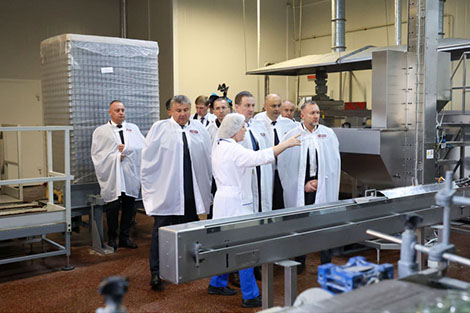
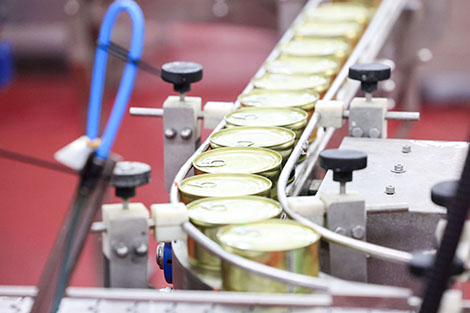
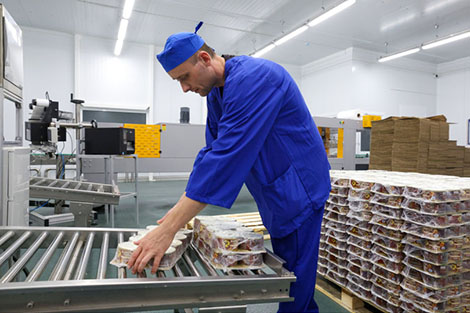
In the new canned meat production facility, human involvement in the production process has been reduced, with high automation achieved through modern equipment. This reduces time, increases production volume, and lowers the cost of finished goods.
Konstantin Chekhovsky, head of sales at Orsha Meat Canning Plant, noted the growing export potential of the enterprise. “Over the past few months, the processing facility has seen a significant increase in capacity utilization, and the plant now has a large volume of raw materials, which is primarily directed toward canned meat production. Today, our focus is shifting toward export supplies, but we have not forgotten the domestic market. With the increased raw material flow, we have significantly expanded our external market potential. For example, in the first seven months of 2026, we exported 500,000 more cans of canned meat compared to the same period last year. In previous years, we also saw steady growth. Cost reductions have helped us achieve high competitiveness for the finished product,” he said.
In addition, Vitebsk Oblast First Vice Governor Sergei Levkovich briefed the prime minister on the prospects for agricultural development and processing enterprises in the agro-industrial complex of Vitebsk Oblast. The oblast’s processing sector comprises four meat processing plants and eight dairy plants. The raw material zone includes 153 agricultural organizations with a total dairy herd of 149,000 cows. There are 331 dairy farms and 107 dairy complexes and farms equipped with milking parlors. The dairy complexes house 68,000 head, accounting for 50.8% of the oblast’s total milk output. In 2025, the average milk yield was 4,641 kg, while on the complexes it reached 5,937 kg, 28% above the regional average.
A number of large-scale projects are planned for beef production. Agrokombinat Dzerzhinsky plans to build six cattle fattening complexes with a capacity of 4,000 head each (two each in Vitebsk District, Orsha District, and Tolochin District). This will provide an additional 12,000 tonnes of meat per year. In addition, the modernization of four existing complexes with a total capacity of 14,000 head will yield an additional 7,000 tonnes. A complex for breeding beef cattle with a capacity of 3,200 head is expected to come online in September 2026. In pig farming, the oblast is showing steady growth: in 2025, production reached 58,700 tonnes of pork, with plans to exceed 70,000 tonnes by 2028. The implementation of all planned projects will significantly strengthen the region’s food security and boost its export potential.
Next stop on prime minister’s itinerary - PAK Plant. An investment project titled Organization of ring rolling production with reconstruction of a production building block is being implemented at the site of BelAZ’s branch - Industry of Rings in Orsha. The project aims to set up a modern import-substituting facility for producing ring blanks for flanges, bearings, planetary gear ring gears, adapters, shells, and wheel rims for mining dump trucks. The project is valued at Br330.4 million and is scheduled for completion in the first quarter of 2027.
The main stages of mechanical equipment installation and process piping assembly have already been completed on most sections of the line. Work is underway to install equipment for the heat treatment section for ring blanks. Until now, ring blanks were purchased from foreign suppliers. Once the project is completed, ring blanks will be produced at the company’s own ring rolling facility, ensuring full import substitution of these products both for BelAZ and for other enterprises in Belarus and Russia.
 print version
 make home page
 add to bookmarks