
Opinions & Interviews
Belarus’ honorary consul in Switzerland: In difficult times, it is vital to preserve bridges, not build walls
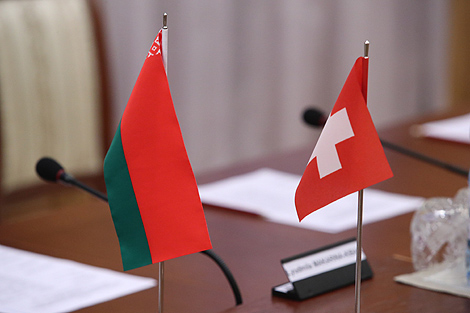
An archive photo
It is important to preserve and develop cooperation primarily in areas where it brings clear benefits to people. This opinion was expressed in an exclusive interview with BelTA by Hermann Alexander Beyeler, Honorary Consul of the Republic of Belarus in Lucerne (Swiss Confederation). He spoke about Belarusian-Swiss projects in healthcare, science, culture, sports, and the broader humanitarian sphere implemented with his active support, as well as his Belarusian roots and the need to preserve the bridges of friendship between the peoples of the two countries even in difficult times.
Mr. Beyeler, you have been Honorary Consul of Belarus in Switzerland for seven years. What is the story behind your appointment? Is it connected with your Belarusian roots?
Indeed, there is an amazing story behind it. When I became honorary consul of Belarus, I did not yet know that my ancestors had lived in Pinsk. I learned about this later. So sometimes I think that my encounter with Belarus was not entirely accidental.
My decision to take on the responsibilities of honorary consul was based primarily on my attitude toward the country, my contacts with Belarusians and my desire to develop relations between Belarus and Switzerland. But when this family history came to light later, Belarus became even closer to me and took a very important place in my life.
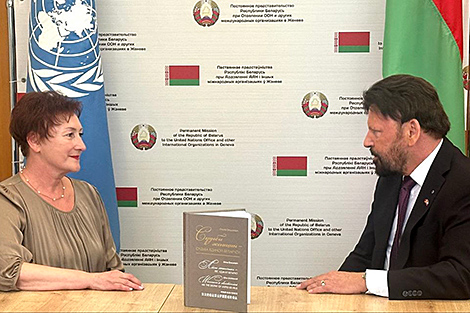
I remain Swiss, and this, in my view, is an advantage for my mission. I understand Switzerland well, while I already know Belarus, its people, opportunities and needs quite well. This allows me to look for common ground even when the political situation is not conducive to it.
For me, being an honorary consul has never been merely an honorary title. I am convinced that the results of such work should be concrete: a meeting that has taken place, a new medical project, assistance to a social institution, contact between specialists from the two countries, support for athletes or a cultural initiative.
Today I can say quite sincerely: Belarus has become a very close country to me.
How often do you visit Belarus? What attracts you most to our country?
I try to visit Belarus regularly. And it is important for me not to limit myself to Minsk. You cannot truly get to know a country if you see only its capital. That is why during my trips I try to visit the regions, their universities, hospitals, social institutions, and enterprises. This is where the country’s achievements and the issues that still need to be addressed are particularly visible.
What attracts me most are the people. In Belarus I meet highly professional doctors, scientists, teachers, athletes, and managers. I am always impressed by the combination of a high level of professionalism with modesty and openness. I like the order, safety and cleanliness of Belarusian cities, the nature and, of course, the hospitality.
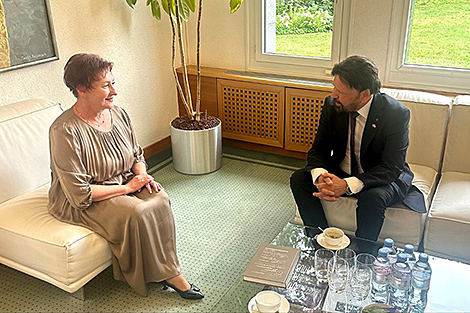
Over time, many initially formal acquaintances have grown into genuine friendships. So today, a trip to Belarus means much more to me than a business trip.
When visiting the regions, you provide support to medical and social institutions. What guides you in carrying out humanitarian missions?
I have a simple principle: if a person has an opportunity to provide help, especially to children, elderly people or people with disabilities, that opportunity should be used.
I believe in targeted assistance. It is important for me to understand who needs it and what concrete result it will produce. That is why I try to visit institutions personally, talk to their heads and specialists, and see their actual needs.
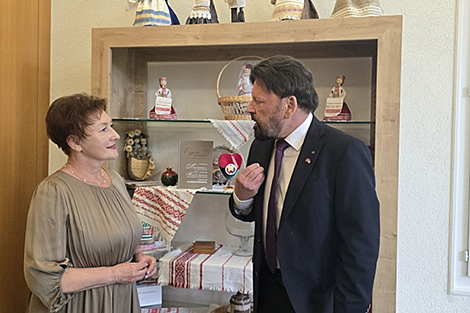
One such example is the Pukhovichy Children's Rehabilitation Center in Minsk Oblast. I visited it and met the children and the center’s specialists. After that, the center received charitable assistance.
Another very important project for me is associated with the National Research and Treatment Center of Traumatology and Orthopedics. In 2024, I presented the center with a certificate to purchase high-tech equipment for pediatric operating rooms and develop its pediatric trauma and orthopedic department. When you see children with severe orthopedic conditions and see the high level of Belarusian doctors helping these children get back on their feet and return to a full life, you realize that such support truly matters.
It was my personal acquaintance with the center that eventually led to a more ambitious idea: the establishment of the Belarusian-Swiss Reference Center for Large Joint Replacement on its basis. For me, this is a good example of how charitable assistance can grow into long-term professional cooperation.
That is why I have a fairly broad understanding of humanitarian work. It can be financial assistance to a social or medical institution, equipment, arranging a professional visit for a doctor, supporting athletes, or establishing contacts between Belarusian and Swiss specialists.
Sometimes it is much more important not simply to provide financial support, but to bring the right people together, find a specialist or technology, arrange professional contacts, and launch a project, including in the regions, that will operate for many years.
What matters most to me is that our work produces a concrete result.
You admire Belarusian healthcare and make a significant contribution to its further development. How do you interact with Belarusian medical institutions?
Over the past few years, I have had the opportunity to get to know Belarusian healthcare quite thoroughly, and I can say quite sincerely that Belarus has specialists of a very high professional level. Therefore, I see our task as much broader than simply introducing Belarus to Swiss technologies. We need to establish sustainable bilateral cooperation in which Belarusian and Swiss doctors exchange experience, visit each other’s clinics, participate in joint surgeries, and take part in educational and research-and-practical events.
I would like the Belarusian-Swiss center to develop not as a formal structure, but as a vibrant professional platform for specialist training, the exchange of surgical experience, the introduction of modern technologies and cooperation with leading Swiss doctors, clinics and medical companies.
We are also working to develop cooperation with medical institutions in Grodno, Mogilev, and Vitebsk. Projects between Swiss university hospitals and Minsk city hospitals are being explored. I am convinced that exchanges should cover different specialties and regions and gradually move from individual contacts to sustainable institutional relationships.
Today, this work is also taking on an institutional dimension. I have managed to establish working contacts with representatives of the Council of States of the Federal Assembly of Switzerland, including members of relevant committees. Healthcare is being considered as one of the priority areas for possible Belarusian-Swiss interparliamentary cooperation between the upper chambers of the parliaments of Belarus and Switzerland.
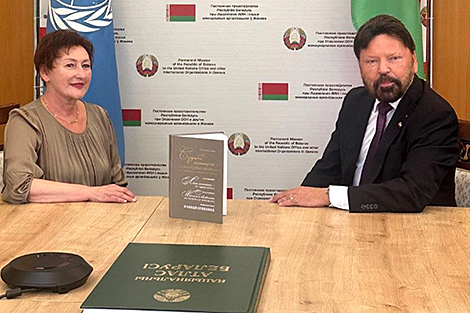
And this is about very practical things: direct contacts between hospitals, professional exchanges between Belarusian and Swiss doctors, expert ties, and joint research-and-practical and educational events. I see one of my key tasks as helping preserve and develop these professional ties.
But there is also an issue that, in my view, needs to be discussed. International cooperation requires not only initiative, but also consistency. Preparing one major professional visit by a Belarusian specialist to Switzerland can sometimes take months of work: it is necessary to reach agreements with university clinics and leading professors, prepare a meaningful program, arrange logistics, and resolve visa, and other organizational issues.
Unfortunately, we have already had situations when carefully prepared opportunities could not be realized for various reasons. As a result, potential opportunities in training young doctors, clinical research and institutional cooperation were lost. What matters much more to us is drawing the right conclusions. Trust between international partners is built gradually and needs to be protected. Therefore, we sometimes need clearer coordination among all participants in international projects, consistency in decision-making and responsibility for agreements reached.
Moreover, healthcare should not become hostage to friendly or unfriendly politics. Today, arranging some professional contacts between Belarus and Western Europe is objectively more difficult than it was several years ago. That is precisely why every such opportunity should be treated with particular care. When it comes to a patient who needs to walk again, an athlete or a child who needs rehabilitation, a new treatment method, or a doctor who needs to master modern technology, political disagreements should take a back seat.
What role do you see for Belarusian-Swiss cooperation in sports?
I attach great importance to this area. And it is not just about sports medicine and rehabilitation.
It is important to me that Belarusian athletes, despite the difficulties that exist today, maintain contacts with the international sports community and have an opportunity to use the mechanisms provided by international sports law to protect their interests.
Thus, in November 2025, I assisted the Belarusian Ski Union in filing a claim with the Court of Arbitration for Sport in Lausanne to challenge the FIS decision to bar Belarusian representatives in skiing disciplines from the Winter Olympic Games. For me, this was primarily a matter of having an opportunity to use an existing international legal mechanism and defend our position through established procedures. Fortunately, we won the case. Following the decision allowing Belarusian athletes to participate in the Olympics, in December 2025 we assisted the cross-country skiing team in taking part in qualifying competitions in Davos. It was particularly gratifying that following those qualifiers, the Belarusian side secured a national quota for the Olympic Games. In January 2026, we also provided active assistance to the Belarusian Olympic freestyle skiing team during its stay in Switzerland.
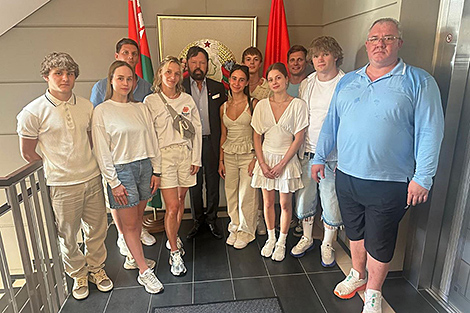
In general, I fully support the initiatives of the Belarusian Ski Union today.
I consider this fundamentally important. Behind every athlete are years of training, discipline and tremendous hard work. Sport should remain a space that brings people together rather than divides them.
Sport offers excellent prospects for medical cooperation. Belarus has strong sporting traditions and a solid medical base, while Switzerland has advanced expertise in orthopedics, sports medicine, rehabilitation, and athletes’ recovery. We have an excellent idea to organize a joint conference in Minsk on these areas.
I would like sports to become another strong bridge between our countries in the future.
What Belarusian-Swiss cultural projects have been implemented with your support?
Culture has always held a special place in my life, so I consider cultural diplomacy an important part of the work of an honorary consul. For me, it is important not only to introduce the Swiss people to modern Belarus, but also to help preserve and bring back its historical heritage.
One of the projects closest to my heart was the return to Belarus of an original Slutsk belt. This unique item of Belarusian cultural heritage was kept in a private collection in France. With my financial support, the belt was acquired and returned to its historic homeland.
It was a special moment for me. It was not simply about acquiring a valuable museum piece. Slutsk belts are one of the symbols of Belarusian culture, craftsmanship and history. And if part of such heritage is given an opportunity to return home centuries later, I consider it a great honor to have played a role in it.
Another project is linked not so much to the past as to the future of Belarusian culture. I presented the Belarusian State Academy of Music with a unique Guarneri violin specially restored for Belarusian musicians. It was fundamentally important to me that such an instrument should not remain in a private collection, but should be played by talented performers.
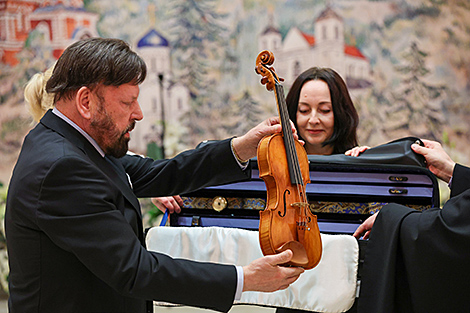
I see a certain symbolism in these two stories: we returned the Slutsk belt to Belarus as part of its historical heritage, while the violin was given to young musicians as an investment in the future of Belarusian culture.
That is how I understand cultural diplomacy. It is not only official events, concerts and exhibitions. It is also concrete actions that help people understand one another better and preserve ties between generations.
I would like Belarus to be known in Switzerland not through political news, but through an acquaintance with Belarusian centuries-old history, music, art, literature, traditions, and talented people. The global situation can change very quickly. But a work of art, a musical instrument or a historical artifact returned to its homeland can serve people for centuries.
That is why culture is one of the strongest bridges between Belarus and Switzerland for me.
Mr. Beyeler, why do you think Belarus’ Western partners, which previously actively cooperated with our country, now take such an unfriendly position?
I am not a politician, and it is not my task to assess governments. But in recent years I have seen the consequences of reduced contacts in practice: economic interaction has become more difficult, while additional obstacles have emerged for medical, scientific, sports, and humanitarian cooperation.
And we need to ask the question: who ultimately feels the consequences of such restrictions? Very often, it is not politicians. It is doctors, patients, scientists, athletes, students, entrepreneurs, and ordinary families.
I am particularly sensitive to situations where the consequences of political disagreements affect sports. Behind every athlete are years of preparation and often an entire professional life. Our experience of cooperation with the Belarusian Ski Union shows how important it is to maintain professional contacts even under the current circumstances and to use the existing legal mechanisms of international sport. Therefore, my position remains unchanged: political disagreements should not automatically mean an end to human and professional contacts.
It would be wrong to explain all the existing difficulties solely by external circumstances. International cooperation is always a responsibility shared by both sides.
That is why I consider practical steps toward restoring dialogue particularly important. Recently, working contacts have been established with a number of representatives of the Federal Assembly of Switzerland who have expressed readiness for interparliamentary dialogue with the Belarusian side. This is an important signal: even today, there are people on both sides who understand the need to talk to each other.
The Swiss tradition teaches us that having different positions is not a reason to end dialogue. On the contrary, that is precisely when dialogue is most needed.
Therefore, I advocate a pragmatic approach: preserving and developing cooperation primarily in areas where it brings clear benefits to people: healthcare, science, culture, sports, and the broader humanitarian sphere.
Today, it is much easier to build a wall than to preserve a bridge. My task is to preserve bridges.
Belarus occupies a special geographical position between East and West. History has repeatedly shown how challenging such a position can be. But it creates an opportunity to serve as a place for dialogue.
Europe is going through an extremely difficult period today. However, I am convinced that even the most serious conflicts ultimately end in negotiations. Therefore, it is necessary to preserve channels of communication even when the positions of the parties seem completely incompatible.
As a Swiss national, I find this approach particularly understandable. Switzerland has a long tradition of dialogue, mediation and the search for pragmatic solutions. I would like Belarus to make maximum use of its geographical position and its opportunities to facilitate dialogue.
Moreover, restoring trust does not necessarily have to begin with high politics. Sometimes it is more effective to start with areas where there is an obvious common interest: medicine, humanitarian cooperation, culture, and sports.
This is precisely the approach I am trying to apply to Belarusian-Swiss relations today. Healthcare and humanitarian cooperation can serve as a practical platform for the gradual restoration of broader dialogue. Within the contacts already established, medical cooperation is being considered as an opportunity to give interparliamentary dialogue concrete professional and humanitarian substance.
I am convinced that pragmatism, professional dialogue and humanitarian values can gradually strengthen trust and create a foundation for long-term relations. This approach also underpins the initiatives currently being undertaken to develop Belarusian-Swiss contacts. I would like Belarus and Switzerland not to lose touch with each other, but to work together to create and build.
Do you have any favorite places in Belarus? What do you like most about Belarusians?
Over the years, there have been many such places, and each is associated primarily with people and memories.
Pinsk holds a special place for me. It is not simply a beautiful Belarusian city; it is a place with which I feel a family connection.
I am very fond of Minsk. An enormous number of important meetings for me have taken place here, and this is where the people are with whom we have implemented medical, humanitarian, cultural, and sports initiatives over the years.
But I also love traveling around Belarus. Polesie, Vitebsk, Grodno, and other cities and regions, each time I discover something new. I am convinced that to understand Belarus, it is not enough to see only its capital.
But if I were asked what the greatest wealth of Belarus is, I would answer without hesitation: its people. I like the hospitality of Belarusians, their openness, respect for guests, and earnest attitude toward work. I am constantly impressed by the professionalism of the people I meet here: doctors, scientists, teachers, athletes, and musicians.
That is why I am particularly pleased when our projects acquire not only official but also human meaning. When the violin presented to the Belarusian State Academy of Music ends up in the hands of talented musicians, when cooperation between doctors opens up new opportunities for patients, or when an athlete gets a chance to compete on the international stage, I understand what all this work is for.
Over seven years, many official contacts have grown into friendships. So today, when I come to Belarus, I no longer feel like someone visiting a foreign country. My historical roots are here, people who have become my friends live here, and projects to which I have devoted a significant part of the past years of my life are being implemented here.
And I would like that in a few years we will speak not only about what we managed to preserve between Belarus and Switzerland during a difficult period, but above all about what we managed to create together.
If healthcare, humanitarian cooperation, culture, sports, and human contacts can become the foundation for gradually restoring broader dialogue between our countries, I will consider that my work as an honorary consul has truly been successful.
By BelTA’s Alina GRISHKEVICH
 print version
 make home page
 add to bookmarks