


Press releases
Top destinations for visitors to Polesie State Radioecological Reserve named
An archive photo
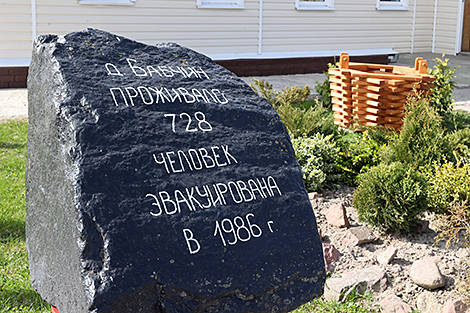
MINSK, 12 September (BelTA) – Head of the Information Department of the state nature protection and research institution Polesie State Radioecological Reserve Aleksei Kazakov spoke about the most popular tourist destinations in the Polesie State Radioecological Reserve in a recent episode of BelTA’s project The Nation Speaks.
When asked about the most popular locations among excursion groups, Aleksei Kazakov highlighted a route across the Khoiniki section of the reserve. “One of the largest and most popular settlements on this route is the village of Pogonnoye. It was a large, rich village with an interesting history, which is why people like it very much. Then there is, of course, the village of Orevichi with fairly well-preserved objects where we have something to show. And, certainly, the village of Krasnoselye where our new observation tower is installed,” he listed the popular places.
In parallel with classical educational tourism, the institution actively works on a specialized scientific vector. The territory of the reserve represents a unique place that allows continuous observations in the field of radioecology, radiobiology, and biodiversity study.
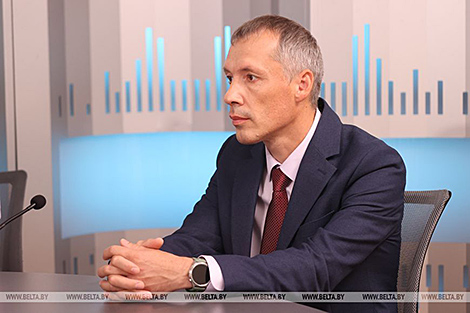
“We have been working for several years to separate these flows: the classical excursion program and develop scientific tourism separately. We cooperate closely with academic institutes of the National Academy of Sciences of Belarus and colleagues from the Russian Federation. This year two conferences have been organized with the participation of Russian and Belarusian specialists,” the representative of the institution said.
Aleksei Kazakov stressed that the reserve has its own spectrometry and radiochemistry laboratory.
Speaking about digital tools used by the reserve, he noted that work in this field has been underway for more than a year. “There are, of course, certain aspects regarding equipment, but overall as of today our interactive 3D tour of our museum is working. You can access it on our official website. For the future we intend to make at least several 3D tours of former population centers. I mean, so that people who even lived there previously could visit it virtually as part of the excursion program. While I do not have specific plans yet, we are working in this direction for now,” the speaker concluded.
 print version
 make home page
 add to bookmarks