
Press releases
Slavianski Bazaar in Vitebsk: How the festival’s name became the city’s hallmark
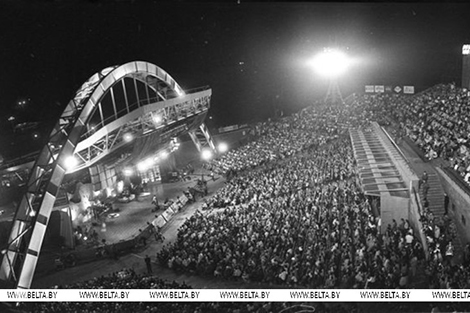
An archive photo
VITEBSK, 17 June (BelTA) - There are 29 days left until the 35th international arts festival Slavianski Bazaar in Vitebsk. BelTA invites you to dive into the festival’s history: each day, we look back at archival materials to highlight the most memorable moments of each festival, year by year.
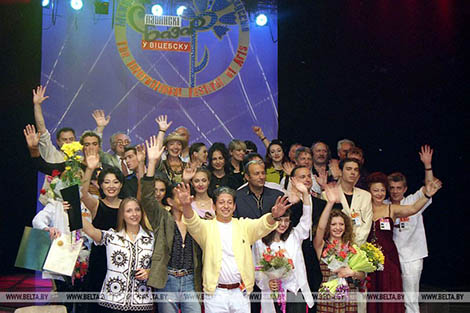
Today is about the 1998 festival. From 1998 onward, the International Arts Festival became known as Slavianski Bazaar in Vitebsk. This name emphasized its connection to Vitebsk Oblast and became the hallmark of the ancient city.
The festival participants and residents of Vitebsk were welcomed by Belarusian President and Chairman of the Supreme Council of the Union State of Belarus and Russia Aleksandr Lukashenko. He emphasized that in 1998, the festival was held under the patronage of the Council of the Union of the two Slavic states. “Situated halfway along the route ‘from the Varangians to the Greeks’, from St. Petersburg to Warsaw, from Moscow to Berlin, Vitebsk has long attracted and gathered creative individuals - singers, musicians, artists, sculptors, architects - creating a unique aura of beauty. Here, every stone breathes history and art. The immortal works of Ilya Repin, Marc Chagall, and Kazimir Malevich went straight from the streets of Vitebsk onto the pages of world art history, so it is no coincidence that our festival, which is also becoming a bright page in the history of culture and art, was born in ancient and yet young Vitebsk. Slavianski Bazaar in Vitebsk gathers more and more participants from various countries around the world each year. Today, artistic ensembles, world-renowned pop stars, and young performers from 26 countries have arrived here to once again take part in a truly grand multinational celebration - a celebration of music, a celebration of song, a celebration of true art. This means that Slavianski Bazaar in Vitebsk has already won enduring popularity and wide recognition, becoming an extraordinary musical event. It is festivals of this scale that largely unite our peoples today,” Aleksandr Lukashenko said in his greeting to the participants and guests of the festival.
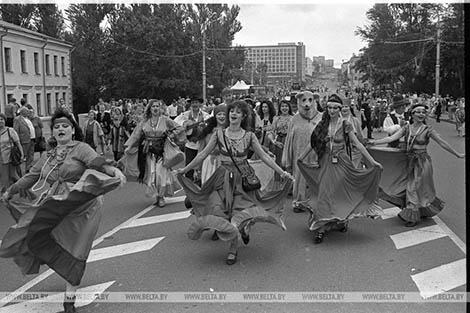
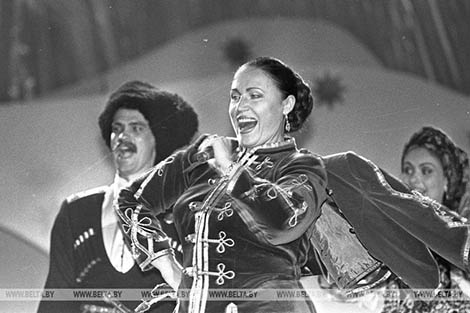
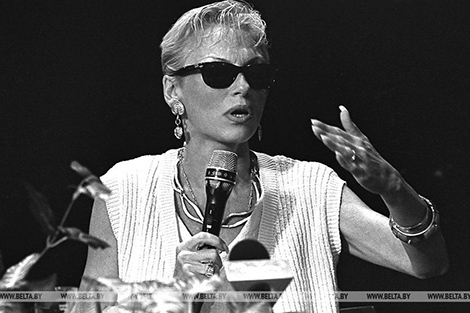
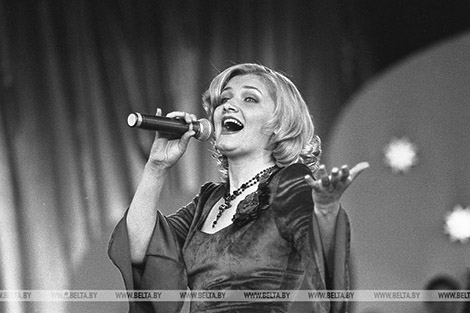
The head of state emphasized at the time: “A song sometimes brings people together faster and more firmly than many political and economic agreements. Because the language of music, the language of culture, is the most vivid and at the same time the most accessible language for all peoples, for all people on our planet. The Slavianski Bazaar in Vitebsk festival has created a unique kind of state - without barriers, without customs, without borders. No visas or passports are required here, no one is forced to fill out forms. And if they ask about your nationality, it is only to weave a representative of yet another people into the festival’s wreath.”
In 1998, the Vitebsk festival became an interstate cultural project of the Union of Russia and Belarus and ran from 20 to 29 July. The arts forum featured 115 cultural and public events, attended by 150,000 people, with some 100,000 people attending 50 concert programs.
Festival activities took place simultaneously at eight venues. Incidentally, this year marked the 10th anniversary of the Summer Amphitheater. For the first time at the forum, performers from Italy, Mongolia, the Republic of Korea, and Japan took the stage. A delegation of Lusatian Sorbs, representatives of the smallest Slavic people, also attended.
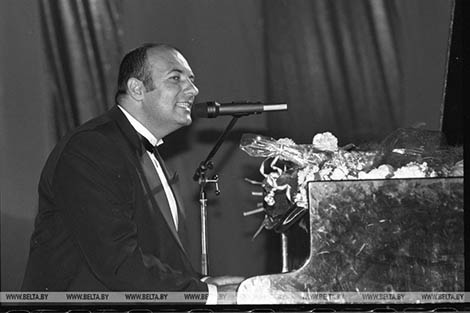
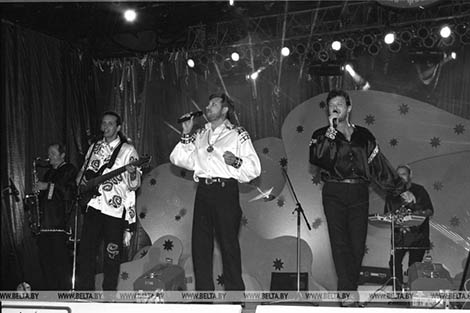
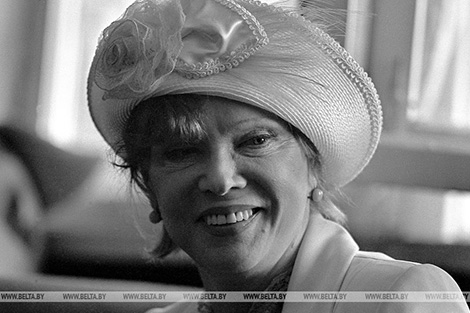
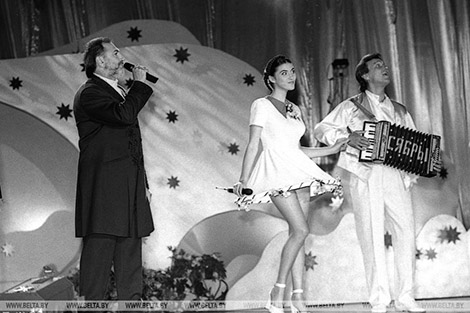
One of the most captivating events was the City of My Youth gala concert, dedicated to the memory of composer and songwriter, Vitebsk native and People’s Artist of the USSR Mark Fradkin. Stars and young performers sang his songs. A grand ballet program took place on the Summer Amphitheater stage, featuring stars of Russian ballet. The festival program also debuted a circus show, with a circus tent set up on the amphitheater courts.
Sixteen performers from 13 countries took part in the Vitebsk 98 young pop singers competition. The jury was chaired by People’s Artist of Russia Igor Krutoy. The Grand Prix was awarded to Rafael from Israel, who performed Igor Luchenok’s song My Enchanted One with lyrics by Gennady Buravkin in Belarusian and Hebrew. The International Children’s Concert Program Festival, which served as a prologue to the main festival, featured over 650 young performers, evaluated for the first time by a competent children’s jury
Ten choirs took part in the charity concert Night Choral Assembly, with proceeds going toward the restoration of the Holy Dormition Cathedral in Vitebsk.
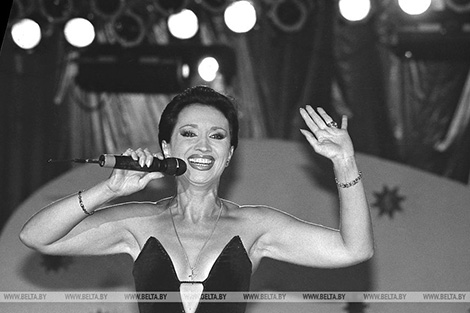
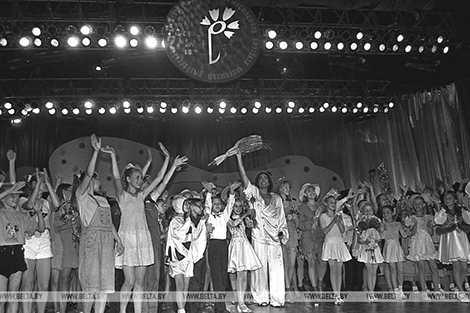
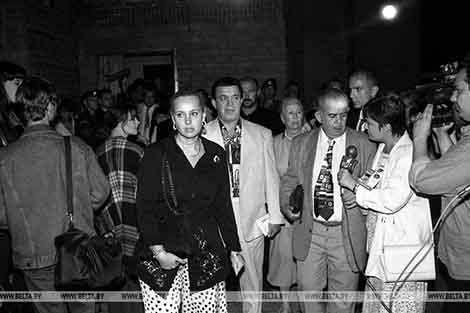
The traditional Rendezvous with a Star event, organized by the festival for journalists, was renamed Star Hour. Meetings were held with Valery Leontiev, Vasily Rainchik, and Oleg Gazmanov, who celebrated his birthday at the forum, among others.
The festival’s film program included nine feature films and seven documentaries, as well as animated films. The 7th Slavianski Bazaar also featured numerous celebrations - folklore festivals, Belarusian cuisine festivals, Russian toy festivals, the Fashion and Music of a New Generation event, which opened with a collection by Vyacheslav Zaitsev, as well as Jazz Panorama, the Patchwork Mosaic of Russia exhibition, the children’s art competition, I Draw the Festival exhibition, and much more. More than 140 craftspeople - potters, woodcarvers, blacksmiths, and embroiderers - gathered in the City of Artisans.
During the festival, Vitebsk signed cooperation agreements with Smolensk, Daugavpils, and Haskovo.
The 7th festival surprised not only with its concert program. Visitors could see Vitebsk from a bird’s-eye view - a chance made possible by aeronauts from Velikiye Luki, who brought hot air balloons to the city. For this Slavianski Bazaar, the Vitebsk Instrument-Making Plant produced a special run of men’s and women’s watches featuring the festival’s emblem.
Additionally, it became easier to stay informed about festival events - its website went live on the internet.
The main events of the 35th international arts festival Slavianski Bazaar in Vitebsk will take place on 16-19 July, with the first concerts already scheduled for 14 July.
 print version
 make home page
 add to bookmarks