


Press releases
Reviving historical Belarusian wedding traditions in Grodno Oblast
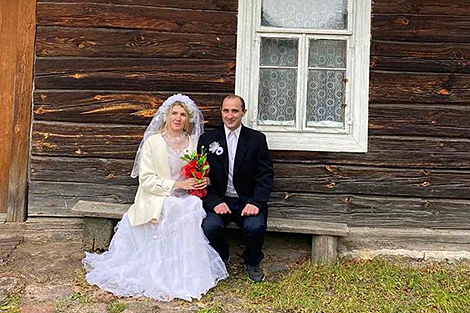
Plans are underway for a grand Belarusian wedding in the traditional style, which will bring together “newlyweds” from every district of Grodno Oblast during the Festival of National Cultures in June in Grodno. The festival’s third day traditionally hosts guests on the Augustow Canal, and the highlight will be a large-scale historical wedding reenactment infused with local Grodno color. Natalya Romanovich, Deputy Director of the Grodno Oblast Methodological Center for Folk Art, spoke to BelTA about the Wedding According to Belarusian Canons, a project for which this reenactment will serve as one of its most vivid elements.
“For this ‘grand Grodno-style wedding’, we are using preserved historical costumes and attributes; much will be specially sewn and woven. We will sew stylized wedding attire and a veil for the bride based on old photographs, restore footwear, and artisans will weave belts and create jewelry,” Natalya Romanovich said.
The “Grand Wedding” will be a vivid finale to the Wedding According to Belarusian Canons project which is being implemented in Grodno Oblast during the Year of the Belarusian Woman. Throughout the year, specialists and cultural workers will conduct research, speaking with elderly villagers and studying archival materials. The work is already underway: electronic archives of materials on regional family rituals are being compiled in the districts. This is invaluable information about wedding ceremonies, customs, and rituals, part of which has been digitized.
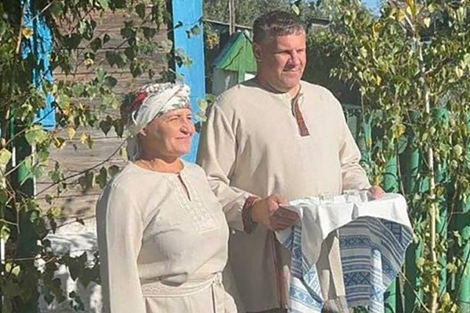
“The role of women in traditional rituals is great: it emphasizes the importance of the feminine principle not only in the family but also in society. This explains our choice of the wedding theme in the Year of the Belarusian Woman, more precisely, the regional features of wedding traditions in Grodno Oblast as one layer of traditional family ritualism,” Natalya Romanovich said. “Our goal is to preserve and bring to life the full richness of ritual actions - the wedding ceremonies, which include beliefs, incantations, folk humor, theatrical elements, songs, dances, and much more.”
Research has already been partially conducted in the Ostrovets, Voronovo, Svisloch, Grodno, Mosty, Slonim, and Shchuchin districts. Based on preliminary findings, it can be said that in Grodno Oblast, a village wedding was a beloved celebration that lasted several days. Its ritual stages included matchmaking, baking the karavai (traditional wedding bread), the groom’s arrival at the bride’s home, the church wedding, the wedding feast at the groom’s house, followed by one at the bride’s house, and, on somewhat rarer occasions, Sbornaya Subbota [Assembly Saturday], which served as a prototype for the modern bachelorette party held the day before the wedding. An integral part was the “perapros” (preliminary inquiry): none of the young men wanted to be rejected by a potential bride and become the object of mockery from fellow villagers, so before going as a matchmaker, they would ask whether the girl would agree to marry. At village weddings, a “brama” (a symbolic arched gateway) was always set up, and mummers – “gypsies” - would arrive.
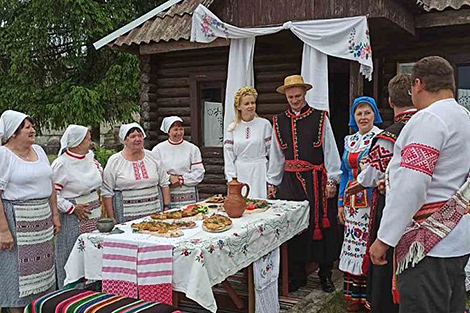
“We are proud that two elements of the intangible cultural heritage of Grodno Oblast directly related to the wedding have been included in the State List of Historical and Cultural Heritage of the Republic of Belarus. These are knowledge and skills of making the traditional wedding karavai in Volkovysk District and the tradition of baking karavai in Slonim District. Ritual baking,” Natalya Romanovich said.
Ahead lies extensive work for cultural specialists: studying the specifics of traditional wedding attire for the bride and groom through ethnographers’ notes, old photographs, museum collections, and learning from the experience of older folk artisans.
“The main goal of the project Wedding According to Belarusian Canons is to stage reconstructions of wedding rituals while preserving local dialects, customs, costumes, folk music, wedding attributes, traditional dishes, songs, dances, and games,” explained the deputy director of the regional methodological center for folk art. “Ideally, we would like to recreate them in a natural environment: walk along a village street, celebrate inside a rural house, or have the newlyweds ride in a carriage accompanied by sharkuny (birch-bark rattles). This is what we will strive for.”
Wedding-ritual reenactments will also take place during major regional festivals, in district cultural centers, and in village cultural houses.
As part of the project, districts will host exhibitions of ethnographic items Ornaments of Memory in the Wedding Chest. Visitors will be able to see reconstructed, or in some cases preserved, wedding outfits of brides and grooms from specific localities, dowry chests filled with handmade carpets, belts, towels, interior items, and traditional instruments used by wedding musicians.
Photo exhibitions Wedding in My Village, featuring collections of wedding photographs from different decades, will tell the stories of entire families. Digital technologies will also be used: each photo display will include a QR code linking to a cultural institution’s webpage with additional information about the wedding photos and the people depicted.
Many recorded wedding rituals can already be explored through the interactive map Rituals and Traditions of Grodno Oblast, available on the website of the Grodno Oblast Methodological Center. The map currently features 44 traditions characteristic of the region’s districts, folk celebrations, rituals, customs, and ceremonies, including wedding ones, documented and reconstructed based on ethnographic fieldwork.
“The project Wedding According to Belarusian Canons aims to preserve our national identity by promoting regional wedding traditions. All collected materials will be presented during the Week of Traditional Culture From Antiquity to Our Days (a regional project to promote elements of the intangible cultural heritage of Grodno Oblast held since 2023) or at folklore festivals,” Natalya Romanovich said.
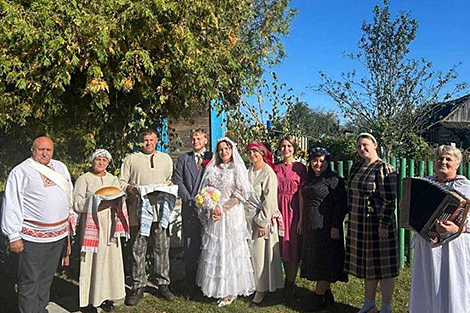
The initiative will continue in 2027: a wedding encyclopedia or photo album featuring reconstructed elements of traditional weddings is planned. Each photograph will highlight the uniqueness of local wedding customs.
Liliya Novitskaya,
photos courtesy of the cultural centers of Volkovysk District, Berestovitsa District, and Lida District.
 print version
 make home page
 add to bookmarks