

Press releases
‘Polesie Indians’: Historian on the unique heritage of the Belarusian Polesie region
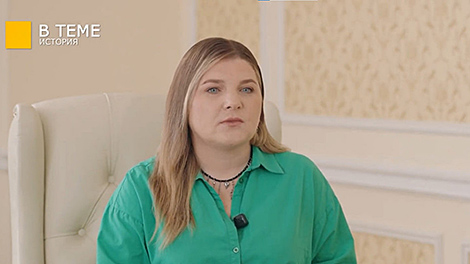
Belarusian Polesie is a unique historical and cultural region that occupies a significant part of Brest Oblast and Gomel Oblast. The region is renowned for its picturesque nature, unique traditions, and protected areas. What are the main features of Belarusian Polesie? What influenced the formation of the culture and character of the Poleshuk people? Why were locals once called “Polesie Indians”? These and many other questions were answered by Irina Bochilo, Associate Professor of the Department of Ethnology, Museology and Art History at the Faculty of History, Belarusian State University, in BelTA’s project On Point. History.
What influenced the culture and character of the Poleshuk people
Vast wetlands, dense forests, and river floodplains are the typical landscape of the region known as Belarusian Polesie. The difficult terrain meant that the Poleshuk people lived in a state of relative isolation, a situation that persisted for many centuries.
“These conditions shaped not only the tangible and spiritual features of the Poleshuk culture but also their character. These are fairly balanced, reserved people who tend toward conservatism. They preserve and venerate their traditions and ancestral memory,” Irina Bochilo noted.
Today, Polesie can no longer be called terra incognita. Historians, ethnographers, and folklorists have been thoroughly studying its cultural features, traditions, and local dialect. The region receives special attention at the state level: tourism is being developed here, and local traditions have been included in the list of intangible cultural heritage of Belarus. Yet even at the beginning of the 20th century, this region remained unknown territory for many.
Why were Poleshuks called Polesie Indians?
The historian explained: this name for the Poleshuks, which was used up until the 1930s, is connected to the fact that the inhabitants of Polesie were bearers of a traditional, even archaic culture that was gradually disappearing in other regions. The origins of this name go back to the end of the 18th century, when the Poleshuks became a real discovery for outsiders.
Mateusz Butrymowicz, a prominent statesman who played a key role in the construction of the Oginski and Royal canals, in 1784 dispatched boats from Polesie towards Warsaw and Gdańsk. The vessels were loaded with everything the Polesie region was famous for: honey, wax, mushrooms, and dried fish.
“The local population came out in great numbers, not so much to see the gifts themselves, but rather to look at these people, who were notably reserved and unusually dressed. They were called Polesie Indians,” Irina Bochilo said. “It was precisely at this time that the last king of the Polish–Lithuanian Commonwealth, Stanisław August Poniatowski, was invited to visit Polesie and Pinsk in particular.”
Why a member of the American Geographical Society came to Polesie
In the 1930s, Louise Arner Boyd, a member of the American Geographical Society, came to Belarusian Polesie. Having learned about this unusual region, she expressed a great desire to visit it and learn about its distinctive features.
“Louise Arner Boyd traveled through Polesie in her own car and on boats of the Pinsk Flotilla. As a result of this expedition, she took a large number of photographs, which were compiled into a whole album,” the historian said. “The photographs show what the so-called Polesie Indians looked like, how they farmed, traded, and organized their daily life on the water.”
Why the Pripyat floodplain was called the Sea of Herodotus
Some villages in Polesie existed in what was effectively an island-like position. This became especially evident during the spring flooding of the Pripyat River. The river is sometimes called the Belarusian Amazon, and its floodplain is known as the Sea of Herodotus.
An interesting legend is associated with the latter name. It holds that in the 5th century BC, Herodotus visited Polesie, saw the “great water” and that’s how the name came into being. There is also another version: Herodotus never sailed here, but learned of the existence of a great lake from the tribes and peoples he encountered on the Black Sea coast.
In such conditions, boats were a lifeline for the Poleshuks. The locals needed to catch fish, so they also used dugout canoes. Incidentally, in Zhitkovichi District, the tradition of making such dugout canoes has held the status of an official historical and cultural value and an object of intangible heritage of Belarus since 2022. The center of this craft is the village of Pererov, where masters make traditional boats from solid oak and pass on this unique skill to younger craftsmen.
What made Polesie’s housing, clothing, and cuisine unique
The distinctive features of Polesie are reflected in many aspects, including housing, traditional costumes, and cuisine. Due to spring floods, village streets would fill with water, which imposed specific requirements on housing construction. Belongings had to be protected from the water, so Polesian people built their houses on wooden piles, also called “shtandarts”. This kept the house above the water level that would flood the village streets during river flooding.
Irina Bochilo also names other distinctive features of Polesian dwellings: “Instead of whole round logs, halves were used. This allowed them to save wood, using half as many logs for construction.” The flat side was turned inward, while the rounded side faced the street, so the houses looked almost the same as those built from whole logs.
When it comes to traditional Polesian costumes, they were quite diverse. Moreover, in villages of some Polesian districts, unique costume elements could sometimes be found that were not typical of others. “For example, in Malorita District and Kobrin District, part of the traditional women’s costume was the ‘burka’ skirt. They were made from heavy sheep’s wool, sometimes with the addition of flax,” the historian explained. “The skirt was often decorated with geometric patterns in red or burgundy. These threads were dyed using alder bark or other natural components.”
Polesian women also wore a specific headdress called a “kvetka”. It was made using bird feathers and decorated with ribbons and flowers. There were also more elaborate headdresses bordering on the fantastical. In David-Gorodok District, there was the “golovochka”. This costume element was a voluminous, complex headpiece with a frame. The “golovochka” resembled a small cushion or a roller-shaped crown.
“Another large and interesting layer of local culture is gastronomy. Due to natural conditions, Polesian people had to rely on what was readily available to them, primarily fish, mushrooms, and berries. Polesian dishes also include millet and buckwheat. Buckwheat bread from Malorita District is included in the list of Belarus’ historical and cultural values,” Irina Bochilo said.
Incidentally, fish in Polesie was sometimes prepared in an unusual way. In Bereza District, it was baked on hay. This, too, was connected to the region’s natural features: Polesie had not only an abundance of fish but also plenty of meadow grasses.
How the famous Polesian dialect came to be
“I would like to note that the Polesian dialect was formed under the influence of intercultural contacts. Polesie is predominantly in the south of Belarus, and the local dialect contains many elements from Ukrainian and Polish. Polesian speech bears little resemblance to classical, literary Belarusian,” Irina Bochilo emphasized. “This dialect is truly unique and interests researchers no less than other aspects of Polesie’s intangible culture.”
The historian noted that the dialect is still spoken mainly by older generations. Young people are increasingly moving to cities, and the Polesian dialect remains alive in rural areas. “Preserving this dialect is an important task, because it is truly unique,” she said.
Where to read about Polesie and its people
In terms of fiction, the first work that comes to mind is Ivan Melezh’s novel People in the Swamp, which vividly describes the life and way of life of Polesian people. This can also be read in the works of other Belarusian classics, such as Yakub Kolas or Yanka Mavr.
As for scholarly literature, researchers’ interest in Polesie grew significantly around the 19th century. Irina Bochilo highlighted Pavel Shpilevsky’s Journey through Polesie and the Belarusian Land, a work by the writer-ethnographer and publicist that occupies a middle ground between science and fiction. Polesie also drew the attention of ethnographer Aleksandr Serzhputovsky and archaeologist and writer Adam Kirkor.
“If we talk about the post-war period, the Institute of Ethnography and Folklore of the BSSR was established, which also worked on this area. Other higher education institutions also joined in: the Brest and Gomel universities, and the Belarusian State University,” said Irina Bochilo.
 print version
 make home page
 add to bookmarks