


Press releases
Ministry releases official count of Belarus’ protected natural areas
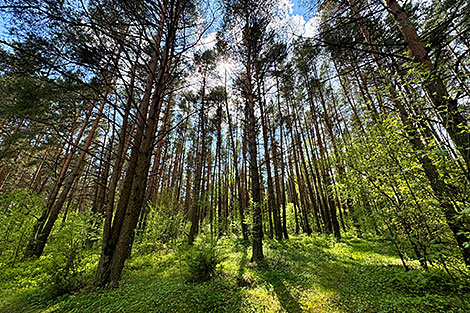
An archive photo
MINSK, 19 May (BelTA) - The number of specially protected natural areas currently operating in Belarus was revealed by Tatiana Zheleznova, Head of the Department for Biological and Landscape Diversity at the Ministry of Natural Resources and Environmental Protection of Belarus at a press conference on 19 May, BelTA has learned.
In 2026, the International Day for Biological Diversity is observed under the theme Acting locally for global impact, which emphasizes the need for local initiatives to achieve global goals for preserving biological and landscape diversity.
“At the level of the head of state and the government, strategic and programmatic documents have been adopted in biological and landscape diversity protection, with budget funding allocated for their implementation. The tools for implementing state policy in this area are regulated by the laws On Environmental Protection, On Specially Protected Natural Areas and Sites, On Wildlife, and On Plant Life,” she explained.
One of the mechanisms for preserving biological diversity is maintaining the Red Data Book of Belarus. “Over 1,000 habitats of wild animals and wild plants, as well as 132 typical or rare biotopes and natural landscapes, were placed under protection in 2025,” Tatiana Zheleznova added.
Another effective mechanism is the establishment and operation of a system of specially protected natural areas. Currently, there are 1,356 such protected areas in Belarus. “That amounts to 1.9 million hectares, or 9.2% of the country’s total area - a vast territory. Each of these protected areas is unique. They are territories with a special protection regime that helps preserve the habitats of animals and plants that have vulnerable status. Each one is beautiful, and some protected areas feature nature trails and routes that allow visitors to enjoy the beauty of our country’s nature without harming the ecosystem,” the specialist said.
Additionally, to restore species and ecosystems, requirements are established for the resettlement and introduction of species, reintroduction, acclimatization, and crossbreeding. Specific restrictions and bans are also imposed in certain territories, during certain periods, and on specific species. Greening initiatives are also carried out. “In 2025, Belarus planted 502,000 trees, 656 shrubs, and over 33 million flowers, while lawns were laid across more than 500 hectares. These efforts have noticeably expanded green spaces in cities and district centers. Over the last five years, green coverage in these areas has reached 40%,” Tatiana Zheleznova reported.
 print version
 make home page
 add to bookmarks