



Press releases
Expert proves professional healing existence in 16th-18th century Belarus
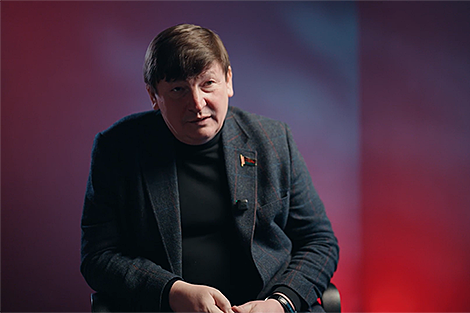
Igor Marzalyuk
MINSK, 18 May (BelTA) - In the 16th-18th centuries Belarusian doctors could perform complex surgical procedures such as suturing veins and trepanning the skull, Chairman of the Commission on Education, Culture and Science of the House of Representatives of the National Assembly of Belarus Igor Marzalyuk said in the BelTA’s project True History. Lectures by Igor Marzalyuk.
The historian stressed that the medical knowledge possessed by Belarusian physicians and pharmacists in that era met the highest standards of the time.
“When you read historical documents from the 17th and 18th centuries, you come across stories like this: two noblemen walk into a tavern, have a drink, start a fight, draw their sabers and start swinging. One chops off a piece of the other’s ear. Then you read on: the ear was sewn back on. Later, during the court hearing, the man whose ear was reattached (it healed), demands that the other party compensate him for the cost of the surgery. So yes, reattaching severed body parts was already being done back then. The same goes for stitching veins: a very delicate operation, but they did it. The documents confirm this. They also performed skull trepanation using the instruments available at the time, under very difficult conditions,” Igor Marzalyuk said.
As for anesthesia, it was very different from modern methods. “There were various forms of pain relief. The most basic was simply making the patient drink vodka to dull the senses. Then they would place a stick between the teeth to help them endure the pain. Be that as it may, we can say that professional medicine, let me stress, professional healing, existed in Belarus even back then,” the historian said.
 print version
 make home page
 add to bookmarks