


News & Events in Belarus
Lukashenko convenes meeting to discuss key investment projects with foreign countries
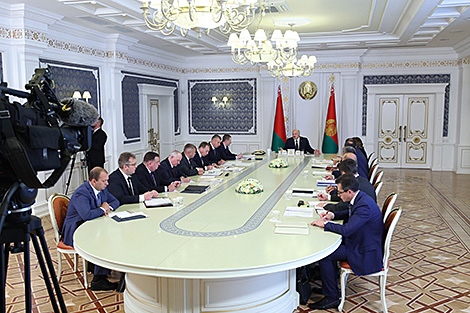
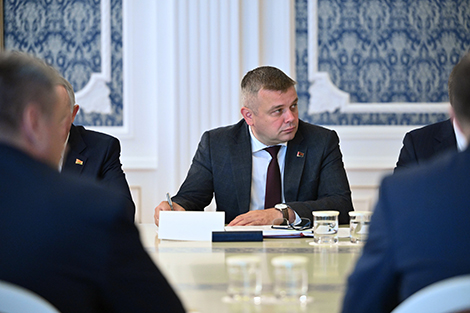
MINSK, 24 July (BelTA) – Belarusian President Aleksandr Lukashenko has convened a meeting to discuss ways to accelerate work on key investment projects with foreign countries, BelTA has learned.
The head of state noted that he regularly undertakes foreign visits. A recent example is a major trip that took him to Russia, China, Indonesia and Myanmar. Belarusian delegations are always well received in various parts of the world, including Asia, Africa, the Middle East, and beyond. Such visits deliver tangible economic benefits, as specific and significant cooperation agreements are reached at the level of heads of state.
“Such trips yield considerable results,” the Belarusian leader emphasized. “But I am concerned that red tape may drown all these efforts.”
Aleksandr Lukashenko cited as an example the agreement with Oman on building a pulp and paper mill in Belarus. The implementation of this project has been insufficiently active, despite its importance. “This is something we badly need. From the air, I can see that we are not keeping up with processing the timber as it ripens. We must process this raw material in a reasonable manner and without resorting to overly sophisticated solutions. This is our national treasure,” the Belarusian leader said, commenting on the project’s significance. “We agreed that we would do this and that. Quite some time has passed. The government reports: we have signed a memorandum, we are considering it, we are planning it … How long are we going to keep planning?”
The president named another area in which Oman is ready to cooperate with Belarus. He was referring to agriculture, which is particularly relevant given the country’s landscape and climate: “You cannot grow food on rocks there, and they import a great deal. They are ready to cooperate.”
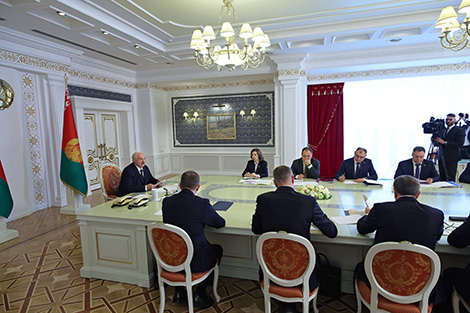
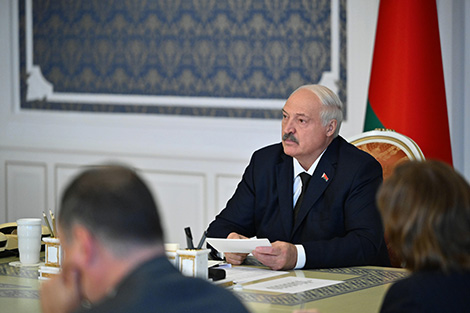
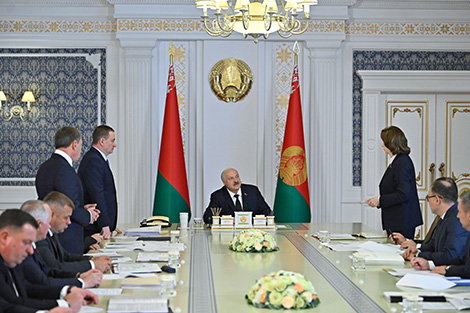
Aleksandr Lukashenko explained why he decided to convene the responsible officials and hear how important agreements are being implemented: “The main thing is the economy, [it’s] the foundation. We cannot allow [the agreements reached during these visits], particularly those at the highest level, to become mired in bureaucracy or to yield no tangible outcomes. Beyond that, ministers and the prime minister also make trips of their own.”
He instructed Belarus President Administration Head Dmitry Krutoi to keep a close watch on the practical outcomes and specific agreements reached during officials’ foreign trips. “No one should return empty‑handed,” he said.
The head of state also described the meeting as an element of presidential oversight over the implementation of key agreements with foreign countries, specifically investment projects, both those in Belarus and Belarusian projects abroad.
“In terms of exports, our enterprises performed well at the start of this year. During the recent major visit, our country also received many kind words and a number of plans were outlined,” said Aleksandr Lukashenko. “At the same time, it has long been known that for successful market entry, especially in distant markets, simple trade is no longer enough. The task is being addressed through cooperation, moving final production closer to consumers, and setting up local or joint logistics and production facilities. The tools to achieve these goals are available, and much has been done in recent months.”
In this regard, the head of state urged to maintain proper product quality. Earlier, the prime minister had been instructed to keep a close eye on enterprises and industry as a whole. The overall situation is not bad, but certain enterprises have issues with the quality of their output. “Thank God, there is no decline [in industrial indicators]. You report that exports are doing well. That is the main thing, because we are an export‑oriented country,” Aleksandr Lukashenko emphasized. “The situation by and large is not bad, and exports are doing well, but there are three, four, five enterprises, and these are not just enterprises but entire holding companies and production associations, that are operating sluggishly. We need to look into this immediately and nip it in the bud. If you cannot produce such volumes, at least make a quality product so that people will want to buy your goods.”
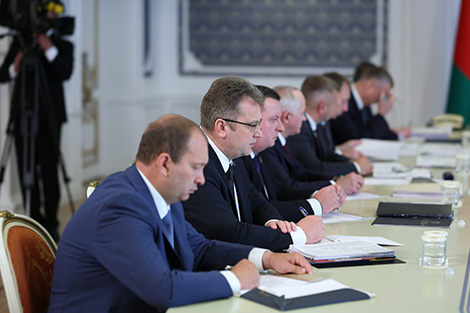
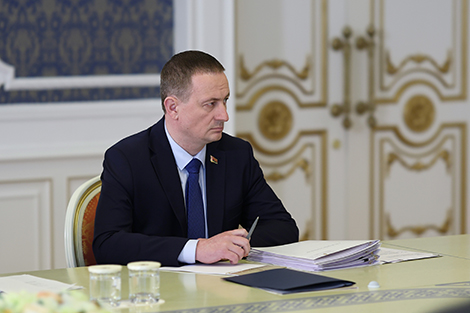
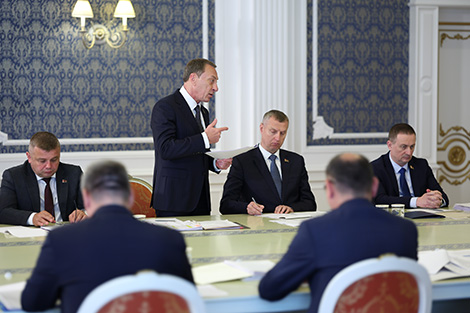
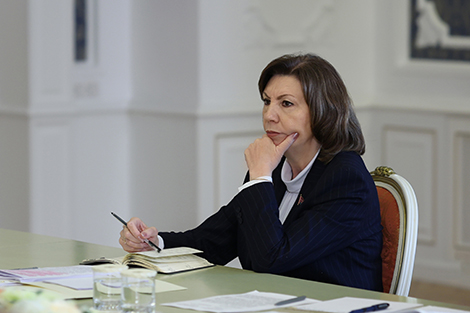
The president recalled that an investment component had previously been incorporated into the government’s action program for developing cooperation with countries of the far arc, and above all Africa, for 2026‑2030. In addition, an agreement on trade in services and investment with China came into effect on 1 January of this year, and in May a new presidential directive was adopted with a clear focus on attracting direct investment.
“One could say that we have painstakingly put together a pool of 60 projects and ideas worth approximately $6 billion to attract investors. In June 2026, the Council of Ministers finally approved a strategy for developing multi‑brand service centers for Belarusian machinery and industrial equipment in other countries, including the CIS and the far arc. Without this, we will get nowhere; no one will buy machinery if they cannot see that it can be repaired and serviced under warranty,” the head of state noted. “These documents must not remain dead weight; they must become a guide to action. And action must be immediate, without red tape. From my own sense of things, we are still moving far too slowly.”
“Put forward your options. There can be no excuses. The main thing is that you hear me and act on it. Let us address each issue in earnest. And one more thing: do not promise what you cannot deliver. We should only do what we are capable of,” Aleksandr Lukashenko told the meeting participants.
 print version
 make home page
 add to bookmarks