



News & Events in Belarus
From industry to infrastructure: Lukashenko receives report on Minsk’s development
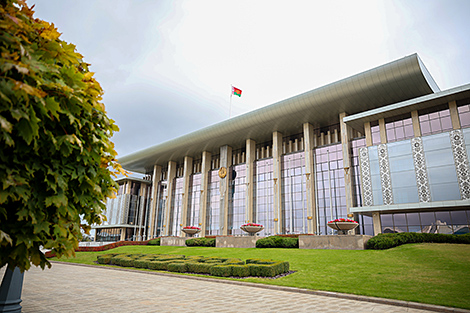
An archive photo
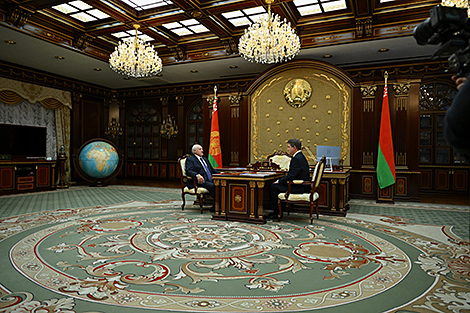
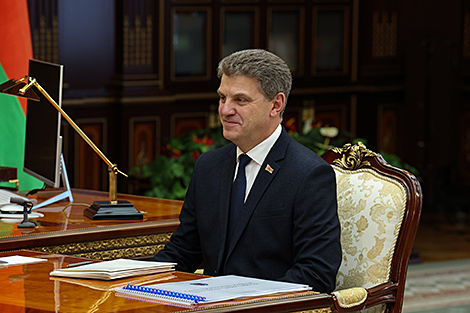
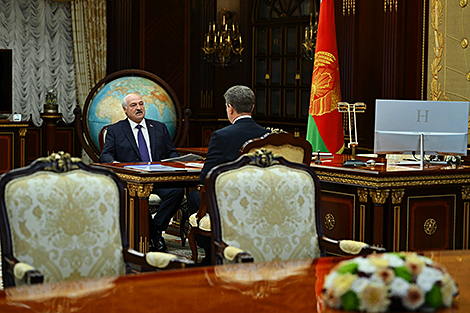
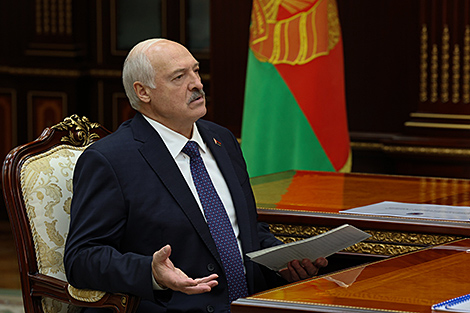
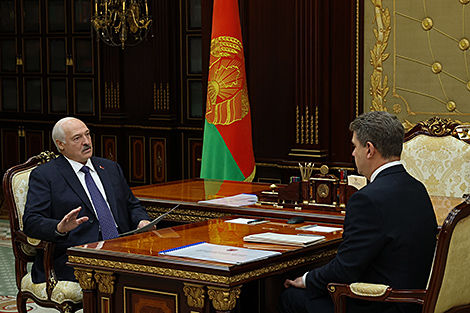
MINSK, 3 September (BelTA) – Belarusian President Aleksandr Lukashenko has received a report from Minsk Mayor Vladimir Kukharev, BelTA has learned.
The main topics of the report included the economic development of the capital city with a focus on the industrial sector, the improvement of transport and road infrastructure, construction and urban improvement, as well as personnel issues.
The president opened the meeting by congratulating Vladimir Kukharev on his sixth anniversary as head of Minsk. “Vladimir Yevgenyevich, today is your anniversary – congratulations. They say you have been head of the hero city of Minsk for exactly six years. Some conclusions can be drawn. But the main thing is not the results, but the prospects,” Aleksandr Lukashenko said.
Economic performance
“The economy comes first. Where there is a functioning economy, there is progress,” the Belarusian leader emphasized.
The head of state noted that the industrial sector is the economic backbone of Minsk. That said, the city is also rather actively investing in agriculture and the construction of livestock complexes across the country. “Thank you for using Minsk’s budget to build some complexes. Probably about a dozen across the country. And this has been going on for several years,” Aleksandr Lukashenko noted.
The president inquired about the situation in Minsk’s industrial sector, which enterprises are struggling and underperforming, and what areas need attention.
“I listened to the prime minister’s report yesterday [2 September]. Everything seems to be going well. The average picture looks decent. However, there are enterprises that are barely getting by and are underperforming. And there are issues in Minsk’s industrial sector as well. Which enterprises concern you the most? So, overall economic growth and industry are key,” the head of state outlined.
He also drew attention to the experience of the Minsk City Technopark. “This is a good thing; people come there and work well. How is the construction of such technoparks progressing? We came to the conclusion that a network of such technoparks should be developed not only in Minsk, but across the entire country.”
Speaking about the capital’s industrial base, the president reminded the mayor that he is responsible for this area: “Keep in mind that Minsk’s enterprises are your responsibility first and foremost. Then they fall to the Industry Ministry, the government, and others. But ultimately, they are all under your purview. Just as in other regions.”
Investment activity in the capital was also discussed. According to Vladimir Kukharev, investment growth in the first half of the year stood at 10%, and it was largely driven by the construction sector. Currently, more than 700 construction projects are underway in Minsk, including social facilities, housing, and technopark facilities.
The president noted critically that a significant share of investment comes from the construction of social facilities rather than production facilities: “Investment in production is lagging behind investment in housing and cultural facilities or museum projects.”
The head of state was informed that the capital’s economy is overall stable. The target for gross regional product growth has been met at 102.2%. Minsk’s GRP accounts for 32% of the country’s GDP.
“Impressive,” the president remarked. At the same time, he set a target for the Minsk mayor: the city’s GRP should grow by at least 3.5% by the end of 2026.
The head of state also set the goal of achieving higher growth for the Belarusian economy as a whole. According to data for January-July, GDP increased by 2.1% year-on-year. The president demands that this figure be raised to 3% by the end of the year: “For the country, God willing, we will reach 3% [of GDP growth by the end of this year] – that is the task I am setting. We must make it 3% when it comes to GDP growth in Belarus. We need to push it to 3% by the end of the year. And for you in Minsk, try to reach 3.5%.”
Salaries
The report also addressed the fulfillment of salary growth targets in the capital. The head of state was informed that the average gross salary in Minsk in the first half of the year stood at Br3,878.
“Vladimir Yevgenievich, you need to maintain this level, but do not push it too hard,” Aleksandr Lukashenko warned. “Salaries are a massive expenditure, and if they grow too fast, they will inevitably drive inflation. And once inflation takes hold in Minsk, it will spread nationwide, and we will end up losing those gains to higher prices.”
In this regard, the head of state emphasized the need to focus on the production sector. “It must not happen that salaries and household incomes grow excessively while production declines. Thank God, neither in Minsk nor across the country is that the case. But we must monitor this closely to ensure high labor productivity. And we must definitely improve performance at underperforming enterprises,” the president set the task.
“The main principle is that money must be earned,” Vladimir Kukharev agreed. “We are maintaining the coefficient [of salary growth relative to labor productivity growth] to prevent any disruptions in the currency market, as that would lead to inflation.”
Construction and transport
The president also inquired about the performance of the capital’s construction sector, observing that Minsk is keeping busy on that front. A range of projects are in progress, from roads and housing to cultural venues. This includes the reconstruction of the National Art Museum and the construction of the National Museum of Belarus.
“This is mostly the city’s burden. But what about other construction projects? For example, you finally handed me the plan for the main transport links of Minsk. This is very important for Minsk residents and not only for them. For the entire country, because many people come to Minsk,” Aleksandr Lukashenko said.
The president asked whether there are enough workers in the construction sector and what is planned for construction in Minsk in the future. “The president has laid down the principle: Minsk must not become overburdened. We cannot keep drawing people away from the regions,” the Belarusian leader reminded.
Urban improvement
The president suggested that the city administration figure out how to relieve residential areas from the large number of private vehicles.
Aleksandr Lukashenko noted that some Minsk neighborhoods create a “terrible impression.” He was referring to the overcrowding of residential areas with cars. “There is a building with a green area in front of it up to the roadway – that is nice and beautiful. But that is rare. In most cases, it is an ocean of cars. Some are dirty and unkempt,” the president said. “It is not a pretty sight when a building is swallowed up by rows of cars. We need to figure out a solution. We cannot get rid of cars altogether, but we do need to rethink what to do with all this parking. In front of the house and near the house, people should still be able to breathe clean air – there should be trees, shrubs, flowers, flower beds, and so on.”
The president called for a long-term plan to clear residential areas and shift parking elsewhere. “Gradually, not overnight, not through bans. But move these parking lots somewhere further away. So that people, especially children, can go outside, and the elderly can sit on a bench. Therefore, urban improvement is a very important issue for Minsk,” Aleksandr Lukashenko emphasized.
Personnel issues
Aleksandr Lukashenko offered to discuss personnel issues if necessary: “How are people working? What needs to be improved or looked at?”
The president observed that Vladimir Kukharev is good-natured, but reminded him that it is still important to identify weaknesses in his team’s performance. “Personnel matters. If you have a capable leader, you will see movement and outcomes. If you do not, nothing will move forward,” he said.
 print version
 make home page
 add to bookmarks