




Business news
60-year-old recipe behind Lukashenko’s ice cream pick
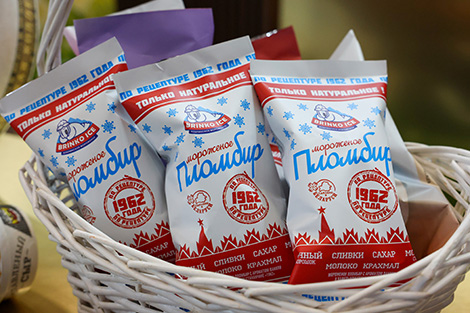
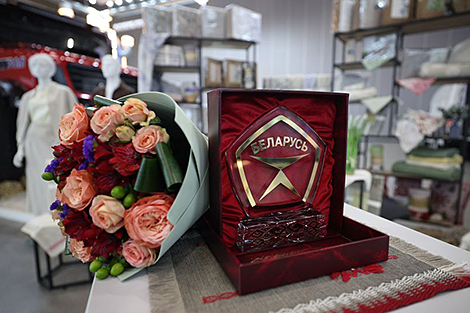
In January 2026, Belarusian President Aleksandr Lukashenko presented the State Quality Mark. Among the enterprises whose products received the high award was Kobrin Butter and Cheese Plant. The award went to a vanilla flavored ice cream in a waffle cone “1962”. Aleksandr Lukashenko said he knows this brand well. “Today I indulged again, thanks to you. I had one. I always insist that we bring back the Soviet era formulas. Not everything, but for the most part, ours was better,” the Belarusian leader said. In the new episode of BelTA’s project After the Fact: Special Report, we take you behind the scenes of how this favorite dessert is made.
How ice cream is made
The ice cream making process begins with the reception of thermized milk and cream. This means the raw materials have undergone a gentle heat treatment.
“Next comes the preparation of the mixture. This involves blending and dissolving the recipe components in milk and cream. Each ingredient is added in a specific order and at a specific temperature,” said Tatiana Sheremeta, Supervisor of the Ice Cream Production Shop at Kobrin Butter and Cheese Plant.
Ingredients are then mixed and heated. After that, the mass goes to a homogenizer at a temperature of 75-77° Celsius. This is a mechanical process that breaks down large fat globules into smaller particles. All these processes are automated and enclosed.

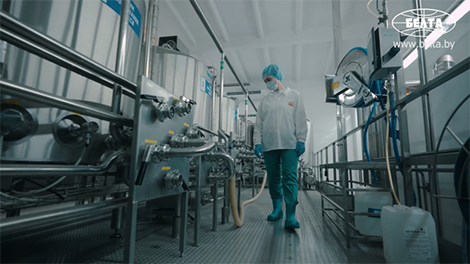
“Next, the mixture goes for pasteurization at a temperature of 87-99° Celsius, with a holding time of one minute. After that, the mixture is cooled to 4-6° Celsius,” Tatiana Sheremeta said.
The cooled mixture goes into ripening tanks. Then the ripened mixture is sent for aeration. “Aeration is the process of incorporating air into the mix. It is whipped and aerated, which gives it an airy, beautiful texture we know as ice cream,” Tatiana Sheremeta said.
Why the ice cream is tempered
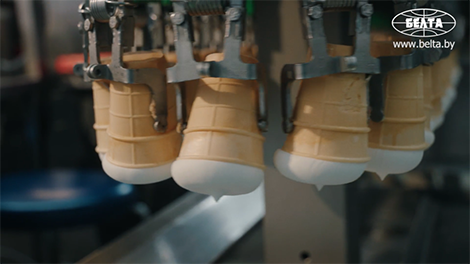
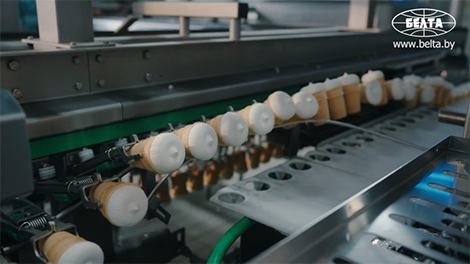
After the aeration at a specific temperature, the ice cream moves to the molding stage, in this case into a crispy waffle cone. The line is actually universal; it can mold different types of ice cream.
“Then it goes into this chamber for hardening. We call it a tunnel, and the temperature there is minus 40° Celsius. That is where the ice cream is tempered. It spends about 30 minutes going through the entire hardening tunnel,” Tatiana Sheremeta said.
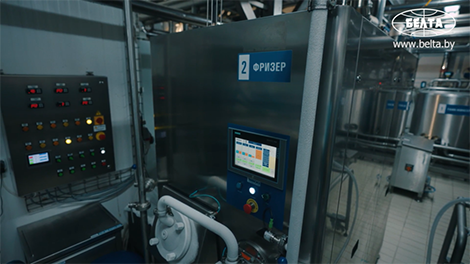
The temperature of the ice cream at the exit of this tunnel is from minus 18° to minus 20° Celsius, depending on the type. In a cone, it may be slightly lower, as it does not freeze through as quickly.
“After the hardening tunnel, it travels this long path on grippers and arrives at the packaging machine, where it is wrapped and labeled. The date, batch number, production date, and expiration date are printed. The codes are also scanned during packaging. No production line can do without codes these days,” Tatiana Sheremeta said.
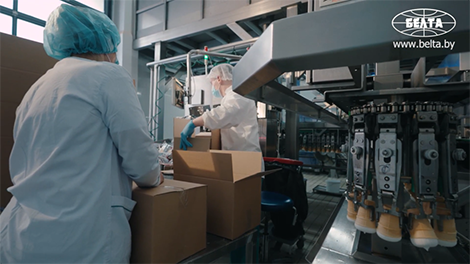
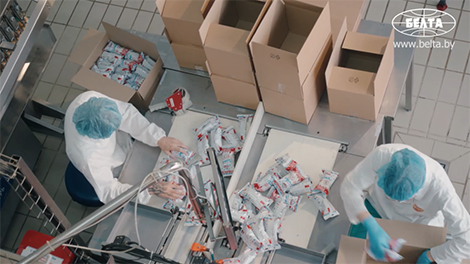
The packers working on the line place the ice cream into boxes, anywhere from 12 to 45 pieces per box. The boxes then move along a conveyor to the cold storage vestibule.
“While it travels there, labels are applied. The labels show the product type, weight, quantity per box, production date, everything the laboratory requires. Then it enters the cold storage vestibule, where it is stacked on pallets and moved to the hardening chamber. The temperature there is minus 26° Celsius, and the ice cream undergoes additional hardening. It must remain there for at least six hours,” Tatiana Sheremeta said.
What goes into ice cream
The ice cream is produced according to the 1962 GOST standard, hence the name. If you have been looking for the ice cream of your childhood, this is it. The taste of this ice cream is familiar to multiple generations.
“Everything here, like milk, cream, is absolutely organic. That is a must, only organic milk and cream are used for our ice cream. Corn starch and egg yolk serve as stabilizers. Of course, we use sugar and vanilla,” Tatiana Sheremeta shared the recipe.
The finished product is tested in the laboratory. The focus is on three main indicators: the mass fraction of fat, the mass fraction of solids, and titratable acidity. Each indicator requires a different amount of time to test. On average, it takes specialists about 20 to 30 minutes to determine product quality.
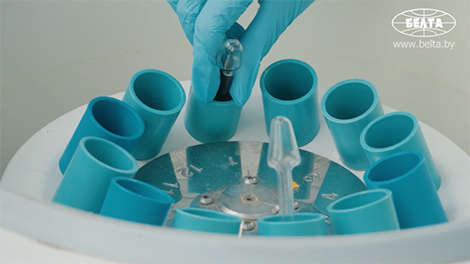
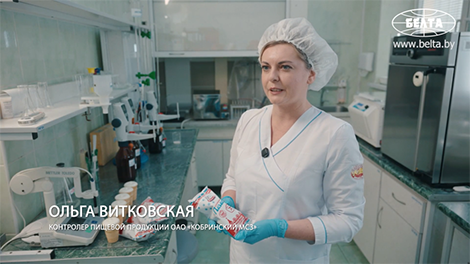
“The mass fraction of fat must be at least 12%. The mass fraction of solids must be at least 37%. And titratable acidity must not exceed 21 Thцrner degrees,” Olga Vitkovskaya, Quality Control Inspector at Kobrin Butter and Cheese Plant explained. “The mass fraction of solids gives it a wonderful texture. The mass fraction of fat, naturally, and titratable acidity tell us that the ice cream will be tasty, sweet, and pleasant to eat.”
And of course, there is a visual evaluation. There are clear criteria for the dessert’s aesthetic ideal. The cap of the ice cream must be even, with a glossy surface and no air bubbles,” Olga Vitkovskaya said.
The “1962” ice cream was launched in Kobrin in 2019. In 2025 alone, more than 14 tonnes were sold. The dessert has won over not only Belarusian consumers; it is also very popular in CIS countries and China.
 print version
 make home page
 add to bookmarks